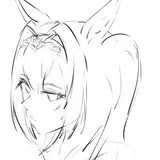
Monster Essays: Monster Politics
Added 2020-11-14 02:20:01 +0000 UTCFun fact about me: I don’t know anything about politics. A few people asked me to do some election-based stories and I didn’t know enough to be able to tell the sides and parties apart.
So I wrote this as vaguely as I could to keep timelines fuzzy and the details unclear. But I figure if anything is going to shake up the system, it would be a dozen new species of intelligent life entering the world among us. Little differences and conflicts sort of took a shift in priorities now that dragons were a thing. “Black and white lived in perfect harmony and ganged up on green,” as Pratchett said.
I generally try and keep the Modern Monstergirl stories as idyllic as possible. It’s an excuse for goblins to use cellphones and centaur construction workers while they’re all just slightly fucked up for a fresh take on the concept without pushing too many buttons. I figure politics had a big part in all this, since there’s canon laws about using a magic without a license and that 18 is still the legal age despite goblins maturing much faster than that. But when somebody asked who the president is during all these stories, I had to take a step back and think about how world leadership would change after all this. The huge push for the rights and respect of other species that went down (partly because we really wanted to fuck them) had me assume that it wasn’t long before elven ambassadors, goblin governors and orc presidents were a viable option.
Dylan Eywind
Interspecies Relations Masters Study
Inhumane Policies. Monsters in Politics.
A+. Quick but thorough. Very well handled.
The political climate of the world has been one of rapid and necessary change in the last century. From interdimensional immigration to the discovery of magic to species that mature at twice the rate of humans, many policies had to be reexamined in the light of a non-human-centric world. Political parties favoring change suddenly skyrocketed in popularity as traditional methods were incapable of maintaining themselves for long in the face of a dozen new species of intelligent life living among them. This increasingly global concern was an unexpected steppingstone in opening international relations into a more unified state.
It was not long before monster species entered the politics. Small nations and cultures were permitted to maintain their individuality, such as dwarf mining colonies, persistent tribes of goblins and the home dimension of the elves. Those that wanted to become citizens of human countries were still required to abide by their laws, even as they changed rapidly.
The elections became a point of contention after President “Old Joe” served his second term. His scandalous death involving being crushed by a demonic prostitute rekindled some old anti-monster sentiments, leading to another strictly human election for the U.S. presidency. Monsters were still permitted to vote, so long as they were registered citizens. While non-human rights and accommodation were huge factors in the election, it was still enough to raise the question of non-human leadership as Julia Cornes became the next term’s president.
Two factors (or rather, individuals) were believed to be the biggest turning point in these policies: Lydia Ragg and Tamala Bankole.
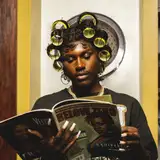
Tamala Bankole was considered a “undercurrent” in the monster humanities movement. She was an African governor-general who was known as a political firestarter, often provoking other leaders by a very vocal urge towards division of wealth and support of the less fortunate. This was seen as little more than leftist politics before Tamala made a public announcement.
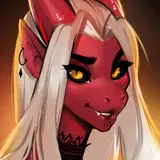
She turned back into a dragon on live television. This caused some amount of uproar before she pointed out that she had served her entire life (and several lifetimes, by changing identities and artificially aging her appearance with her shapeshifting) while doing more good for the lower class in recent years than most other politicians in her position. She received massive public support; sentiments varied from the goodness in all races, our groundless fears in demons upon their arrival, sympathizing monsters to the lower class, and the fetish-driven trending #sitonmeTamala. It reached a point where removing her from her position would have been the government shooting themselves in the foot, thus creating precedent in monsters serving in office.
The first officially elected monster politician came to be in Rec-Yan Voores, a cyclops and family man who became mayor in a small community in Colorado. While the quiet victory was highly celebrated, many point to Lydia Ragg as the most notable of early elected officials from the monster community.
The outspoken and practical goblin was the first ever goblin governor, winning her election in Louisiana. The blunt but well-meaning goblin had taken an interest in the legal system at an early age when her older brother was arrested for public urination. Her candidacy was funded by a curious business consultant, and her announcement of entering the race was treated as a novelty at first. News stations mentioned Ragg as if an act of political satire more than genuine candidacy.
Ragg proved far more charismatic and knowledgeable than most people expected of a goblin. While flirtatious in many situations, including many caught on camera or during debates, she would frequently point out specific or obscure laws and state legislature that were outdated and in need of change. Some still accredit her victory to her shortstack curves and the urge for something different in leadership, but it did not discredit her effectiveness as a governor. Her two terms of service drastically reduced the homeless problem while consistently polling incredibly high with locals of all species. She was known to keep several sexual partners on call before she ended up marrying one of them in her third year in office. After his defeat in her initial election, her opponent Scott Sarsdale was quoted stating “Lydia is a sex addict that can charm the pants off a priest. That doesn’t mean she doesn’t know her stuff.”
This victory build bridges for non-human races in politics across the globe. The most notable victory was in our last election when newcomer and former Navy captain Duke “Da Boss” Rarsly became our first orc president. While patient and soft-spoken for an orc and politician, he was often praised for his quick decision making and practical sense of foresight while caring for those serving under him. His policies maintained a focus on fixing issues, such as cracking down on pollution and corruption using the modern abundance of magic.
His vice president, female gorgon Yulia Talisk, has stated during his campaign; “Ask anyone. Mr. Rarsly does not lash out in anger or act in violence until it’s necessary. He looked after his men and women when he served like his family, and we can expect he’d do the same for the American people if they let him become their president.”
President Rarsly seemed to be the final flourish on the stance of monster rights. Global politics shifted as numerous elections and positions were filled by non-humans over the next few years. Studies pointed out a significant raise in elves, demons, gnomes and dwarves in particular, as well as a major member of British parliament opting to turn into a vampire. All races have started to hold sway over the state of the world as what seems to be the last traces of inequality are slowly weeded out of the world.