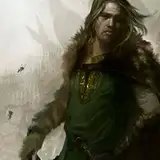
Chapter 40: The Broadcast of Reckoning”
Added 2025-08-07 14:30:00 +0000 UTCThe broadcast chamber was quieter than death. No footsteps, no breath, not even the hum of magic or machinery dared intrude on the stillness
The broadcast chamber was quieter than death.
No footsteps, no breath, not even the hum of magic or machinery dared intrude on the stillness as Harry ascended the podium. His boots struck the metal floor with slow, deliberate cadence—tap, pause… tap, pause—each step resounding like the toll of a bell in a cathedral of silence. He wasn’t rushing. He couldn’t. The weight he carried would not be hurried.
The Gryphon was bathed in low amber light, the hyperspace currents outside still sweeping in ribbons of violet and silver past the panoramic viewports. The space beyond twisted with light too vast and strange to be earthly, but Harry didn’t look at it. Not now. His eyes were ahead—fixed on the slim pedestal before him, and the thousands, perhaps tens of thousands, of lives on the other end of this broadcast.
Cameras shifted quietly on gimbals, lenses adjusting focus with barely audible whirs. Screens across the fleet flickered to life.
In the mess halls of long-haul cruisers and family modules, faces turned upward from half-eaten meals. In infirmaries and research bays, healers and techs paused, fingers stilling mid-spell or mid-keystroke. In bunk rooms, young witches sat bolt upright, heartbeats already racing. Even the soldiers—the hardened, the practical—stood straighter at the chime of the fleet-wide alert, as though pulled upright by something older than discipline.
On every vessel in the fleet, the same image beamed to every screen: Harry Potter—commander, survivor, symbol—standing at the heart of the flagship, framed by the gleaming glass curve of the Gryphon’s and the chaotic elegance of hyperspace bleeding through beyond.
He looked impossibly still.
His cloak, simple and black, hung motionless against his boots. His hands were folded in front of him—not in command, but in restraint. Shoulders taut, spine straight, jaw locked against the pressure of what he was about to speak.
The bridge crew didn’t move. They didn’t need to. Cameras had already found him—tight close-ups catching the faint flicker of pain behind his eyes, the barely-there tremor of his fingers. A side angle captured the ships in formation behind him—each one a pearl strung on the luminous thread of the hyperspace corridor.
Somewhere, a baby cried softly. Somewhere else, a tea cup shook on a saucer and was slowly, reverently set down.
He hadn’t said a word yet.
And still the silence pressed on.
Because they all knew: when Harry Potter took the podium like this, it was never for something small.
And this time, it would change everything.
—-----------------------------------------------------------------------------------------------------------------------
Harry stood motionless before the microphone, the silence so complete it felt sentient—watching, waiting, judging.
He looked down for a moment, eyes fixed on the faint shimmer of his reflection in the polished podium surface. His hands gripped its edge, white-knuckled, and then he exhaled—slow, shaking, like he was forcing breath through stone.
“I thought…” he began, and already his voice carried the weight of a thousand graves. “We thought all magical life on this version of Earth was lost.”
He looked up.
His eyes, ringed by exhaustion and something older—something carved into him by fire and time—met the camera. The fleet. His people.
“The plague… the collapse… we believed they were all gone.”
A pause. A breath. And then—
“But they’re alive.”
It wasn’t a shout. It wasn’t even loud. But across a thousand rooms, it hit like thunder. Because in that single, cracked syllable—alive—was the collapse of hopelessness. The shattering of a truth they'd all accepted too quickly.
Behind him, the holoscreens shimmered to life.
Rows of bioscans blinked into visibility—medical pulses, slow magical auras, faint flickers of core readings. Most were marked by youth: small frames, erratic magical fields—untrained, frightened. Some human. Some clearly magical-born.
None older than seventeen.
In ships across the fleet, gasps rippled through the silence like wind through tall grass.
On the Sanctum-class hospital cruiser, a young witch named Marla clutched her mother’s hand so tightly her knuckles paled, her mouth slightly open. A nurse next to her—Muggle-born, one leg replaced by conjured alloy—lowered her clipboard with trembling fingers.
On the frontline carrier Avitus, two hardened Aurors turned to each other in silence, their eyes already damp. One reached for the other’s forearm and squeezed.
In the refugee mess halls, children crowded around screens, eyes wide and shining. One small boy pointed up at a bioscan labelled ALTHEA, age 9, her magical core erratically surging on the readout. He whispered, “She’s like me.”
His mother burst into tears.
On the bridge of the Gryphon, no one moved. Only the distant sound of magic, breathing low through the ship's walls, and the flickering pulse of a heartbeat sensor in the background.
Harry swallowed.
His throat worked visibly, and for a moment, he looked as though he might crumble under the weight of it all. His hand strayed unconsciously to the place over his heart—where once, long ago, a letter had been carried. Where now, something like purpose burned in its place.
“They're out there,” he whispered, “alive… and waiting.”
—-----------------------------------------------------------------------------------------------------------------
Harry’s shoulders tightened as he straightened behind the podium, the soft hum of the Gryphon’s bridge falling into a haunted stillness. The light from the bioscan charts still danced faintly behind him, flickering with innocent pulses—tiny lives suspended in quiet resistance.
He inhaled slowly, and when he spoke again, his voice had changed.
Gone was the fragile spark of hope.
What remained was sorrow. The kind of sorrow that doesn’t shout—it lingers. Settles in the bones. Changes the shape of a man.
“You all know what happens when a young witch or wizard doesn’t receive guidance,” he said quietly, as if saying the words too loud might wound them more. “When magic matures inside them with no one to explain it, to anchor it, to help them breathe through the storm.”
His fingers brushed the edge of the podium.
“Magic doesn’t wait,” he said. “It builds. It swells. It aches to protect them… even if they don’t understand what it is.”
A brief flicker—on every screen across the fleet—of old training footage: a young girl in her early teens, mid-scream, as an entire city block shimmered and cracked around her, reality itself unravelling in a swirl of raw magical discharge. Another image: a boy, maybe eleven, curled on the ground as flames licked the air around him—wild, formless, instinctual. No intent. Just emotion made elemental.
The feed cut.
The silence that followed was total.
On a command ship, a Muggle-born engineer leaned forward in his seat, one hand over his mouth. His partner—a magical systems technician—slowly lowered her eyes, her face pale.
On a recovery barge, two Enforcer captains looked at each other. One had once lost her brother to accidental magic. The other had spent five years teaching war orphans how to sleep without warding themselves in panic. Both looked like they’d just been punched.
“All the adult magicals on this Earth died in the plague,” Harry said quietly, painfully. “So when new magical children were born—untrained, unloved, unknown…”
He paused. A slow breath in. Out.
“They exploded.”
A hush, thick and terrible, settled across the fleet.
“Not every time. Not always fatal. But often. And violently. Buildings levelled. Families hurt. The Muggle governments didn’t understand what was happening—not at first. But they adapted. Efficiently.”
Harry’s mouth thinned. The next words came slower, heavier.
“They developed sensors. Methods to detect latent magical signatures in children. They came into homes—sometimes with permission. Sometimes by force.”
He didn’t raise his voice. He didn’t need to.
“They took them.”
A quiet sob echoed from somewhere on the Gryphon’s lower decks.
“They told the public it was for the safety of the children that they were being cared for. That it was... humane.”
His gaze turned steel.
“But none of us were there to see. No one to protect them. No one to teach them. They were scared. Alone. Ripped from their parents because of something inside them they didn’t even understand.”
A ripple of grief moved like a wave through the ships. Some closed their eyes. Others gripped the backs of chairs. On one screen, a child reached out and touched the glowing hologram of a name—wondering if it might be someone they knew.
“We weren’t there,” Harry said, voice hollow now, distant. “And in our absence, fear filled the silence.”
His hand fell from the podium. For a heartbeat, he looked older than his years—ancient in sorrow, carved by guilt and rage held barely in check.
He had given them hope.
Now he was giving them the cost.
And he hadn’t even spoken the worst of it yet.
—----------------------------------------------------------------------------------------------------------------------------
For a long moment, Harry didn’t speak.
His hands rested flat on the podium, knuckles pale against the dark metal, as if grounding himself. The light of hyperspace bled across his face in streaks of violet and silver, but his eyes—his eyes were steady now. Fixed. As if staring through every screen at once.
“I wish I could give you certainty,” he said at last, voice low and hoarse with restraint. “I wish I could tell you it’s just a mistake. A rumour. A lie.”
He looked down. Not to read. Just to gather what little strength lay in silence.
“But I can’t.”
The air throughout the fleet shifted, like breath held in a thousand throats.
“I can’t confirm everything. The details are fragmentary. The reports—coded, smuggled, incomplete. But the pattern is clear. The evidence aligns. Too many sources. Too much fear to be fiction.”
A murmur rippled across the ships.
Bridge officers froze mid-command. Families paused mid-meal. Mechanics, medics, teachers—all stopped what they were doing and stared, as if the screens had become windows into a world none of them wanted to see.
“They are not simply taken,” Harry continued, his voice a razor now—thin, sharp, cold. “They are kept. Contained. Labelled.”
He swallowed, jaw tight.
“There are… camps,” he said. The word came out like a curse, one he hated even forming with his mouth. “Facilities. Top secret. Global. Hidden from every satellite, every eye.”
The pause that followed was brief—but devastating.
“And when they turn seventeen…”
His breath caught. Not from doubt—but fury restrained beneath grief.
“…They are killed.”
A wave of shock shattered the silence. Audible gasps. Cries of disbelief. A young Muggle mother covered her mouth in horror, clutching her half-blood daughter tighter. A grizzled warlock on a refugee freighter dropped to a chair, staring at nothing. One young Auror threw his mug across the deck.
Harry raised his hand—not to silence them, but to carry the weight forward.
“I must be clear: we cannot yet confirm every account. And I cannot—must not—guarantee that every detail is true.”
But his next words left no room for comfort.
“What I can confirm… is that they are not free. Not protected. Not safe.”
Another beat.
“There are reports—” he hesitated, lips parting like a man approaching the edge of a cliff. “—of experiments. Of magical conditioning. Of attempts to… extract magic. Bend it. Study it.”
Across the fleet, tears fell in silence. Rage crackled in clenched fists. Entire decks stood still.
He looked directly into the camera, now—face open, eyes dark with fire.
“I will not pretend this isn’t horrifying. It is. It should be.”
His voice deepened—resolve to settle like armour into every word.
“And I will not ask you to bear this lightly.”
His next words were a vow:
“But we cannot allow this to stand. Not in our name. Not in silence. Not ever.”
The silence that followed wasn’t stunned anymore.
It was charged.
Like the breath before lightning.
And Harry Potter stood alone before it—heartbreaking, voice steady, gaze unshaken.
Because the truth had been spoken.
And now the future would answer.
—---------------------------------------------------------------------------------------------------------------------------
Across the fleet, it hung like fog. Not passive. Not numb. But trembling—just before the scream.
Then it broke.
Not in chaos, but in a thousand shards of raw, unfiltered humanity.
On the lower decks of the Gryphon, a veteran battlewitch named Calyx stood, her wand-hand clenched so tightly it trembled. Her lip curled in fury, and her voice cracked as she whispered, “Seventeen. Seventeen. Like they’re expiry dates.” She didn’t speak again. Just turned and punched the metal bulkhead—hard enough to split skin.
Aboard the Amaranth, one of the agricultural vessels, a cluster of young magical engineers stood frozen. A muggle technician beside them—who had never cast a spell in his life—was the first to move. He placed a hand on one of their shoulders, his voice quiet and hollow. “Tell me what to do. Whatever it is—we do it together.”
On Hope’s Compass, a medic sobbed quietly in a corner, holding a photo of his daughter, long lost in the early days of the war. She would have been seventeen this month.
In a schoolroom aboard the Sanctum, children huddled around a flickering holo-display. Tiny hands gripped robes and uniforms, some asking questions too big for their tutors to answer. A little Muggle boy turned to his magical classmate and whispered, “Will we go save them?” The girl—no older than ten—nodded with solemn certainty. “Yes. We’re wizards. That’s what we do.”
Even hardened Muggle officers—those trained in dispassion, survivors of three wars and too many betrayals—turned away from the screens. Not because they didn’t care. But because they did. One of them, a former intelligence operative with cold eyes and a steel-trimmed uniform, whispered to no one, “I’ve seen monsters. But never children caged by fear.” His jaw tightened. “Not again.”
The reaction didn’t divide them. It unified them.
Grief mingled with resolve. Fury with purpose. Rage with unbearable love.
Because somewhere, down there on a broken planet, were children.
Not statistics. Not anomalies.
Children.
Magical. Forgotten. Waiting.
And the fleet—this fragile, improbable fleet of the broken and the brave—felt something shift in its bones.
This was no longer about survival.
It was about rescue.
It was about justice.
And in every corner of every ship, the exact four words began to rise—like breath, like spell, like promise.
“We must go save them.”
—-------------------------------------------------------------------------------
The moment the grief surged into fury, Harry stepped forward.
His hand rose, palm forward, fingers steady. A universal gesture—not of command, but of calm.
“Stand down,” he said, voice firm but not sharp. “Please. Hear me.”
It didn’t echo in the chamber. It settled—low and heavy, like the first drop of rain before the storm breaks.
All across the fleet, those watching froze mid-reaction. Raised wands lowered. Trembling hands steadied. Even the hum of conversation seemed to hush beneath his voice.
He stood tall now, framed against the swirl of hyperspace, his cloak barely shifting in the artificial wind of the bridge. There was no armour on him. No medals. Just a man bearing the invisible weight of thousands—and refusing to let it crush him.
Harry’s eyes were tired, his jaw taut with emotion, but his words came with clarity:
“We will recover them. All of them. Every witch. Every wizard. Every magical child left in the dark.”
He let the promise hang for a beat, his gaze sweeping the invisible thread that tied the fleet together—bridge to bridge, ship to ship, heart to heart.
“We do this not in vengeance. Not to punish. We do this to bring our own home.”
A ripple passed through the listening crowd—some crying now, others holding each other. Still others standing a little straighter.
His voice strengthened—not louder, but more profound, rooted in conviction.
“We do not ask who their parents were. We do not care what blood runs through their veins. Magical is magical. And they are ours.”
Then—logistics. Clear. Tactical. Measured. The commander emerged beneath the pain.
“Effective immediately, I am activating Operation Dawnbreak.”
Screens across the fleet flared to life with new directives, icons blinking red and gold.
“I want medical units prepped for trauma response. Legal teams will be deployed for documentation and reintegration. Recovery teams—composed of both magical and Muggle specialists—will lead first contact and extraction.”
He paused only once more.
“This will not be a magical mission. This will not be a Muggle mission.”
A beat.
“This will be our mission. Side by side. As one people.”
Then he said it—quietly, but with such weight it pressed into the air itself:
“We’re not just rescuing children. We’re proving who we are.”
The silence that followed was no longer one of stunned silence.
It was sacred.
Across the fleet, people nodded—held hands—touched screens.
Because now, the mission was clear.
And the man who had led them through everything had just given them their greatest purpose yet:
To return. To rescue. To rise. Together.
—-----------------------------------------------------------------------------------------------------------------------------
Harry’s voice lowered now—not from weakness, but from something more profound. Something steadier. A weight set down at last.
“This isn’t just a rescue mission,” he said, the words deliberate, quiet enough that the silence leaned in to hear them. “This is a reckoning.”
His eyes didn’t blink. His gaze was unflinching—not angry now, not wounded—but clear. Clean. Like morning after fire.
“A test of who we are. Who we choose to be.”
Behind him, the swirl of hyperspace flickered in solemn gold and violet, a cathedral of moving light. Before him, the fleet listened—not just with ears, but with breath held and hearts braced.
On every ship, screens flickered, steady now. The broadcast image sharpened to a single frame: Harry Potter standing alone beneath the gaze of a thousand stars, outlined by the subtle gleam of the Gryphon’s bridge. There was no anthem. No seal. No stagecraft.
Just a man who had fought wars, buried friends, raised cities, and broken barriers—now speaking not like a hero, but like a steward of a promise.
“This is the moment,” he said, softer now. “The one history will remember—not for the enemy we fought, but for the choice we made.”
In the family wards of the refugee vessels, children leaned into their mothers’ arms, their eyes wide with wonder. On the training decks, battle-worn veterans stood shoulder to shoulder, hands clenched over hearts. In the command bays, Muggle engineers and magical medics shared quiet glances—some afraid, some steady, all changed.
And as Harry’s image lingered one final moment on the screen, it held not just his likeness—but a fleet’s reflection:
Witch and wizard. Muggle and squib. Refugee and rescuer.
Not broken anymore.
Not divided.
But trembling—with purpose.
Waiting—for the order that would shape their future.
Then—
The screen cut to black.
And the stillness that followed was not silence.
It was resolve.
PREVIOUS INDEX NEXT