YouTube Link : https://youtu.be/adF9X9E0Chs
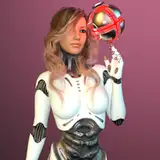
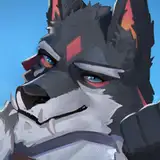
Black Forest Labs (BFL) publisher of FLUX models kept their promise and published the FLUX.1 Kontex DEV model today. So I didn't sleep and after doing huge research and test non-stop, I have prepared this excellent step by step tutorial that will show you how to use this amazing model. With FLUX Kontext you can edit any part of the image in any way with just prompt. No-masking, no-ControlNet. It can also restore and upscale older images or it can do outpainting. It can even combine multiple images into a new image. FLUX Kontext can even colorize old black and white images. This model is extremely robust and versatile for so many tasks.
🔗Follow below link to download the zip file that contains SwarmUI installer and AI models downloader Gradio App - the one used in the tutorial ⤵️
▶️ How to install SwarmUI main tutorial : https://youtu.be/fTzlQ0tjxj0
🔗Follow below link to download the zip file that contains ComfyUI 1-click installer that has all the Flash Attention, Sage Attention, xFormers, Triton, DeepSpeed, RTX 5000 series support ⤵️
🔗 Python, Git, CUDA, C++, FFMPEG, MSVC installation tutorial - needed for ComfyUI ⤵️
🔗 SECourses Official Discord 10500+ Members ⤵️
🔗 Stable Diffusion, FLUX, Generative AI Tutorials and Resources GitHub ⤵️
🔗 SECourses Official Reddit - Stay Subscribed To Learn All The News and More ⤵️
0:00 FLUX 1 Kontext Dev Model Showcase & Capabilities
0:49 Tutorial Setup: SwarmUI Over ComfyUI for Simplicity
1:29 Getting Started: Presets & Prompting Guide
1:50 Step 1: Download & Update SwarmUI
2:33 Step 2: Running the Model Downloader
2:52 Step 3: Downloading the FLUX Kontext Dev Model
3:45 Step 4: Critical Update of ComfyUI & SwarmUI
4:21 Step 5: Importing the Latest SwarmUI Presets
5:03 Step 6: Applying the FLUX Preset & Loading an Image
5:21 CRITICAL: Setting the Correct Model Architecture
5:50 How to Set Image Resolution & Aspect Ratio
6:33 Example 1: Changing Hair Color with Natural Prompts
7:26 Analyzing the First Result & Quality Preservation
8:09 Example 2: Converting to Anime Style & Image Creativity
9:14 Example 3: Multi-Image Interaction by Stitching Images
9:54 Generating a Combined Scene with a Detailed Prompt
10:49 Generating a High-Resolution Version Natively
11:52 Example 4: Outpainting Strategy with a Larger Canvas
12:31 Generating the Outpainted Image
13:05 Example 5: Creating the Famous Ghibli Style
13:49 Pro Tip: Generating Higher Resolutions Automatically
14:43 Example 6: High-Quality Latent Upscaling for Anime
15:55 Example 7: Restoring & Colorizing an Old Photo
16:39 Analyzing the Amazing Photo Restoration Result
17:16 How to Run on a Private Cloud (RunPod & Massed Compute)
18:08 Cloud GPU Price & Performance Comparison
18:35 Final Words & How to Get Support


FLUX Kontext, developed by Black Forest Labs, represents a significant advancement in AI-driven image editing and generation. By leveraging natural language processing and sophisticated machine learning, it allows users to modify images with simple text instructions, making advanced editing accessible to a wide audience, from filmmakers and designers to hobbyists. This article explores FLUX Kontext’s capabilities, how it works, its applications, and its advantages and limitations, providing a detailed overview for anyone interested in this innovative tool.
FLUX Kontext is a suite of generative flow matching models designed for both image generation and editing. Unlike traditional text-to-image models that create images from scratch, FLUX Kontext performs in-context image generation, meaning it can process both text prompts and existing images to produce coherent, context-aware visual outputs. This capability allows for precise modifications to specific parts of an image while preserving the overall composition, making it a powerful tool for creative workflows.
FLUX Kontext operates using a generative flow matching approach in the latent space, a technique that unifies image generation and editing. It employs a 12B diffusion transformer (in the [dev] version) to process high-resolution images efficiently. The model integrates semantic context from both text prompts and input images, allowing it to understand and execute complex instructions with precision.
For example, when a user uploads an image and provides a prompt like “Change the car color to red,” FLUX Kontext analyzes the scene, identifies the car, and modifies only its color while preserving the background, lighting, and other elements. This is achieved through sequence concatenation, which enables the model to handle local and global editing tasks seamlessly.
The model’s speed is a standout feature, with inference times up to eight times faster than leading competitors, such as OpenAI’s 4o/gpt-image-1 model, according to tests reported by Replicate. This efficiency supports interactive applications and rapid prototyping, making it a practical choice for time-sensitive projects.
FLUX Kontext offers a robust set of features that distinguish it from other image editing tools:
Text-Based Image Editing: Users can describe changes in natural language, such as “Swap the background to a beach” or “Make the dress blue,” and the model applies these edits accurately.
In-Context Generation: The model generates new content that blends seamlessly with the existing image, ensuring visual coherence.
Character and Object Preservation: It maintains consistency of characters or objects across multiple edits, crucial for storytelling or sequential art.
Local Editing: FLUX Kontext can target specific areas of an image, such as changing the color of a single object, without affecting the rest.
Style Reference: Users can apply specific styles or aesthetics, like transforming an image into a “90s cartoon” style
Interactive Speed: With low latency, the model supports iterative editing, allowing users to refine their work quickly.
Multi-Step Editing: Complex edits can be broken into smaller steps, enhancing precision and control.
These capabilities were evaluated on KontextBench, a benchmark with 1,026 image-prompt pairs across five task categories: local editing, global editing, character reference, style reference, and text editing. FLUX.1 Kontext [pro] reportedly excels in text editing and character preservation, as noted in the arXiv paper.
To get the most out of FLUX Kontext, users should follow these prompting strategies, as outlined by Replicate:
Be Specific: Use clear, detailed language, e.g., “Change the red car to blue” instead of “Change the car color.”
Start Simple: Begin with small edits and build iteratively for complex changes.
Preserve Intentionally: Specify what to keep, e.g., “Change the background to a forest while keeping the person’s pose.”
Use Descriptive Phrases: Avoid pronouns; use phrases like “the woman with short black hair” for clarity.
Quote Text Edits: For text changes, use quotation marks, e.g., “Replace ‘Eeny Meeny’ with ‘Flux Kontext’.”
Control Composition: Specify camera angles or framing to maintain layout, e.g., “Keep the original composition.”
Choose Verbs Carefully: Use specific verbs like “change” or “replace” instead of vague ones like “transform.”
FLUX Kontext’s versatility makes it valuable across various industries:
Filmmaking and Advertising: Creators can generate and edit visual assets for storyboards, concept art, or promotional materials
Design and Branding: Designers can iterate on visual concepts quickly, creating posters or brand content
Art and Illustration: Artists can prototype ideas or refine artwork, such as creating a “90s cartoon” style
Education and Training: Educators can create engaging visual aids or interactive materials.
Social Media and Content Creation: Users can transform selfies into professional pitches or ads
FLUX Kontext offers several benefits compared to traditional image editing software like Photoshop:
Ease of Use: No advanced technical skills are required; users can achieve results with simple text prompts.
Time Efficiency: With inference times up to eight times faster than competitors, it supports rapid workflows.
Precision and Control: Text-based instructions allow for targeted edits, reducing unintended changes.
Cost-Effectiveness: It’s reportedly cheaper than models like OpenAI’s 4o/gpt-image-1, with no quality compromises like yellow tint issues (Replicate).
Commercial Use: Outputs generated on platforms like Replicate can be used commercially for apps, marketing, or business purposes.
Despite its strengths, FLUX Kontext has some limitations:
Visual Artifacts: Excessive multi-turn edits may introduce artifacts or degrade image quality.
Instruction Adherence: The model may occasionally misinterpret prompts, requiring users to refine their instructions.
Limited World Knowledge: Its understanding is based on training data, which may not cover all real-world contexts.
Fidelity Impact: The [dev] version’s distillation process may result in slightly lower fidelity compared to [pro] or [max].
These limitations are noted in the Black Forest Labs announcement and the arXiv paper.
FLUX Kontext is a transformative tool in AI-driven image editing, offering a user-friendly, efficient, and precise alternative to traditional methods. Its ability to process text and image inputs, maintain context, and deliver high-quality results makes it a game-changer for creatives across industries. While it has some limitations, its speed, accessibility, and versatility position it as a leading solution for modern visual workflows. As the technology evolves, FLUX Kontext is likely to further redefine how we create and edit images.
Furkan Gözükara
2025-09-30 22:30:42 +0000 UTCDiggy Dre
2025-09-30 09:41:43 +0000 UTCFurkan Gözükara
2025-07-13 01:15:19 +0000 UTCJS
2025-07-11 02:12:54 +0000 UTCFurkan Gözükara
2025-07-11 02:00:32 +0000 UTCJS
2025-07-11 01:58:28 +0000 UTCFurkan Gözükara
2025-07-11 01:46:35 +0000 UTCJS
2025-07-11 01:38:43 +0000 UTCFurkan Gözükara
2025-07-10 23:53:02 +0000 UTCJS
2025-07-10 23:45:29 +0000 UTCFurkan Gözükara
2025-07-02 20:32:28 +0000 UTCLoloFakess
2025-07-02 20:19:28 +0000 UTCFurkan Gözükara
2025-07-01 17:35:06 +0000 UTC楠 陈
2025-07-01 08:13:19 +0000 UTCFurkan Gözükara
2025-07-01 00:27:05 +0000 UTCWonjun Park
2025-06-30 23:39:28 +0000 UTCFurkan Gözükara
2025-06-29 23:07:27 +0000 UTCNeil Rhodes
2025-06-29 23:03:22 +0000 UTCFurkan Gözükara
2025-06-29 22:50:00 +0000 UTCFurkan Gözükara
2025-06-29 22:49:45 +0000 UTCVyacheslav Belyaev
2025-06-29 17:18:12 +0000 UTCThe Explorographer
2025-06-27 19:57:36 +0000 UTC