RELATIONSHIP REDOX #8: DOES FRIENDSHIP AND LOVE PLAY A MAJOR ROLE IN YOUR REDOX STATE AND HEALTH?
Added 2019-10-31 13:37:18 +0000 UTCI'd like this post to be dedicated to ideas around nurturing love long term.
I think I have done a poor job of exploring this aspect of relationships and how it relates to health and wellness and I think I need to improve this.
I believe relationships are built around three cornerstone pillars similar to life's 3 legged stool of light water and magnetism.

They are:
- Intimacy, which is characterized by warmth, support, communication, and understanding;
- Passion, which is characterized by physical arousal and desire; and
- Commitment, which involves the decision to actively work on, and sustain, a relationship.
I think all three are dynamic and lead to different types of love in relationships and they all build different lives. This mimics the effects of light, water, and magnetism and its dynamism effect on mitochondria and cells to create an epigenetic program that sculpts the matter in our cells to build our tissues and the life we experience.
Currently, I believe the most important of this 3 legged stool is passion.
I believe today that holding “decay beliefs” about passion — in other words, believing a decline in passion is irreversible — is associated with lack of commitment, lowered investment, and pursuing romantic alternatives to one’s partner. I think this belief is a function of the redox state of our colony of mitochondria as we age. As such, I think the reason relationship struggle as time marches on is because each other redox state varies based upon the choices we have made in how we sustain the redox power in our own lives.
I believe total ‘complete’ love, is a possible result in life when all three variables of the stool of love are present and relatively strong. However, this dynamic viewpoint of love brings up the possibility that there might be multiple possible combinations of this 3 legged stool, therefore, multiple resulting types of love can manifest based upon the variable strengths.

Romantic love: For example, a couple who engage in a short-lived romance might demonstrate high levels of passion and intimacy, even though they lack commitment. There is a strong link to dopamine creation here.
Fatuous love: Some other couples who meet might marry quickly (and therefore commit to each other) on the basis of overwhelming passion but perhaps do so without truly understanding or getting to know one another deeply.
Such people are more likely to indulge in both commitment and passion in the absence of intimacy, which can be a risky move for obvious reasons. They might not like each other much once they become more familiar with each other's quirks and proclivities!
Companionate love: In contrast, an experienced couple who have shared many experiences throughout their long, happy marriage might continue to enjoy significant intimacy and commitment to each other, even if their passion has progressively dissipated over the years. Sometimes having a companion is the most powerful driver of a bond.
Consummate love: Consummate love is a synonym for total love or a love that appears to be an ALL IN type of relationship. This happens when intimacy, passion, and commitment are all present in substantial degrees. I believe this is what most people are looking for and want in their lives.
I believe it is the rarest because I believe it requires optimized levels of hormones made around light, like POMC, insulin, leptin, and melanopsin. I think when a relationship has two people who experience two different light environments the redox power becomes more variable to one another on a relative basis and this threatens the balance of the type of love possible between the two people as time evolves.

Total love is difficult to sustain long term because it requires both people to heavily invest in behaviors that support redox power chronically as we age.
What variable do I think is most at risk with lowered redox power?
The most variable element in my opinion, — the one most at risk of decline with time— is passion. I think this is why love in a relationship varies over time.
Could a chemical give us a clue to a changing redox in our partner?
Phenethylamine is an organic compound, natural monoamine alkaloid, and trace amine, which acts as a central nervous system stimulant in humans and is made in the same areas dopamine is made in the brain. PEA chemical formula is pictured below. 
In humans, this is a VERY variable chemical and it is found in Substantia nigra pars compacta; Ventral tegmental area; Locus coeruleus where dopamine is found at high levels; many other places where amines with aromatic benzene rings are made to act as photon traps for sunlight. This chemical is very similar to other potent exogenous stimulants known to alter human behavior.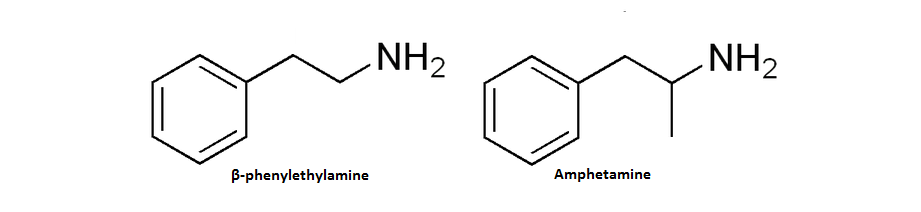
It is made from phenylalanine and tyrosine in humans.
The creation of phenethylamine (PEA) varies greatly across species, and the human receptors of this stimulant chemical is called hTAAR1. PEA is an endogenous neurotransmitter and neuroregulator that plays a key role in mood and cognition too.
This brings up an interesting point about PEA: can it be harnessed to improve your health and love life in ways that might surprise you? Yep.
It has been found among 95 carbon and 95 nitrogen sources tested in foods, β-phenylethylamine (PEA) performed best at reducing bacterial cell counts and biofilm amounts, when supplemented to liquid beef broth medium. PEA is a trace amine whose molecular mechanism of action differs from biogenic amines, such as serotonin or dopamine. Especially low or high concentrations of PEA may be associated with specific psychological disorders. For those disorders that are characterized by low PEA levels (e.g. attention deficit hyperactivity disorder). Might it be able to modulate the other neurohormones we need to create a stable loving relationship over time?
I think it might.
PEA is strongly linked to bacterial metabolism and this makes me think it might be a serious modulator of mitochondrial redox power in humans as well because the inner mitochondrial membrane is the source of redox power and it retains its mitochondrial evolutionary lineage.
In several bacterial species, the above reaction is catalyzed by the enzyme tyrosine decarboxylase, which also converts tyrosine to another trace amine, tyramine (Marcobal et al., 2012; Pessione et al., 2009). Intriguingly, PEA synthesized by fungi and bacteria can also be found in food products (Onal et al., 2013), where it serves an indicator of food quality and freshness.
This includes the Korean natto (Kim et al., 2012) and commercial eggs (Figueiredo et al., 2013). Another food that contains PEA is chocolate, where it is not produced by bacteria, but during the thermal processing of cocoa (Granvogl et al., 2006).
PEA has also been found in the brains of humans and other mammals (Paterson et al., 1990; Philips et al., 1978), which is facilitated by its high solubility in plasma and its ability to cross the blood-brain barrier (Oldendorf, 1971).
Like its α-methylated derivative, amphetamine, PEA has stimulant effects which lead to the release of so called biogenic amines, including dopamine and serotonin (Bailey et al., 1987; Rothman & Baumann, 2006). This can help it modulate their diurnal controls in our cells and affect our behavior with our partners.
Unlike amphetamine, PEA has difficulties maintaining high concentrations in the human body, due to its oxidative deamination to phenylacetic acid by the enzyme B monoamine oxidase (MAO) (Yang & Neff, 1973). Phenylacetic acid,has an effect that is similar to the activity of the natural endorphins (POMC), an effect that is known as a “runner's high”.
I've started to look deeper into this connection in people with relationship issues and the results have been eye opening to say the least.
Comments
this is fascinating ... “PiC” ... Passion (1st ... the driver) and Commitment to keeping the Passion burning and evolving creates a place for true trust... “intamacy” ... that allows the 3 to synergisticly grow and create a force that has the potential of exponential surges of a frequency that is “ALL ❤️ IN” ... (or something like that 🙂) so “PiC” wisely ... this will be my new definition of “PiC’ky” regarding relationships ... on a side note i have been making bone broth like crazy lately ... definitely going to look further into what i can combo it with to enhance the effects regarding the info at the end of the article
aquatix
2019-11-03 18:29:29 +0000 UTCI think the reason are not the environment and mitochondria only but also the values , perceptions , , thinks that they believe etc etc
Arvan P Suhardja, MD (MagicTheDoctoring)
2019-11-02 06:22:38 +0000 UTCQuestion Why is it possible for a mother and daughter relationship to go bad when they share the same mitochondria and environment?
Greggors
2019-11-01 01:31:27 +0000 UTCKeep them coming Doc. Life is much more fun and interesting when it goes up, down and side to side. Ask yourself... Would you rather drive across a flat table or on twisting mountain road?
Allin
2019-10-31 17:05:55 +0000 UTCThank you very much for sharing your insights and for being open about your personal life on the forum. I'm not sure I'm surrounded by the wrong tribe(s) or if it's a chemical failure to attract my circle of people. This is a lifelong struggle and it followed me over more than 2000km and many borders. Still hoping to find my tribe.
Brillit
2019-10-31 14:14:55 +0000 UTC