![[Teaser] Units of History: Druzhina](https://img5.nokimo.com/storage/9/uw/px/fb3178-019e8ce3-e4fb-75dc-b0e9-75cbea519e82.jpg)

I first want to give a warm welcome to our newest patrons: hello, and thanks for joining our Patreon! If you haven't already, you can access to our Discord server by clicking here. We'll be starting the next installment of "What If Caesar Survives" soon so be on the look out for that.
I want to share a snippet of the script for our upcoming documentary on the Druzhina: Companions of the Grand Prince, premiering later this week. Enjoy!
Intro
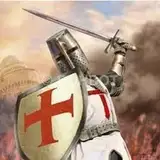
The lands of eastern Europe have long been on the forefront of war. It is here, during the Medieval era, that the Rus principalities stood valiantly against assaults from the north, south, east and west; against Viking, Byzantine, Crusader and Mongol alike. Leading them into battle would be the armored fist of the Druzhina [Dru-jee-nah]. Today let us explore the history of these elite knights from the Rus domains.
Origins
To understand the origins of the Druzhina we must first come to know the lands from which they emerged. These were the vast domains of eastern Europe. They are bounded to the North by the Baltic Sea and to the South by the Black Sea. To the west lie the Carpathian Mountains and to the Far East lie the Urals. Within these natural borders extends the Great Sarmatic Plain whose roughly 4 million square kilometers are filled with vast prairies and forests. Its relatively flat features are given character by several upland regions as well as numerous river valleys and basins which gradually drain to the north or south. In terms of natural resources it is rich with wild game, fish, timber, peat, copper, iron, and silver.
Inhabiting these lands were a variety of people who lived largely nomadic lives. For instance during antiquity, many of the inland regions were dominated by steppe tribes such as the Cimmerians, Scythians, and Sarmatians. Neighboring the horse lords were others who lived more sedentary lives along the rivers and shores. Over the centuries they would be mixed by migration, inter-marriage, and conflict. This was especially true during the period of Great Migrations in late antiquity which saw the movement of many peoples across the region. One of the major ethnolinguistic groups which came to occupy the lands of eastern Europe at this time would be the Slavs. By the 7th century, they had split into multiple linguistic branches and each regional group began to consolidate its own power within the context of their particular ecosystem.
For the most part, their various population centers were quite spread out with a common model of development involving the construction of walled, wooden cities built atop defensive terrain from which the local elite and their followers could establish control over the surrounding regions. This influence could be further extended by tapping into the major rivers through which men and goods could flow more readily. But they were not the only ones to recognize this. Many northmen from the Baltic and Scandinavian regions made their way south across the great rivers to trade, raid, and seek fortune. These would slowly mix with the local Slavic and steppe tribes of the region. According to the 12th century records of the “ Primary Chronicle” the foreign Varangians were even invited to become overlords. Much academic debate surrounds this topic and the issue is far from settled. However what is clear is that either by conquest, diplomacy, or gradual integration the two would merge around the 9th century AD to become the group we now refer to as the Rus. But again we must remember that such labels are modern conveniences which would have meant little to the people at the time.
Returning to the legendary founding of the Rus, the “Primary Chronicle” claims that around 860 AD, a Scandinavian man by the name of Prince Rurik came to rule the region of Novgorod. He brought with him many noble followers and a body of loyal huscarls. According to the story, it is these men and those who followed in their footsteps to guard the leaders of the Rurikid dynasty who would eventually become known as the Druzhina. In reality however it is highly likely that units of proro-druzhina already existed in some form. After all, the practice of powerful men surrounding themselves by retinues of elite household troops can be seen across the world and already had its seeds in the region as far back as the Germanic tribes of antiquity. That being said, there are certainly some distinguishing characteristics of the Druzhina which made them stand out from their peers.
We can begin in the years of their infancy. Some clues as to their role can be gleaned from the term Druzhina itself. Coming from the root ‘drug,’ meaning ‘friend,’ they were a Prince’s closest companions whose bonds were interpersonal and not bound by oaths of fealty or military service as might be seen in the Medieval west. The position was not hereditary and a Prince could invite anyone into his Druzhina based on merit, skill, loyalty or bravery. Likewise these companions were free to refuse or to leave whenever they desired. They remained because they wanted to remain. In exchange these men would often be fed, clothed, housed, and armed by their Prince. One Arab visitor who encountered the Rus during this period reports the following:
"Residing on a huge throne together with forty slave girls, [the prince] mounts his horse without ever touching the ground; 400 ‘bravest companions’ live in his ‘palace’, ‘men who die with him and kill themselves for him’."
This emphasis on their martial devotion was important. At this point the Druzhina acted primarily as a bodyguard to their Prince and would function as the reliable, armored core of his host in times of war. Yet this was not their sole purpose. Naturally such musclemen soon doubled as an enforcement and tax gathering body for the various leaders of the Rus principalities which would emerge in the 10th century. These territories were loosely managed, had few defined borders, and were constantly feuding with their neighbors. In this environment a ruler’s authority only extended so far as they could actively enforce their will. The armed Druzhina were thus the instrument of that will.
Over time however the land of the Kievan Rus would become more organized and the role of the Druzhina correspondingly became more complex and institutionalized. By the 11th century each Knyaz, or Prince, ruled over their Knyazhestvo, or principality, with the help of a 2 tiered Druzhina. The senior Druzhina consisted of the noble Boyars and their closest retainers. These men were powerful figures in their own right, often from the aristocracy, who filled the highest levels of a principality’s administration. In combat they acted much like the Druzhina of old, representing the small but elite bodyguard of the Prince. The junior Druzhina meanwhile consisted of lesser nobles and elevated common folk. They were more numerous and thus could be found filling the lower rungs of power both on the civil and military side. For instance this group collected all of the non-combat personnel into a more domestic retinue and were responsible for other essential things - like logistics, civil administration, and estate management.
For our purposes, however, we will be more interested in their manifestation as a military unit. Let us therefore turn to a discussion of their equipment in battle.