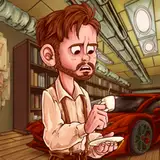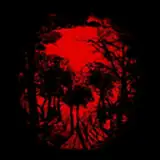

Many people do not understand the fine line between copying and inspiration in art. Sooner or later, every artist begins to ask the eternal question:
Where is the boundary between using an illustration as a reference and copying or stealing it?
Let’s quickly break this down, it's simple. But first, some important definitions. We are considering the terms in the context of the creative art industry:
Copyright – the legal protection of an author's rights over their work and full control over it;
Plagiarism – the act of claiming someone else’s work or idea as your own without giving credit;
Theft – the use or appropriation of someone else’s work without the author's permission;
Copying – the exact reproduction of someone else’s work without any changes;
Inspiration – a creative impulse received from an external source that motivates the creation of new work;
Reference – an example used to create one’s own work.
Now, let's formulate a general thesis explaining the difference between theft and borrowing through inspiration:
Copying or stealing an illustration is a clear repetition of someone else's work without changes or with only minor modifications. Using an illustration as a reference or source of inspiration means taking ideas, elements, or the style of the work to create something new and original.
To better gauge the extent of borrowing someone else's work in your art, you can analyze it by asking yourself a series of questions:
How similar is my work to someone else's?*
How many elements of someone else's work (composition, palette, idea, details) have I used in my art?
How much have I reworked the original reference?
Have I added something of my own to the work?
Can the source of inspiration be recognized just by looking at my work?
How would I feel if someone else did the same thing with my work?
If answering these questions makes you feel uneasy, I suggest re-evaluating your understanding of the terms "reference" and "inspiration."
Plagiarism and theft are bad, but admitting your mistakes is good! Every artist starts their career by copying because, to create something original, you first need to gain experience and develop an eye for art. This is a natural part of learning, and there is no shame in it. The most important thing is that the artist understands why they are making certain choices. Be mindful of where someone else’s work ends and where your original idea begins.

To avoid accidentally stealing someone's work and instead use it as a reference, follow these steps, which essentially answer the questions you asked yourself earlier:
Analyze the main elements of the chosen work. Break it down into key components (composition, color palette, shading, dynamics, idea, style) and understand how these elements work together to create the desired effect.
Don’t copy, rework. Be inspired by specific aspects of the work, but don’t replicate them directly.
Combine references. Use several works as references, mixing and matching elements from each. This will help you create something new.
Add something of your own. Adding your own secret ingredient will definitely make your work unique. This could be your personal style, an idea, a technique, or something else.
Study and learn. References are meant for this purpose. They are learning materials to help you develop your skills, not for direct borrowing.
Swiper, no swiping! Be honest and don’t deny the use of references if asked. Crediting sources can help other creators as well!
Let me show you an example of my work with references. Let’s take a phone wallpaper I drew for September as the basis. Everything is explained on the image:

In each reference image, I only take one or two elements, which I then use in my own work. The color palette, composition, idea for the background, inspiration, humor, or even a fragment of an object—these are all like puzzle pieces. When they pass through a creative mind, they are assembled into something new and completely unpredictable! The most fascinating part is that even if the elements remain the same, changing the primary (the creative mind) makes the result impossible to predict, because it will always be something fresh and unique!
I believe that everything has already been invented, and it’s up to us to recreate something by interpreting material from the past through the lens of the present. It may sound complex, but in reality, it’s quite simple.
Don’t be afraid to imagine and create—just believe in your abilities and strength. Truly.
Yungon
2024-09-27 22:28:35 +0000 UTC