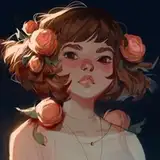
This month, I want to share the process for my mountain trail painting! I think it’s a good example of how I paint imaginary landscapes, as well as implement textures from images and brushes.
Here’s some information about this process video:
It has been sped up by 200%, so 2 times the original speed.
This painting session took me a bit over 7 hours, split up into multiple sessions.
I edited the process into three parts. This is part one of three!
I mostly used the hard round brush from my own brush set to paint this. I also used a lot of brush & smudge combinations to paint and then soften edges. The smudge tool I used the most was the scrappy smudge brush from Yuming Li’s brush collection.
This is painted in Adobe Photoshop. You can replicate a similar workflow inProcreate, with the exception of the gradient tool and the number of layers used!
Here are some helpful resources that can help understand this process in more detail:
Environment essentials: this tutorial breaks down my process for drawing environments into the most basic and essential steps, and especially talks about how I layer my detail from front to back - similarly to what I did in this painting process!
Drawing environments in Procreate: if you’re curious about how you could translate a process like this one into Procreate, this is a great video to check out!
BLOCKING IN MY IDEA
In my mind, I pictured a character walking down a winding path that leads up a super steep mountain. In order to capture that, I start with a simple sketch, which is really just about figuring out the basics of what goes where. Once I have that down, I start blocking in the basic shapes and colors. Gradients are really important for this, because in order to capture a sense of scale, you really need to see that atmospheric perspective and that gentle fade to softer, more blue hues. That’s why I start with a gradient that fades from blue to green and block in the elements from there. Getting the path right is extra important because it leads the the eye around the image! At 2:33 minutes in, I start painting that on a separate layer. Once I have that down, I feel like I got the essential aspects of my painting in place. I’ll figure out the rest later!
ADDING TEXTURE AND DEPTH
Currently, my favorite technique for adding some texture and depth is to use a combination of the smudge and brush tool. This basically allows me to paint in harder edges with the brush, and then soften one of the edges with the smudge tool, which blends it in nicely. I found a smudge tool called ‘scrappy smudge’ that came with Yuming Li’s brush set that’s ideal for this, and I use it a lot in this process! You can see me use it at 6:02 minutes in, by painting some brush strokes inside of a lasso tool selection and then immediately smudging one edge. But it’s basically something you see me do all throughout the process because it’s just such a great way of softening the colors while introducing some texture as well!
PLACEHOLDER CHARACTER
I know that I want to add a character to this scene, because the vibe is all about going on a long and arduous solo journey. But I’m not sure how they will look or what size they’ll be. So I just add a placeholder: a simple stick figure that I block in on a separate layer about 20 minutes into the process. This ends up being more challenging than I expect, though: I change the character a ton of times throughout the process, all the way to the very end! I guess that’s the benefit of having it on a separate layer: I can always change it as I go.
I hope you enjoy it - part 2 and 3 are coming right up!
Loish
2025-04-28 11:38:00 +0000 UTCMizidora
2025-04-24 13:55:03 +0000 UTC




![gal ha had[The Sir]](https://nokimo.com/istorage/53465.jpg)