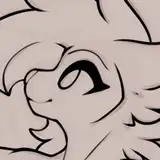
You may be wondering what I’m holding. This is a fossil I discovered earlier this year and it is that of a Rhamphorhynchoid facial impression! This comes from the late Triassic layers of The Connecticut River valley and it’s the first evidence we have of Rhamphorhynchoids living in the area! It’s also jump starter a major project I’ve been working on this summer to find more evidence of their habitat.
Rhamphorhynchoids, belonging to the suborder Rhamphorhynchoidea, were early pterosaurs that lived during the late Triassic to the late Jurassic periods. They are distinct from the later and more familiar pterodactyloids, which had larger wingspans and lacked long tails. Rhamphorhynchoids are known for their diamond-shaped tail vanes and elongated jaws, often filled with needle-like teeth. These features suggest a life that was adapted for capturing fish and small marine creatures while on the wing.
One of the fascinating aspects of the Rhamphorhynchoids is their size variation; some were as tiny as sparrows, while others had wingspans of over six feet. This diversity in size and form speaks to their adaptive nature, allowing them to occupy various ecological niches over time.
The discovery of this facial impression in the Connecticut River valley is indeed groundbreaking. Previously, most evidence of these creatures has been found in Europe and Asia. This discovery not only extends our knowledge of their geographic distribution but also provides us with a glimpse of their morphology and, possibly, behavior. Facial impressions, which are relatively rare in the fossil record, can offer unique insights into the soft-tissue structures of ancient creatures, giving scientists the chance to infer aspects of their diet, sensory capabilities, and interactions.
The presence of Rhamphorhynchoida in the Connecticut River valley further paints a picture of a thriving prehistoric ecosystem, where these flying reptiles soared above ancient coastlines and inland waterways, hunting for prey and contributing to the rich tapestry of life that once flourished in this region.
As we study and analyze this incredible find, we are reminded of the ever-changing nature of our planet and the intricate web of life that has existed across eons. Each discovery, like this Rhamphorhynchoid facial impression, is a testament to the enduring saga of evolution and the mysteries that still await our uncovering.