NokiMo
Farya Faraji
Farya Faraji

patreon


Plousiadinos' Song - Late Medieval Byzantine Music

Early access to a speculative, historically informed approximation of what historical, secular music of the Eastern Roman Empire could have sounded like.

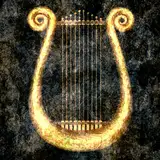
The only surviving secular piece of music from the Eastern Roman Empire is by Ioannis Plousiadinos, a 15th century Cretan intellectual who wrote an Imperial Acclamation for John VIII Palaiologos, the penultimate emperor of the Empire. The melody heard here is based on that written down composition, and I added in attested melodic motifs from medieval Byzantine liturgical music and neighbouring modal traditions. The instrumentation is all period accurate and based on visual representations of Greek medieval art.

Plousiadinos' Song - Late Medieval Byzantine Music Plousiadinos' Song - Late Medieval Byzantine Music

Comments

We do know what Ancient Greek music preceding the early Middle-Ages was like, even that of centuries directly preceding the figures you mention, so there is a possibility to approximate at least to some degree the salient aspects of early Byzantine music; I'll touch on that subject in an upcoming video essay

Farya Faraji

We don't have many notated compositions of the secular kind, but we know enough about the music theory to be able to produce plausible enough approximation. That's where Halaris comes in: Halaris' are original compositions but written in a historically plausible style that aims at capturing what historical Byzantine music would have been like, it's definitely not modern Greek music. However, Halaris goes into speculative territory far more than I personally feel comfortable with when it comes to historical reconstructions. I prefer to stick strictly to the attested facts and limit my renditions to those. Halaris on the other hand wasn't afraid to build his entire reconstructions around speculative plausibilities, which is why some reject his reconstructions as too polluted by speculative aspects, as they form a massive part of the reconstructions, more than is typically the norm in scientific music reconstructions. I personally love many aspects of his reconstructions but hesitate to present them as examples to the average curious person, because the average person don't have the musical knowledge to identify the speculative aspects and separate them from the known ones.

Farya Faraji

I'm so excited! Quite a tragedy that we don't know most about Byzantine secular music, it mustve been quite a rich and varied tradition. I am curious actually what you think about the works of Christodoulos Halaris. Many of his albums say that these are Byzantine secular songs, even though we don't know much about said tradition. Is this a case of Byzantine-themed modern Greek music perhaps? I heard one song (one of my favs, On the Grass of a Meadow, is from the 16th century). Either way, I deeply love the sound of Greek music throughout its ages and I cannot wait to hear this piece!

Eight

Considering the over 1,000 years of Eastern Roman history, from Emperor Arcadius to Constantine XI, its only surviving secular piece of music is relatively recent—closer to modern times. This makes one imagine how rich and vast the Eastern Roman musical tradition must have been and how much has been lost to us from the eras of Zeno, Justinian, Heraclius, Basil II, John II, and many others.

Luthfi Lofianda


Related Creators