(LEFT TO RIGHT)
Skuyena: The native apex predator of Trang Island may be an efficient killer, but it is not an efficient eater, and is unable to cut through bone, unlike the sawjaw predators of the Serinarcta mainland. This has allowed the evolution of a powerfully-built scavenger closely related to the mainland skuagator which often trails behind the snifflers in numbers, eager to tear through the scraps with their huge, bone-crushing jaws.
Skangler: In many ways, the physical polar opposite of the contemporary skuyena, this an extremely slender and lithe predator that is all length. This heron-like wader hunts in the shallows and along the coast, dipping its incredibly long neck underwater to snap up small aquatic animals. It often hunts in groups, with at least one animal keeping its head up to watch for predators, using their erect, flag-like tails to maintain contact.
Casquelope: A close relative of the long-ago mainland skreehonk, this is a smaller, grassland-dwelling grazer that became isolated on Trang over ten million years ago. These are now one of the most numerous and common of the island's endemic avian herbivores, and their large herds are a frequent menu item for skuyenas and death snifflers. The young are relatively large for giraffowl and are almost flightless and dodo-like as juveniles.
Dotted Nibbler: A poppit species which rafted to the island roughly seventeen million years prior, it has evolved down similar lines as the unrelated tribbybara and its descendants into ungulate-like proportions. These are common forest-dwelling animals and come in a number of species of varying coat patterns, feeding on low-growing vegetation, seeds, and fruits, but always ready to scamper away from the first hint of danger.
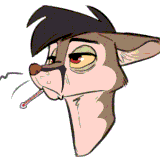
Kokopi: A tall, native giraffowl unrelated to the casquelope, this is part of a more recent immigration event. Deer-like forest browsers, the intimidating horns are their head are actually hollow and only used for display. Young are totally flightless and hoatzin-like, clambering in the trees for fruits and young leaves with long arms and hooked claws, transitioning into a macaque-like adolescent stage before becoming more elegant, fully terrestrial adults.
Death Sniffler: Finding itself isolated on Trang when there were no other predators, a population of small snifflers gradually evolved into fearsome hunters of large game that they now hunt in packs. The trunk of its trunk ancestors has been reduced to make way for a hooked killing beak, which it uses in tandem with raptorial claws to leap upon its quarry and tear at its flesh.
Pygmy Wumpo: One of the most divergent wumpo species alive, this species became genetically isolated from the mainland populations nearly twenty million years ago during the last ice age, when sea levels were still low enough for the region to be connected to the mainland. The species is noted not just for its relatively small size, but its bright red plumage, likely descended from the erythristic colour mutation that was common among the island wumpos.
Rumprat: Another poppit species which evolved from the same common ancestor as the nibblers, this is a semi-aquatic beaver-like animal that occurs in large numbers around the island's wetland regions and bodies of water. It has few defences except to flee to burrows or swim underwater, and is an extremely common prey species.
Oliver Hill
2023-02-04 11:29:00 +0000 UTC