Notes on Lyme Disease
Added 2021-12-16 05:53:51 +0000 UTCIt has been noted that a very large percentage of herbal formulations requested are to deal with LYME Disease cases. As such, it is a significant increasing sales development in Natural Health in North America and worldwide.
What I have here is a review on the top herbs effective at complete destruction of Lyme in all forms and stages of life.
Quinine/quinone derivatives are the KEY as noted here:
The researchers note that the ones with the highest antibacterial activity directed against B. burgdorgeri were Ghanian quinine and Japanese knotweed (emodin).
The active ingredient in Ghanian quinine is an alkaloid called cryptolepine, which people have traditionally used against malaria, hepatitis, septicemia, and tuberculosis.
Japanese knotweed features an antioxidant called resveratrol. Some studies have suggested that resveratrol may have anti-cancer properties, and may protect heart and brain health.
"This study provides the first convincing evidence that some of the herbs used by patients, such as Cryptolepis, black walnut, sweet wormwood, Peruvian Cat's claw (Uncaria tomentosa), and Japanese knotweed, have potent activity against Lyme disease bacteria, especially the dormant persister forms, which are not killed by the current Lyme antibiotics," says study co-author Prof. Ying Zhang.
EXTRA INFO:
Two of my Quinine/Quinone genes are anomalies that interfere with quinine/quinone metabolism and so my liver can't handle most forms of quinine/quinones. I am not 100% sure if this means I can not metabolize most sources of quinine/quinones and thereby Quinine-based Malaria medications are bad for me or if they are potentially important for me.
OR Does this give me some kind of enhanced immunity to Malaria, Lyme Disease, and other spirochetes?
Nigella sativa (Black seed) contains high volumes of Thymoquinone which is a form of Quinine/quinone that is capable of bypassing my genetic liver metabolism and makes my biology work amazingly.
"In vitro acetylcholinesterase inhibitory properties of thymol, carvacrol, and and their derivatives, thymoquinine and thymohydroquinone".
"Thymohydroquinone -- Akin to thymoquinone, thymohydroquinone is one of the most potent acetylcholinesterase inhibitors on the planet"
Will Nigella sativa also be effective against Lyme? I think it is a relevant cofactor that will ensure accelerated clearing of Quinolinic acid wastes from tryptophan metabolism.
Back to the finer details, I will suggest that you ought to at least source and keep these herbs on hand for yourself and anyone you may come across that is challenged with Lyme Disease.
Here are the research papers that speak to the lab testing that verifies these herbs are far more effective than Big Pharma prescriptions available:
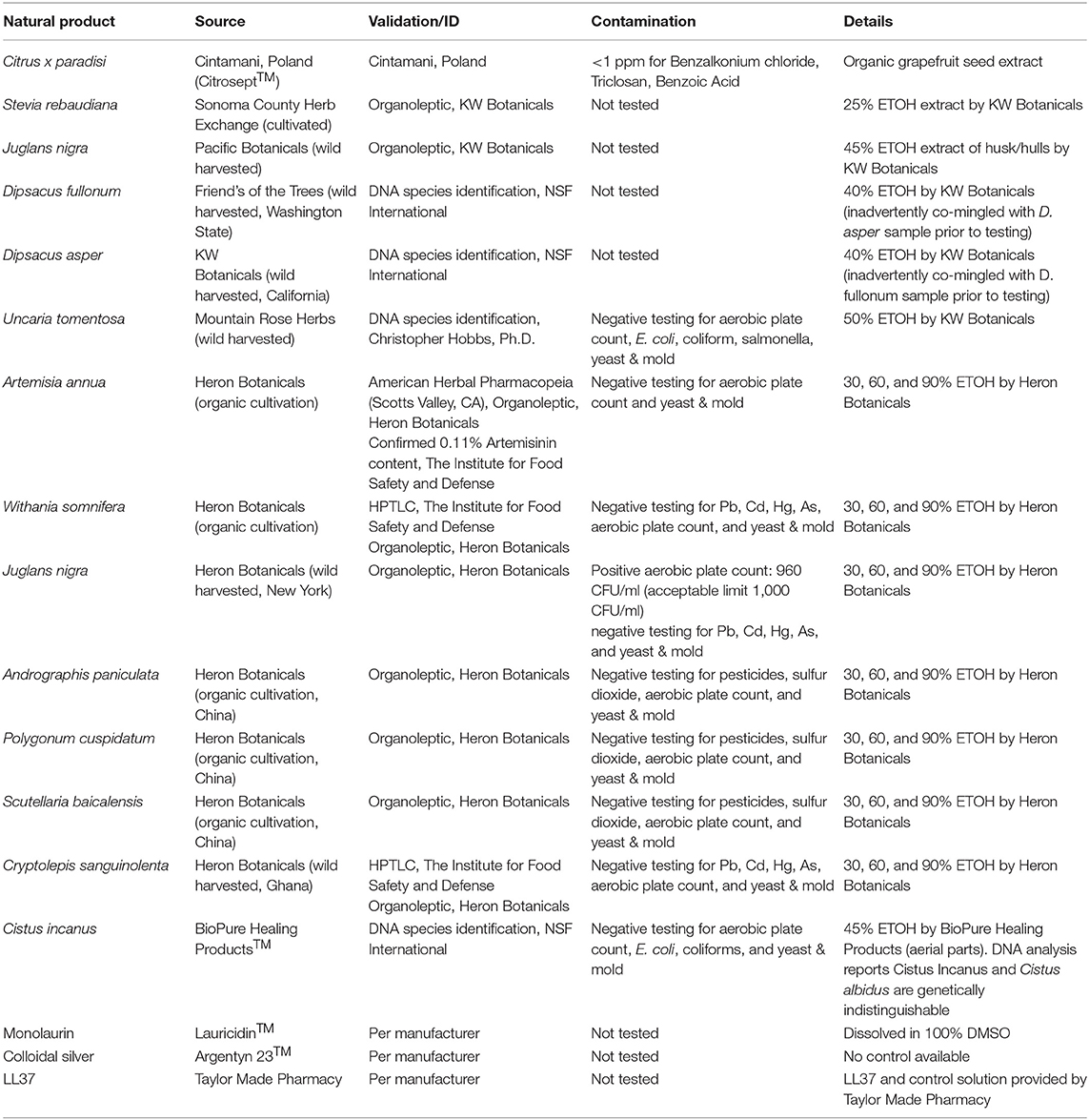
Evaluation of Natural and Botanical Medicines for Activity Against Growing and Non-growing Forms of B. burgdorferi https://www.frontiersin.org/articles/10.3389/fmed.2020.00006/full
https://www.frontiersin.org/files/Articles/492971/fmed-07-00006-HTML-r3/image_m/fmed-07-00006-t001.jpg
Evaluation of Natural and Botanical Medicines for Activity against Growing and Non-growing Forms of B. burgdorferi https://www.biorxiv.org/content/10.1101/652057v1.full
"Among them, 9 natural product extracts at 1% were found to have good activity against the stationary phase B. burgdorferi culture compared to the control antibiotics doxycycline and cefuroxime. These active herbs include Cryptolepis sanguinolenta, Juglans nigra (Black walnut), Polygonum cuspidatum (Japanese knotweed), Artemesia annua (Sweet wormwood), Uncaria tomentosa (Cat’s claw), Cistus incanus, and Scutellaria baicalensis (Chinese skullcap)."
Phytochemical and Pharmacological Review of Cryptolepis sanguinolenta (Lindl.) Schlechter. https://www.ncbi.nlm.nih.gov/pubmed?Db=pubmed&Cmd=ShowDetailView&TermToSearch=29750083
The Popular Herbal Antimalarial, Extract of Cryptolepis sanguinolenta, Is Potently Cytotoxic https://academic.oup.com/toxsci/article/70/2/245/1621660
Cryptolepis: An African Traditional Medicine that Provides Hope for Malaria Victims http://cms.herbalgram.org/herbalgram/issue60/article2597.html?ts=1582933906&signature=5ebd08146dde9b236b4db057b21c132c
Nomenclature and Taxonomy
Cryptolepis is derived from the root of Cryptolepis sanguinolenta; syn. C. triangularis N.E. Br., and Pergularia sanguinolenta Lindl. Its common name among the various tribes of Ghana include nibima (among the Twi speaking people), kadze (among the Ewe), and gangamau (among the Hausa). It is also known as Ghana quinine or yellow-dye root. Although the aqueous extract has a bitter taste, this name is probably based on the common use of the plant as a substitute for the anti-malarial alkaloid quinine, and should not be confused with it. Some decades ago, quinine was the drug of choice for the treatment of malaria, and is still in use in areas where there is resistance to chloroquine malaria drugs. In keeping with common practice with popular medicinal botanicals that do not have accepted common names in English, the common name cryptolepis, based on its Latin generic name, will be used throughout this paper.
https://en.wikipedia.org/wiki/Cryptolepis_sanguinolenta
NEXT is to source this Cryptolepis sanguinolenta in large volume:
The only available source that I have come across for a decent price is https://herbies-herbs.com/cryptolepis-p12769 for $98CDN/lb retail.
Black seed oil can be found here: https://www.buieholisticherbs.com/products/buie-black-seed-oil
The rest of the herbs can be found on Mountain Rose Herbs and Etsy (search for organic and/or wild-harvested, there should also be Lyme kits available on Etsy. Search for one with Teasel and Japanese Knotweed, follow the instructions on description or sent product. Teasel and Japanese Knotweed are herbs local to New York state that can be found upstate when in season).
It certainly appears relevant to include high dose resveratrol for any Lyme protocol.
As it is to make a more complete protocol formula is to also include these herbs, as noted in the research papers above:
Among them, 9 natural product extracts at 1% were found to have good activity against the stationary phase, B. burgdorfei culture compared to the control antibiotics, doxycycline and cefuroxime. These active herbs include Cryptoplepis sanguinolenta, Juglans nigra (black walnut), Polygonum cuspidatum (Japanese knotweed), Artemesia annua (Sweet wormwood), Uncaria tomentosa (Peruvian Cat's claw), Cistus incanus, and Scutellaria baicalensis (Chinese skullcap).
I hope this is extra helpful in your efforts to deal with Lyme Disease and also enables you to be in the position of helping others with a holistic approach.
SIDENOTES: Please start LOW and SLOW in dosage and approach to see how you respond to each herbal medicine. Remember, detox is not always comfortable and you must have faith in the process. If something seems wrong intuitively, back off for a while. It will need to be done in phases: Chase bacteria out of biofilm, then kill it. On average, this is typically a period of 2 months of each phase, though listen to your body and respond intelligently.
IMPORTANT NOTE: You may very well have to move out of any major city (New York City, Los Angeles, Atlanta, London, etc.) for a full recovery from any autoimmune disease. See this study: https://link.springer.com/article/10.1007/s12026-016-8825-7
Sunlight and your general light environment (including artificial blue light throughout the day and especially after sunset, which disrupts melanopsin function) also plays a major role in the immune system and any autoimmune disease.