It Is Wednesday: Endgame(s)
Added 2024-09-25 17:33:19 +0000 UTCIndustry continues to be a mess, so this week, let's talk game design theory -- and also give you an update on The Shadow Over Cyberspace.
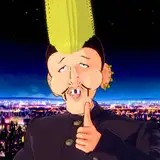
While waiting for the last background art to come in, I've been busy writing all 15 endings. "What the-- fifteen endings!?" you might be saying. And it's true! Because we need distinct writing for all of these variations:
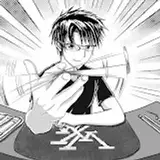
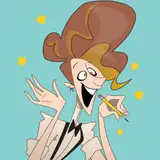
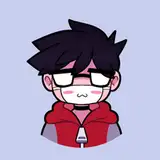
4 Solo Endings: Niara, Hector, Aza-chan, Yosuke (with "pulled back from the brink" vs. "gave in to temptation" on each)
2 Team Endings: Team Chaos (Niara/Aza), Team Order (Hector/Yosuke)
4 Team+ Endings: Team Chaos adding in Hector, Team Chaos adding in Yosuke, Team Order adding in Aza, Team Order adding in Niara
4 "Diagonal" Endings: Niara/Hector, Niara/Yosuke, Aza/Hector, Aza/Yosuke
1 Quad Ending: All four recruited to the same team
1 Failure Ending: Couldn't sway anyone to your side
1 Cthulhu Ending: Decided to let Cthulhu win
...and because I am bad at math that's actually 17 endings, not counting variations.
But what is an "ending," exactly? I've got two schools of thought here...
Arcade Spirits and New Challengers both end in the same place, with the same ultimate resolution -- but they're highly customizable about how you reach that ending, who you ally with, what help you seek along the way, and so on. It's a singular story and told from start to finish but the end reflects your choices. There are achievements for different endings, but ultimately they're all pretty similar. You're not really meant to "collect 'em all" but some folks enjoy that, so hey!
Penny Larceny has wildly different endings, with whole chapters unique to each of the five main paths through the game, plus a bonus ending. Here, you're meant to "collect 'em all" because that enables the bonus ending that ties everything up. It's wildly nonlinear and each experience is very different from the last until the grand finale.
I think both approaches have merit. One is good for longform stories, where you can say "this is MY ending to MY story and I'm happy with how things turned out." The other is good for shorter, more replay focused stories, where you can say "I wonder how things would be different if...?"
For The Shadow Over Cyberspace, I'm going with kind of a hybrid. The story is fairly linear, just like Arcade Spirits, up to the finish line -- and then you choose who you want to bring with you into battle, based on whose trust you've earned along the way. Each combination has a different outcome, but the story leading up to it is the same. So I encourage players to drop a save before the finale, so they can see what the different futures lie in store for this world.
Will I return to the Penny style in the future, episodic and with extremely different paths? Maybe. I'm pondering my next game after this. But with my health situation and the increased difficulty of doing really complicated game dev, I can't say for sure. To be continued.
So, what are your favorite narrative games, and how do they approach choices and endings? Do they save the major branches for the end, or is every experience wildly different?
Comments
I've been a gamebook reader since long before I had a computer, so I've given a lot of thought to this question over the years! As a general rule, I have an aversion to "one obscure true path to victory, but a million frustrating ways to die" and "branching plot with no internal logic or consistency." Most other shapes have a good chance of entertaining me, though. I like to have meaningful choices and also feel like there are some logical rules governing the virtual world I am engaging with. The recent Lone Wolf: The Huntress trilogy by Jonathan Stark does some really interesting and original things -- I highly recommend it. A real challenge in interactive fiction and games is balancing a feeling of "real stakes" with actual interactivity -- when you have "good" and "bad" endings, the "bad" ones frequently have less emotional impact because they don't feel like the real intended conclusion to the story, just detours along the way there. In the Huntress books, there are some events that you can change (with superhuman effort), or which you can accept (leading to some emotionally impactful results), but either way it feels equally "real." That's a hard feat to achieve. The final volume is also very clever indeed from an "endings" perspective, but to say more would be to spoil it. I really enjoyed Arcade Spirits because it provided types of plot variation that wouldn't really be practical in a print-based medium -- it effectively demonstrated to me how the visual novel is a distinct form from the gamebook. I also enjoyed Arcade Spirits: The New Challengers, but I did feel that my enjoyment suffered a bit from understanding what structure to expect, because the choices had less tension once I realized that the ultimate outcome would likely not be drastically impacted (though I still enjoyed the character development and world-building along the way; my overall reaction was positive). I am currently on holiday away from my gaming PC, but I am looking forward to the surprises Penny Larceny has to offer when I get back.
Demian Katz
2024-09-26 19:08:27 +0000 UTC