Sicko Transbians: RCBG and the importance of bad representation (a short interview for "Lesbian With Teeth")
Added 2025-07-02 14:00:27 +0000 UTCAt some point within the last decade, queer artists (and, indeed, marginalized artists as a whole) were all conscripted into an informal, community-wide department of public relations. A silent consensus seemed to have been reached that in addition to any other metrics, queer art was first and foremost to be judged on the basis of the all-important question: is it good representation?
The criterion of ‘good representation’ was as ill-defined as it was omnipresent, a nebulous standard that seemed suspiciously orthogonal to quality. Portrayals of queer characters and queer life that were uninspired, clean-cut, palatable and crucially, respectable, could be championed and lauded even if the underlying narratives were unchallenging, banal, and frankly more than a little trite. Meanwhile, any art that dared to portray the messiness, explore the viscerality, or lean into the inflammatory nature of queer depictions that disrupted and denied the reductive tidiness patriarchal norms seek to box us into could be denounced as ‘bad rep’, for failing in its true purpose of being visible without making anyone beholden to the heterosexual regime uncomfortable, heaven forfend.
This fixation on ‘good representation’ has ironically not even selected for particularly representative art. Instead of reckoning with the reality of queer existence in all its difficulty, complexity, and richness, a climate of self-censorship has been encouraged for the supposed intangible benefits of proving to patriarchal society that we, too, can be normal. Not only is this a stultifying edict, but it has resulted in a bizarre hyperscrutiny of queer artists, whose works are often denounced and criticized with an intensity and according to standards that are not applied to their cishet counterparts, paradoxically punishing marginalized voices for daring to give voice to their experiences!
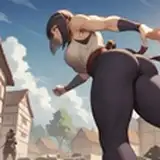
With this preamble, Talia and Beth would like to discuss their approach to their joint project of messy queer fiction that ruthlessly depicts and satirizes some of the less-savory aspects of transfem sociality and community, in their serialized work called (yes, really) Ranked Competitive Breast Growth. They go over their inspirations, their approach to crafting imperfect and severely flawed characters, and why it’s important to acknowledge some of the uglier sides of transition journeys and queer relationships instead of constantly retreading the familiar ground of linear self-actualization, where queer people go from “miserable and closeted” to “out and happy”.
So, are we asking for trauma porn?
T: There’s a difference between patriarchal propaganda that depicts queer existence as inherently unfulfilling, miserable, and destined to a painful end, and actually crafting stories about queerness as-it-exists in a world designed to snuff it out.
B: I’d go so far as to say that we're ideologically the opposite of trauma porn here in the sense that rather than fixating on the absolute tragedy of troubled queer existence, by showing the ugly bits and examining why they happen, properly, we can demonstrate that the trauma isn't just avoidable, but a system of violence that has to be maintained on purpose.
What is Ranked Competitive Breast Growth actually about?
B: Ranked Competitive Breast Growth is about irony poisoning, which is subtly distinct from just being a work that's irony poisoned.
T: It’s also about cope. Specifically, how queer people cope with existing in a world that is constantly telling us we shouldn’t exist, that maybe we’re not really queer after all, that sure we’re unhappy but everyone’s a bit unhappy, everyone has to do things they’d rather not, and can’t you just put up with what we all have to put up with? If you’re still queer and miserable, why not just retreat into the fiction that you were never queer at all and do what’s expected of you?
What gave you the idea for RCBG? What inspirations are you drawing from?
B: The choice of making it about Ranked Competitive Breast Growth draws on a lot of stuff I've been joking about for a while, “strategies” for growing breasts for instance, and specifically the idea of a “progesterone meta” is based on the variety of tips people give about prog, which was on my mind when I started writing as I was in the process of figuring out prog dosages. Then, the idea of making it about trans women all trying to convince each other that they're cis came from a bunch of different sources–some posts about Death Note’s mindgames, some of my own recurring bits about various contrived excuses to transition without being trans–and once those basic ideas were put down, the fact that I'd engineered a perfect arena for satirizing trans community and repression just hit as I was thinking about writing it.
T: Personally, I’m drawing on a deep well of frustration that comes with existing as a brown girl in queer communities that are ill-equipped to talk about racialization, but also don’t really talk about queerness, feminism, and the basis of our oppression that well either, while mangling a lot existing scholarship—both good and bad—to justify truly absurd moral positions. The conceit of RCBG isn’t that far off from how a lot of queer spaces actually operate, in my experience making a show of progressivism while preserving existing hierarchies under the cover of these tortured political stances.
What makes RCBG ‘sicko lesbian’?
B: Fundamentally, sicko lesbianism is about letting lesbians act on their desires and own them. This is a theme that RCBG is constantly dealing with, whether we’re looking at the failure to do it through repression, or the various mental gymnastics characters go through to justify doing the things they want. A big part of it is that regardless of any excuses provided by the competition and contrived excuses cooked up by the characters, they still choose to do everything. They’re participating willingly and can quit at any time.
T: To me, our most boisterous character by far, Laura, is exemplary in terms of acting on her desires, quashing her opposition, and utterly dominating the norms and customs of her social space through any means necessary. She has secured for herself everything she wants and needs, but continues to struggle with internal questions that she is studiously avoiding the answers to. This interplay we have between characters who act on their impulses emphatically while still refusing to fully interrogate their own desires results in fleshed-out people who are just bad at doing the best thing, both for themselves and for the people they love, which is what makes them a joy to write.
Why is it important to you to portray the imperfections of queer communities and the struggles to accept oneself?
T: People barely fucking talk about racism in queer communities, for one thing! Representation-oriented books especially gloss the realities of existing as a non-white queer in predominantly-white queer cultures, and it’s a topic I’ve really enjoyed unpacking and depicting. Accurate and unnerving portrayals of racism are difficult to nail in general, because scenery-chewing violent racists are simple and also frankly an easy way out, while texturing a sympathetic character whose motivations are understandable but ultimately cowardly and self-serving is harder, but more accurate and more real in terms of how real-life racists embedded in our communities actually operate. They think they’re doing the best they can and trying to be good people, but ultimately aren’t willing to challenge norms or sacrifice any comfort, and are therefore damned by complicity. I’m really happy I’m getting the chance to actually explore a storyline like this.
B: I think it’s important to show the imperfections in an honest way, because there are serious issues with online queer communities–as with any online communities, to be clear–and the idiosyncrasies of queer culture have led to a perhaps undeserved reputation for inclusivity and progressive values which fails to play out in real life when it gets taken for granted rather than being understood as an ideal to work towards.
The structuring of RCBG is in part designed to satirize some of the mechanisms of transmisogyny in queer spaces, you know, by enforcing a rule that trans women aren’t allowed in the competition and putting the responsibility for identifying and ousting those trans women on the participants. You might then say “but wait a minute, the participants are all implied to be at least under the transfeminine umbrella, if not outright trans women.” This incredible self-own is of course entirely on purpose, as niche transfeminine spaces very much do partake in transmisogynist patterns of toxic behavior! This, in fact, is how trans women get cut off from their support networks in real life, especially trans women who are racialized.
Comments
Reading a ton of queer literature has just been so rewarding for me, and being more active in queer spaces has helped me find truly fulfilling communities
Morgan Braymer
2025-07-02 20:06:37 +0000 UTC"Aren't you tired of being clean-cut and presentable? Don't you just want to go sicko mode?"
Natalya Chernyshevsky
2025-07-02 14:58:15 +0000 UTCI don’t know exactly how I feel radicalised, but I do. Holy shit. Yes. (and seen)
Diana
2025-07-02 14:53:46 +0000 UTC