Writer's Blog - Issue 3 (Words of a Letter Flock Together - Becoming Friends with Your Characters)
Added 2020-11-15 15:00:03 +0000 UTCForeword: This issue of Writer's Blog, written by main writer Ari, details his methods of connecting with the characters in Mothorial, even during times when he wasn't writing the main script. As we move into Chapter One and properly introduce our leads, we thought it would be a good time to explore the ways in which an author becomes acquainted with his main characters!
________
There is a Portuguese word that I’ve heard used in the context of reading quite a lot. That word is saudade: a feeling of longing, melancholy, or nostalgia. You know that feeling you get when you finish reading the last page of the series you’ve been enjoying for years, knowing that this was the end, the last time you would get to see these characters? That feeling of an almost joyful grief, in the context of reading, is saudade. When I finish a book I’ve been really enjoying, I tend to become very attached to the characters, and feel like I’ve genuinely lost a friend. That’s a feeling, as a writer, we can only dream of giving our readers.
But the feeling is even more potent as a writer; you aren’t making your way through a story on a cozy afternoon. You are pouring your heart and soul into these characters, getting to know them on an intimate and emotional level. They become not just your friends, but your children. You care deeply for them. But it’s an inherently twisted relationship, as well, because you’re not their parent. You’re their god - as long as you’re spending time with them, you’re finding ways to introduce conflict and make their lives more difficult. Where would the story be, otherwise? You take these textual children to the darkest of places, both physically and emotionally, and navigate them through it, knowing some might be lost along the way. When you read about a character dying, you will miss them. When you write about a character dying, you have killed them. When the story ends, you are giving them the freedom to relax and live their lives, having finally escaped your devious interference.
But this isn’t a bad place to be. As a storyteller, it is the only place to be. How can your reader care about your characters if you, the creator, don’t love them? And not just the good characters, either; a good villain should be someone you love to write about, or at least, love to hate writing about. You are trusting your audience to take a journey with these people, whether human or otherwise, through pain and growth and loss. You’re asking a lot of them.
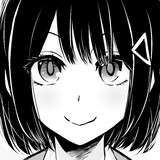
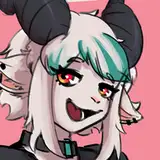
When I first created Ava and Ackerley, having them be drawn by another person made a profound difference for me. It almost made them feel more alive by default, because I could envision them doing something, and then witness them actually doing it. That’s a profound feeling. But as I wrote ahead, further and further into the story to places that wouldn’t be drawn for literal years, I had to move away from their depictions and imagine them in my head. By this point, I feel genuine love for my main characters, and even side characters who I intended to appear only a couple of times have grown into major players in the story. So how did I find this degree of love? I asked myself what it was I loved in the people I hold dear in my life. What about them, and what I knew about them, made their friendships feel as close as they do? Well, for one, spending time with them makes a huge difference, of course. It can be hard as a writer to always have something to say in the story, but that doesn’t mean you can’t spend more time with your characters anyway. For me, that meant writing character sheets, “doodling” little scenes and interactions, and exploring them in other contexts (in my case, music).
My character sheets are pretty straightforward. I basically just explored their fears, goals, wants and needs, allowing myself the joy of improvisation and knowing I could easily change things later. In the end, a lot of what I wrote in the original character sheets three years ago is still true now. Here are the original Ava and Ackerley character sheets from back in the day:

I didn’t use it as a full-on blueprint; it wasn’t like I would reference back to this sheet to decide how a character should feel, because that would be controlling the scene rather than experiencing it. But by writing this stuff down, I began to look at the characters not just as illustrations, but as people, and I began to read into their expressions and understand what was going on behind the scenes. I began to empathize with them. I also wrote detailed backstories for each character, but I won’t post those for obvious reasons. Maybe one day!
As an illustrator, Izzy doodles a lot. It’s like being an athlete; you can’t just run once a week and expect to stay on top of your game. You have to keep it up, even if it’s just a little at a time. And as a writer, I find that to be equally important. It’s not every day that I feel equipped to write the Volumes, especially as the story gets more complicated and I need to think things through, but if I only write once every few days or even once a week, it gets harder to stay fresh, especially in the early days when I was just starting to understand and get to know these characters. So I would doodle; I would write little scenes, knowing they weren’t serious or going to be read by anyone. I would basically write fanfiction for my own characters, in a way; scenes that I knew never would happen, but gave me the chance to see how they would interact with one another if given the chance. Not everything I wrote made much sense or fit each character in the long run, but it was in these doodles that I developed my affection for the characters, and felt like I was getting to spend time seeing them have fun, hanging out, and not just struggling to deal with their emotional issues on crazy adventures. Some of these doodles even ended up becoming scenes in the proper webcomic script. You gotta have fun as well as challenges, after all!
The third way in which I developed my attachment to, and knowledge of, my cast was through music. Everyone has different interests, and by taking my characters out of the scriptwriting medium and moving them to another, I was able to put myself in their shoes in a headspace completely different from my Mothorial writing sessions. By now, I’ve written ballads, pseudo-musical numbers, and even drinking songs, all of which have enriched the world and characters of Mothorial, and many of which will appear in some form in the story. By writing not from my perspective as the god of this universe, dictating what happens to everyone, but instead writing as the characters, I felt a sense of connection that was distinctly personal. It gave me the chance to write in the first person, and ask questions like: what sort of genre would this character sing? What would they sing about? Would they even sing at all?
When we tell stories, we don’t do it just for our readers. We do it for ourselves, too. Even if no one else were ever to read Mothorial (though I certainly hope they do) I feel as though I have gained something tangible and permanent in the process of uncovering them. Because it doesn’t feel like you’re inventing these characters. It feels like they’ve always been there, living their lives, and you’re just peeking through some portal or behind some curtain and discovering them there. Stephen King said “You go where the story leads you,” and the more I write, the more I realize how true that is. When I first met Ava, I had no idea how complicated her mind was, or how much pain she had been through, or how potent her dreams were. But the more I discover just how real she is to me and how earnest her emotions are, the more privileged I feel to be able to join her on her adventure across Mothorial. I know when I finish writing about her life for the final time, saudade won’t even begin to cover it.
May the Elder guide your path, and the Mother warm your den.