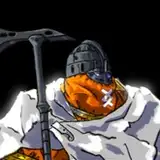
Writing is not something to be done lightly.
To inscribe words or thoughts in stone or fired clay for all posterity is, in many ways, an act of violence against the ephemeral. Knowing what to leave out is just as important as what is recorded, for every mark becomes an eternal scar—inviting future generations to feel only a pang of what once lived in deed and thought. And to try to press such experience into mere signs in clay is, at best, inadequate—some would even call it a crime.
For who among mortals can truly decide what deserves to be remembered?
It was the proud elves, ever obsessed with legacy, who brought writing with them to the shores of Tenehu. Finding the bookkeeping required for governance too tedious for beings of such noble blood, they elevated select human slaves who showed promise in such matters. In return, these humans were spared from manual labor—though their work was no less excruciating.
Outside the great school in the holy capital of Hurriaä, there are few true places of learning. But in Hurriaä, a great number of scribes are educated. Some are employed by the Serpent King himself; others are given as valuable gifts to foreign princes, in whose service they train students from among the prince’s own subjects. These lines of tutelage stretch far back in time. Some principalities even boast of having their own “schools,” though none compare to the one in the capital.
To become a scribe, one must pass the writing exam: to carve the first twelve verses of the Kurilusa into their own skin as it is read aloud—without a single error. Because of the grueling nature of this trial, it is not uncommon to see scribes bearing scars upon scars across their entire bodies. To prevent cheating, examinees are never told in advance whether the Kurilusa will be read in Pazuril, the “Tongue of the Highborn,” spoken by elves, or in Tenelu, the vulgar tongue of the masses—the “Tongue of Tenehu.” Sometimes, the exam will shift between tongues mid-verse, just to truly test the candidate.
And yet, students still speak in awe of the rare prodigy who completes the task flawlessly on the first try, the twelve verses perfectly arranged across his chest—an achievement destined to inspire his future colleagues.
But it is not only scribes who may become living parchment.
When especially important treaties are made between principalities, it is not uncommon for them to be carved into the flesh of the respective Ledger Kings, who then serve as living documents. Upon their death, their skin is often flayed and archived—or sent to the other prince as a sign that the contract has been broken.
Some messages are carved directly into the skin of a living messenger, who must arrive at their destination before the wounds heal and become illegible.
There are even tales of elf lords who, having lost wars, were forced to wear elaborate proclamations of subjugation or apology carved into their own flesh for all to see—a punishment of supreme humiliation.
Thus, the elves hold a dual view of the written word: to them, it is not something to be taken lightly.
⸻
Oh cruel hand, that carves in clay
The echo of a vanished face.
To sing of beauty long departed
Is to bind the wind in chains.
Better the silence of the tomb
Than songs that weep in vain.
—The Lamentations of Prince Tukumuliuma
Didrik Magnus-Andresen
2025-08-05 17:18:23 +0000 UTCIreland coyote
2025-08-04 14:58:23 +0000 UTC