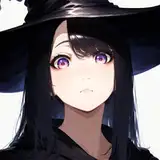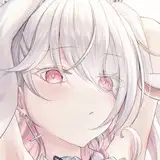
Due to their low population, elves only take one partner at a time, as anything else would seem an extravagant excess. Elven princes are already known to go to war against their neighbors with the goal of stealing a wife for themselves—especially if she has borne a child. Having multiple partners is seen as tempting fate even more than they already do. That is not to say there are none who try.
But these wives are not mere trophies to be fought over. They are often the power behind the throne, using their dynastic ties to their advantage and goading their husbands into wars to avenge perceived slights or elevate their honor. There are even cases where a wife has arranged the death of her husband in order to rule as a widow. This, however, often results in unsolicited suitors arriving with such a host that their “offer” can seldom be refused.
Rarer still are the instances where deep love between wife and husband persists—not built merely on mutual ambition. Such couples may turn their village into a haven of bliss in a troubled world. But many are the neighbors who circle them like wolves, perceiving such feelings as weakness.
The elves, as a race, have lost all color and now remain completely white. Only their eyes retain a trace of their former glory, ranging from gold to white, though most have violet or red irises. Their pale skin and eyes are sensitive to the burning rays of the sun. Most often, they are accompanied by an attendant holding a parasol for shade, but in some cases, they dress in such a way that they are fully covered and can move freely by day. This is a more common sight in the city of Hurriaä, where elves are more numerous than elsewhere.
Finely wrought ornaments of gold, pearls, and gems are sought as signs of wealth and status. They prefer certain colors for their symbolic meaning. Purple, made from serpent’s blood, is extremely precious. Black represents the sacrifice of the Lord of Lords. White symbolizes his buried head and the fate of the elf-kin. Red represents their sacred blood.
A common amulet worn by elves is a representation of the Gorlet, or blood-drop beetle. It is said to be born from the drops of blood that fell from the severed head of the Lord of Lords—each drop springing to life in the form of these tiny beetles. These amulets are believed to ward off evil.
In terms of dress, elf-kin of both sexes prefer free-flowing garments of silk. This silk is woven from fine strands harvested from within the lotus stalk. These lotus flowers are said to be among the few things the elves brought from their mystical homeland. Hardy and sacred, most elves keep a small pond in their abode where these flowers grow. Some even eat the flowers, as they are known to produce a relaxing effect that drowns all pain and sorrow. However, they also bring about a trance-like state in which the eater lies as if dead, assailed by visions.
An extract or tea made from the lotus has gentler effects and is highly sought after as a pain reliever. When mixed with a drop of serpent’s blood, it becomes especially valuable, as it is also believed to aid in healing wounds.
Didrik Magnus-Andresen
2025-05-30 06:03:41 +0000 UTCMO PO
2025-05-29 23:55:11 +0000 UTCMO PO
2025-05-29 20:04:50 +0000 UTCOdinSon_1774
2025-05-29 17:59:31 +0000 UTC



























![개성인쥬스[pingkypen]](https://nokimo.com/istorage/106895.jpg)