The puzzle of the low-angle plane
Added 2018-10-31 15:09:20 +0000 UTC
I think a lot about low-angle planes. Mostly, I think about how they’re unnecessary. I’ve seen prominent woodworkers refer to them as “essential” and that’s nonsense.
Before these planes were reintroduced by companies like Lie Neilsen, low-angle models like the Stanley No. 62 were rare. They had been produced in low quantities and may have been targeted towards very specific crafts, like craftsman who flattened butcher block surfaces in kitchens and bakeries. The average furniture maker or carpenter was unlikely to own one of these planes. Plain old, standard-pitch planes handle the vast majority of planing tasks very well and these are the planes that have dominated workbenches and tool boxes for centuries.

But I’ve used fancy, low-angle planes more than once and they are a delight in the hand. Their low center of gravity gives them a solid feel against the work. They are easy to control and produce excellent shavings with little effort. I also understand the argument about switching out different blades to achieve different cutting angles. Being able to throw in a 50° blade and instantly have a high-angle smoother for difficult grain is attractive.
So even though they are (most likely) superfluous, I wouldn’t mind having a nice low-angle jack plane or smoother. But here’s where we run into problems. These things cost a lot.

Obviously, the Lie Neilsen low-angle planes are expensive; that company only makes expensive tools. But there are no low-cost alternatives. Sure, Stanley makes a low-angle jack, but it’s still over $100 and gets mixed reviews. And look, I’m cheap. $100 for a plane is just crazy talk to me.

I love making my own tools, and I especially enjoy making planes. So it’s natural for me make my own low-angle jack. It’s strange that no one has made this plane in the DIY space, but low-angle planes present some considerable challenges for plane-makers.
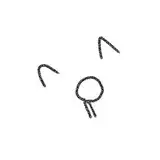
I’ve done a sketch of what I have in mind, and it shows the problems. Consider the circle and the arrow.

The circle shows the mouth of the plane and the leading edge of the bed. On a standard-angle plane, the bed is pitched at 45°and that leading edge is thick enough to support the blade during planing. This is one of the key reasons that excellent planes can be built from wood.
But low-angle planes are typically pitched at just 12°, and that leaves the front edge of the bed paper-thin. A wooden bed that thin would surely crumple under the force of planning. Large manufacturers use cast iron (or the superior malleable iron) and these materials can support the blade even at a very low angle. The average solo plane-maker will not be casting iron in his or her shop and that makes low-angle designs seem out of reach.

The other major problem is illustrated by the arrow. Most homemade planes are hammer-adjusted, which is an effective and easy-to-master method of advancing and retracting the blade. But as the illustration shows, the low angle of the blade leaves its back end pointing straight at the tote (rear handle). There’s no way to get a hammer in there to adjust the iron. Manufacturers solve this problem by using custom-machined mechanical adjusters. This is another move we won’t be making in our basements and garages.

Of course, a master infill-maker like Conrad Sauer could surely make a good low-angle plane, but his advanced metal-working skills are beyond most of us and any plane he produces costs more than any Lie Nielsen by a factor of 10. For all his genius, Conrad can’t save us. We’re on our own here.

The fact that these planes seem so out of reach just makes me more determined to make one myself. The problems are considerable but I’ve got a few ideas.
First, the bed.
I don’t see any species or arrangement of wood that will fix the problems inherent in a 12° wooden bed. A different material is called for. I plan on inserting a small piece of aluminum into the bed prior to milling the final angle. Aluminum is easy enough to work in the home shop, and modern grades of the metal offer excellent hardness and durability. Brass or bronze would also be good choices. Even cut down to 12°, aluminum should be more than strong enough to support the iron. It does oxidize, but I keep my planes oiled, so I’m not very worried.
Next, adjustment.
I’ve spent hours and hours fiddling around with off-the-shelf hardware, looking for an adjuster that can be made from common parts. My results have been less than inspiring. I know that Veritas makes a nice Norris-type adjuster, but just one of these costs $25.00 with shipping. More importantly, this is a low-production specialty item being made by a relatively small company. Who knows how long these adjusters will be available. I want a more long-term solution.
I’m sure many of you have adjusted a wooden plane before. It’s easy. Tap on the back of the blade to advance it. Tap on the heel of the plane or the top of the toe to retract it. Many planes even include strike-buttons to keep you from mashing the wood with your hammer. But these moves won’t work with a low-angle plane where the iron is so close to the tote. Taping the iron is impossible. Tapping the wedge is equally difficult.
First, I’ll replace the wedge with a screw-cap. I like these better anyway. You can dial in the exact tension you like by twisting the screw and the cap doesn’t loosen no matter how hard you whack the heel of the plane. So there’ll be no need to tap the wedge.
Then there’s advancing the blade. We can’t hit it with a hammer, but maybe we don’t need to. We retract the blades in our wooden planes by tapping the heel. The plane effectively moves around the iron and the iron moves back relative to the plane.
Why not just do that in reverse?
If we tap the toe of the plane (on the end, not the top) the plane should do the opposite. The iron should advance.
I tried it yesterday with an old jointer. It worked great.
So, with these issues worked out, building the low-angle jack at home should be relatively easy. Right?
Stay tuned.
Comments
And it's cheap!
Rex Krueger
2018-11-02 19:02:04 +0000 UTCLower-case s, as in Blacksmiths. For about 4 months now.
Rex Krueger
2018-11-02 19:01:55 +0000 UTC1095 steel is very good for heat treating. The Marine K-Bar is made of this steel as is the USAF Survival Knife.
Jim Williams
2018-11-02 17:47:31 +0000 UTCSee? You study with Smith's.
James Boatright
2018-11-02 13:29:52 +0000 UTCJames, you seem to already know a lot about steel, so I'm not sure you need my input. Still, I think that O1 is an ideal choice (although "plain" steel generally refers to low-carbon steel and O1 is a high-speed steel; it's just semantics). 3/16 is my preferred thickness; thicker than a standard Stanley iron, but thin enough to actually sharpen. I've used 1095, which is cheaper, with excellent results. Also, I'd say that 20 inches will get you 4 blades for low-angle or krenov-style blades. I would avoid leaf-spring unless its free. It often has micro-cracks that don't reveal themselves until you've done all the work. The smiths I study with use it sometimes, and they have a lot of horror stories. Good luck!
Rex Krueger
2018-11-02 10:29:12 +0000 UTCSo, I've been trawling on line tool steel dealers. What thickness do you think is ideal for these low angle planes? I've been seeing 2 inch by 20 inch by 3/16 for around $25 in O1. I'm thinking that a "plain" steel like that with only a touch of Mg designed for oil quenching that I can temper in the toaster oven makes sense, and you ought to be able to get 3 blades out of that. The alternative is to try the leaf spring trick. If you cut it, he at to austintite temps, flatten with a hammer, re heat and quench, the various sites I have been reading suggest the outcome is good, and truck springs can be had for a couple of bucks at salvage yards...
James Boatright
2018-11-02 05:29:55 +0000 UTC