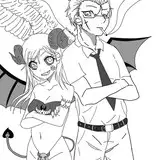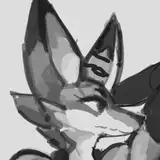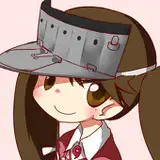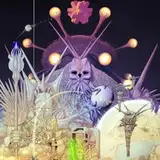
Thanks to Seth for the commission work, I very much appreciate it, especially at this time of the year 🙌
In Seths words, here’s a bit about the Achoi below.
“INTRODUCTION
Among the most prominent members of the Consoj Alliance, the Achoi are a remarkably outgoing, almost flamboyant, species who excel in the forums of diplomacy and inter-species relations. Though somewhat later to achieve interstellar travel than the Valnur and Eikran, they were still early explorers who made contact with a number of different entities. Today, they are widely regarded as the most inclusive and open people of the Consoj Alliance, sometimes too much so for the tastes of the more conservative elements thereof.
LATE RISERS – THE HISTORY OF THE ACHOI
Originating on the idyllic, semi-tropical world of Moktauka, orbiting an ideal G-class main sequence star (Mulya), the Achoi faced fewer evolutionary pressures compared to many other species. As such, they came into tool use only perhaps 1 million years ago, as more an outgrowth of their innate curiosity and ingenuity as for any need. Regardless, this late start was followed by rapid advance in many respects, thanks to the Achoi’s innate aptitude for working as a whole, while allowing individual inspiration to flourish.
More or less resembling modern Achoi by that time, the ancestors of the current species were markedly smaller. The earliest recorded tool use revolved around creating shelter from Moktauka’s storm seasons, which were the most challenging environment to be found on the world at that time – Similar to hurricane season on Earth, though far more spontaneous and potentially deadly, the two seasons thereof were the cause of many of the proto-Achoi’s early hardships.
Early efforts in such were the creation of mortar, and the resulting durable shelter that could be had, against the storms. As the early Achoi were largely shore dwellers, gathering shallow-water creatures and nearby fruits for sustenance, while leaving the largest and worst predators well inland, they also developed crude techniques to cultivate their favored plant based foodstuffs, and learned to lure sea life into tidal pools during high tide, eventually leading to their expertise in fish farming. This status quo existed for approximately two hundred thousand years, with little pressure to push farther, as the early Achoi developed their methods, and their population grew.
Primitive art, largely consisting of riotously colorful coatings of fruit derived pigments, and carvings in the mortar walls of early settlements, seems to have been a holdover from early territorial marking instincts, rather than something newly developed. A writing system, however, did not appear until approximately twenty thousand years ago, with traditions, information and stories passed down via a rich oral tradition instead.
Metallurgy and the ability to craft more sophisticated technologies, came about largely to work decorative additions into their homes, as well as jewelry, with it’s utility in other ways slowly being explored thereafter. With the population growth of their early era, the Achoi formed into several large pockets across Mouktauka’s two primary continents, with smaller groups flocking to larger, more successful, aggregations as well. By that time, wooden seafaring vessels had become the highest technology of the Achoi, allowing them to support this populace via sea harvesting. This also led to an explosion of contact, trade, and in time, competition of ideals approximately twelve thousand years ago.
Within two centuries of the rapid contact between otherwise separate groups, the two most influential were the Kukraan and Hukna, both essentially very large tribes that had grown into de facto proto-empires during the preceding era. Both boasted large fleets of wooden ships of sail, and used them to contact smaller groups to add to the fold, bringing them into inevitable contact. Whereas the Kukraan were more regimented and stoic than the average Achoi today, the Hukna were almost chaotically outgoing and emotional. Needless to say, this brought them into early and quick competition, and not long thereafter, the first wide scale conflict in their species history.
The War of the Waves was initiated by the Hukna in response to an edict limiting contact by the Kukraan leadership, which also limited the Hukna from their fishing territories. Far less controlling of their population growth, the Hukna had been on the brink of a food crisis for some time, and saw a need to expand, rather than force limits on their people’s growth, as suggested by the Kukraan leadership. Unwilling to see their own food stocks depleted by such shortsightedness, the Kukraan instead chose a form of isolationism, which was seen as a selfish act by the Hukna.
The resulting conflict pushed a revolution in metalworking and engineering that led to many advancements throughout the near century of its on-again, off-again conflicts. By the end of the War of the Waves, the Hukna had essentially fragmented, with the chastened survivors absorbed by the Kukraan, who had successfully developed more advanced sailing ships, navigational aids, and primitive gunpowder and incendiary weapons during the war. Ironically, taking in the Hukna survivors also ultimately softened the Kukraan’s rigid outlook. As a whole, the Kukraan eventually faded, giving way to the Hu-Akaani Commonwealth.
The Hu-Akaani Commonwealth would, in time, become the cornerstone of a global Achoi culture, but it’s history was marked by alternating periods of civil strife, and rapid advancement immediately thereafter. This cycle caused the Hu-Akaani Commonwealth no end of issues due to instability, but also made it the most advanced of the Achoi’s early civilizations, persisting until as recently as 1,400 years ago, alongside their rivals in the Udakuu Imperium, and the Dekuka Collective, all of which would play important parts in eventually bringing about the spacefaring Daku-Kudaka civilization.
During the intervening centuries from approximately ten thousand years ago, until it’s mutation into the DakuKudaka, the Hu-Akaani Commonwealth was among the triumvirate that advanced it’s sciences, engaging in two large scale wars with both the Udakuu and the Dekuka, seeing large scale advancements each time in terms of their technology, and more importantly, the culture of the Achoi. While, by and large, the Achoi remained an emotional people, the lessons of this era would inform their culture well into the modern age as to the need for restraint.
The first of the wars fought was the only real territorial war in the history of the Achoi – The Heartlands War. Lasting for approximately twenty years before it ended by treaty, the war began as the major powers of the Udakku and Dekuka spread deep into the jungle interior of Mouktauka’s northern continent, searching for valuable resources and room to expand their industrial base, which by that time was equal to Earth of the 1940’s. When their efforts began to hinder one another, and years of negotiations went nowhere, the Udakku Imperium seized the nearby Dekuka held lands as a buffer zone, sparking twenty years of warfare.
Initially neutral in the conflict, the Hu-Akaani Commonwealth attempted to broker peace with both sides. Both the Udakku and Dekuka, in turn, attempted to pressure them into an alliance to turn the rapidly deadlocked conflict in their favor, which the Hu-Akaani repeatedly rebuffed. Inevitably, the conflict began to spill over into the HuAkaani’s lands, eventually leading to a village caught in the crossfire. Both of the other sides were quick to blame the other, but the Hu-Akaani ultimately chose to ally with the Dekuka Collective, against the larger and more historically threatening Udakku. This was twelve years into the Heartlands War, which would rage for another seven before an armistice was reached, leaving decimated lands in it’s wake.
The second war was far shorter, but also far more destructive, contributing to the ultimate downfall of both the Udakku and Dekuka. Occurring just over a millennia before the Achoi became an interstellar species, this last great war has become known to the Achoi simply as the Great War. Not wishing to glorify the most devastating terrestrial conflict in their history, the Achoi have been content to leave it with that simple label ever since. Fought using armaments akin to Earth’s 1960’s to 1970’s, the Great War was also the only use of nuclear weapons by the Achoi.
By the end of that conflict, the Hu-Akaani was the closest to a functional nation-state that was left, and the remnants of those around it were absorbed in the form of refugees. Ultimately, the remaining population was mostly absorbed by the Ach-Tokkai , the modern Achoi civilization that arose from decades of recreating the Hu-Akaani, and which persists to this day. With the loss of many sources for raw metals during the two wars, the Achoi began searching for alternatives, and took particular note of the riches from a prehistoric asteroid impact which had provided them with a reserve to begin with, that allowed them to endure the crisis following the Great War.
A digression is needed, in that while the majority of notable history was written around a few actors, they were far from the only cultures present. In the era following the Great War, numerous minor cultures rose to greater prominence, filling the vacated space non-violently, and taking that lesson to heart. Among the most prominent were the Zhai, Yishto, and Hyanchi, would would play large roles in the evolution of Achoi society, going forward.
By that time, the Ach-Tokkai had sufficient technology to begin reaching for the stars in their first crude, halting, efforts. Spurred on by early successes, and pushing through their initial failures, the Achoi successfully developed their orbital and in-system infrastructure by the end of that same century. Revitalized with the influx of resources from mining their rich asteroid fields, the Achoi began to explore the rest of their solar system, eventually discovering a small alien derelict that allowed them to unlock the secrets of faster-than-light travel, allowing them to begin exploring nearby star systems, and establishing their first out-system colonies approximately 500 years ago.
Another century would pass before the Achoi made contact with the Valnur – A defining event that changed the course of their collective history, and directly led to the formation of the Konsoj (Consoj) Alliance. During this time, the Achoi rose to prominence in matters of intercultural relations, succeeding in affairs where the Valnur could not. Empathetic and outgoing, the Achoi would be responsible for bringing several minor races into the Alliance.
Their involvement in the Consoj-Ultau war was somewhat more limited than that of the Valnur and Human species, but the Achoi did add their not inconsiderable infrastructure towards supporting the Alliance, contributing greatly towards the eventual armistice. In the post-war era, the Achoi did much to help other worlds recover from the scars of the interstellar raids that typified it, earning them a reputation as trustworthy and altruistic, albeit sometimes too extroverted, particularly among Humans.
Their involvement in the conflicts with the Giranyu were, ultimately, minimal, as the warlike species focused on Valnur worlds. Nevertheless, the Achoi provided for the common defense, and participated in relief missions once more, leaving the front to others. Enjoying the era of relative peace, despite the continued tense nature of existence between the Consoj and the Ultau, the Achoi were one among many stunned to discover the machinations of the Valnur against a fellow member of the Alliance – Namely, the Humans.
Ever forgiving, ever accepting, the Achoi acted as intermediaries in the initial knee-jerk moments of that scandal. Though their own reputation remains unsullied, there now stands a wariness, and lingering concern, over the state of the Consoj as a whole, and in particular, the ramifications of that great deception. Overall, their standing has grown further in recent years, and some murmur of the Achoi taking the Valnur’s place as “first among equals”, in time.
DE HOMINIBUS – THE BIOLOGY OF THE ACHOI
The Achoi (Homo amare sapiens) are an upright, bipedal, gengineered hominid species descended from ancient Humans, long removed from the now separate species, at large. Averaging 152-182 centimeters tall, and weighing 54-82 kilograms as a typical specimen, the Achoi tend to be in approximately the same height and mass range as Humans, sharing certain structural similarities as well.
Technically omnivorous, the Achoi are by and large pescatarian in practice. Blessed with an abundance of seafood, the Achoi have long since made it the staple of their diet, alongside nuts, fruits, vegetables and the very occasional consumption of other meats. Efficient livers and kidneys also allow them to consume very rich foods, which they take full advantage of. Alcoholic drinks, and other intoxicants, also have less of an effect on the average Achoi.
Possessing 242 bones, the skeletal structure of the Achoi is simultaneously thinner and more dense than the average Human being. Similar in strength overall, the skeleton of an Achoi is more complicated than that of a Human, primarily due to their digitigrade leg and foot structure, which sees many of the additional bones as part of a more robust shock absorbing mechanism.
Achoi give birth to live young after a gestation period of six months, and their young mature physically at the age of roughly 17 years. Between their peaceful lifestyle, and advanced medical technology, the average Achoi will live between 150-200 years, most of which will be in vigorous and good health. Achoi do not become physically infirm until shortly before they die, marked by a brief period of failing health beforehand. It can be difficult to tell a young adult from an elder, outside of this end-of-life period, for members of other species, and generational gaps are largely non-existent within the Achoi, as well, due to this.
Perhaps the most notable trait of the Achoi, aside from their increased sex drive, are their vocals. Possessing hard, beak-like, lips, the Achoi largely express emotions with their eyes, but are nevertheless famed vocalists – Their modified vocal cords allow them to speak and mimic sounds and languages that are impossible for Humans, or many other species. Talented linguists and singers abound among them, because of this.
In detail, the Achoi’s appearance is marked by several notable features. Hairless on the crown, the Achoi nevertheless possess a luxuriant pelt of sorts that begins behind the ears and head, encompasses the neck, and stretches down the back. Most keep this meticulously trimmed. Further, they possess finger-like palps on either side of the jaw, which are of minor use when eating. Finally, the thick, claw-like finger and toe nails of an Achoi are often carefully manicured, or decorated, but can also be useful as a natural tool or means of defense.
ON EXTROVERTS – ACHOI CULTURE
Widely known as among the most extroverted people within the Consoj Alliance, the Achoi are often seen as hedonistic and flamboyant by those around them. Highly individualistic, accepting, and extremely open, the Achoi embody a liberal ideal that has existed to varying degrees throughout their history, and continues to do so today. These traits have made them highly successful diplomats, negotiators, and, notably, therapists.
Extroverted, diverse, and naturally prone to affectionate displays, the Achoi are best described as a tactile people. Greetings among them, and with outsiders, tend to consist of often caressing contact that can easily be uncomfortable with those unfamiliar with the species. As open as they are, it comes as no surprise that this accepting attitude extends to sexuality. The Achoi nearly encourage pansexuality, and are notably xenophillic.
Extremely diverse, the Achoi are a veritable buffet of different cultures. The short list of the most prominent include the Zhai, which could be considered first among equals, the Yishto, the Hyanchi, the Nyengob, the Shuntshé, the Onta, the Kalar, the Ikrohu, the Kuow, the Mukufi and the Yayo. Discourse between these differing cultural blocs has been smooth and peaceful for many years, largely free of prejudice or willful misconceptions so common elsewhere.
Religiously, the largest congregation is the Juin-Sa. Resembling Earth’s Buddhist, Zoroastrian and shamanic followings, Juin-Sa is considerably more openly liberal, and open to questioning, than those examples. Alongside some secondary sects, certain Earth religions have gained a following among the Achoi, particularly those preaching peace, karma, and acceptance. In a perhaps strange occurrence, the ancient book known as the Kama Sutra quickly became it’s own quasi-religious symbol among the Achoi, and (mis)informed some of their early dealings with Humanity.
Alongside a diverse culture, the Achoi show a diverse sense of fashion. On average, Achoi dress tends towards loose fitting, open garb such as cloaks, shawls, and robes. While important figures, such as dignitaries, adopt a more “authoritarian” appearance, the majority of Achoi favor the aforesaid. It is unsurprising that nudity is neither taboo, nor rare. Traditional abstract tattoos, known as Manu, are also commonplace. Many see it as a form of living art, and there is a sect of Achoi society that embraces it fully as such.
RUNNING BEFORE WALKING – ACHOI TECHNOLOGY
In terms of native technology, the Achoi are within the median in some areas, and well-ahead in others. This is due to the unique challenges of their homeworld of Moktauka, in which they faced few predators, but great environmental challenges during certain times of the year. Notably, the Achoi are expert architectural engineers, and this expertise extends to orbital and deepspace engineering as well.
Pushed into space by the need for raw resources after the second of only two major wars in their history, the Achoi were forced to develop null-gravity mining and processing techniques early. This, in turn, pushed the development of space construction. It took the discovery of an ancient, alien, derelict to begin the drive towards wormhole based faster-than-light travel. This left the Achoi to begin exploring the stars later than some, but far sooner than complete newcomers, such as Humans.
Their penchant for building away from the Heartlands of Moktauka has left a great deal of the tropical landscape intact, which in turn has informed the Achoi’s choices on other worlds. Tidal and solar, then cheap and efficient fusion power, became the energy sources of choice for the Achoi, allowing them to build without destroying worlds in the process. Large shoreline settlements are common, which often extend miles into the ocean as veritable artificial islands, built as platforms so as to allow the sea-life to flourish beneath.
Genetics and cybernetic enhancement are relatively commonplace, spurred on by the open ideals of Achoi society. Genetic engineering is mostly used on their unborn young, immunizing them beforehand from a wide variety of ailments, and correcting abnormalities before they become an issue. Cybernetic implants, on the other hand, are often obtained either as a form of fashion statement, or quality-of-life upgrades. Internal databases, data uplinks, and other such everyday mods are common, while more decorative and expensive types are far less so, but still prevalent.
For the most part, the Achoi have otherwise developed the standard selection of interstellar-level technologies that one might expect of an advanced species. Terraforming, cloning, artificial intelligence, advanced energy manipulation and advanced material sciences are all well-developed. Lagging somewhat behind in terms of military technology, mostly due to lack of interest in the field, the Achoi import the balance of any war-fighting materiel they believe they need from Human manufacturers, finding it more than adequate for self-defense.
OUTREACH – ACHOI AND THE GALAXY
Between their extroverted nature, and innate inclusivity, it should come as little wonder to most that the Achoi enjoy a high standing within the Consoj Alliance, and in the galaxy as general. As one of the early members of the Consoj, the Achoi have brought in a number of minor races, and were instrumental in bridging the gap between the herdminded Valnur, and the highly individualistic Human species during their early years of contact. Many years later, they also were one of the few influences that kept the Humans in Consoj at all, following the revelation of the Valnur’s deceptive acts.
Within the Consoj Alliance, the Achoi are regarded well, if regarded as “busybodies” at times. All too helpful and eager to include all around them in most affairs, the Achoi’s open and empathic nature sometimes causes minor friction between them and more reserved species. Conversely, it often makes them quite capable of taking any such situation, and using it to not only repair relations, but improve them above and beyond what was had previously. This knack for such has caused many diplomatic positions within the Consoj to be filled by Achoi.
In the wake of the revelation of the Valnur’s “Great Deception'', the Achoi had a variety of reactions – Outrage, chastisement, and even anger. On the galactic stage, however, their response was singular – Attempting to mediate between the infuriated Humans and the Valnur. For the most part, it was a successful effort, keeping the Humans in the Consoj, and somewhat resolving the immediate issues at hand, thus averting a possible war. In the long term, however, there remain many challenges.
The Achoi’s relations with the Ultau Dominion are both somewhat better, and simultaneously worse, than those of the Consoj Alliance at large. Though their outreach has managed to establish relations with some of the Dominions members, their overall relationship with that polity remains cold, particularly with the Eikran. Regarded as chaotic, at best, and meddlesome interlopers, at worst, the Eikran have rebuffed most of the Achoi’s efforts, beyond the most basic of diplomatic talks. Among other members of the Dominion, the Anthaar regard them with confusion.
Both the Zoryx and the Gokyu have relatively good relations with the Achoi. The Zoryx regard them as an excellent market, and treat the Achoi as favored customers, separately from the Consoj’s own standings. This leads to a great many third party import-export firms that further enrich both the Achoi and Zoryx. Needless to say, the Zoryx do nothing to endanger their profits. The Gokyu, meanwhile, view the Achoi as “charming bumpkins”, and take a certain reserved pleasure in the taboo of the relationship at large. To use the Human vernacular, they feel that knowing the Achoi is to “Walk on the wild side”, and the mutual charisma of the species involved makes the unlikely relationship work.
Unlike the Valnur, the Achoi have, at times, managed some relations with certain sects of the Ka’Jala Imperium, though the fractious nature of that collective makes overall diplomatic overtures nigh impossible for anyone. Attitudes on both sides run the gamut, and the overall relationship could best be described as “convoluted”. Unable to reconcile the fact that relations with one sect means war with two others, the Achoi are often exasperated.”
Callum Diggle
2022-12-15 09:03:15 +0000 UTCCallum Diggle
2022-12-15 09:02:48 +0000 UTCGabu
2022-12-15 01:59:55 +0000 UTC60sebastian
2022-12-14 20:41:59 +0000 UTC