Commentary: Pages 28-29
Added 2024-11-11 01:11:19 +0000 UTCPage 028 - Easy Wins
One funny little thing with Sitara is that she says “ah” all the time and never “oh” or “um”.


When you’re maintaining a cast as large as this while trying to keep all of their voices distinct, cheap tricks like these are really handy. ‘Cause they work! There’s at least three soft spoken girls in the cast that Sitara could potentially get mixed up with, so it’s important that we clearly demarcate their speech styles with their own little quirks and habits.
Peri muses:
One of the Just Editor Things I keep meaning to do when I have the time is make a spreadsheet of character speaking guidelines. Who says “ah” vs. “oh”, any idiosyncrasies about curses they will or won’t use, that kind of thing. We have a lot of rules built up for the cast about this, and right now they’re all stored in Lum’s head, my head, and scattered across a couple years of Discord messages. Not the best system, in the long term… ah well. One of these days when I have a chunk of time and a hankering for spreadsheets, I suppose. (I usually have far more of the latter than the former.)
It’s interesting to stop and consider in what ways Sitara is different to, say, next page’s Yuno.

They’re both shy green girls, but there’s a difference in how they hold themselves that comes through in their speech. On the broadest level, Sitara is more “naturalistic” and Yuno is more “anime”. Yuno is more likely to outright exposit about her current emotional state where Sitara will leave things unsaid. Sitara has a slower rhythm of speech, which comes through in her using shorter sentences and more commas. Yuno lets her emotions spill out of her in a nervous rush, she’ll pad out her sentences with unnecessary words, she trips over herself with ums and uhs. Despite being more confident in what she says, Sitara has a simpler vocabulary.
If Yuno talked like Sitara did, she might have phrased the above dialogue like this:

That’s a real different vibe! And it points toward differences in their personality. In fact it even has a functional effect: Sitara, who genuinely doesn’t talk any more than she needs to, is less useful to me for exposition than the loose-lipped Yuno. I could even say Yuno is written “more sloppily”, in that I’m more willing to let her dialogue sound a little awkward if it serves the narrative, because that’s in keeping with the vibe of her world. Love Bomb is not a game with a high pedigree of writing!
Peri supplies:
This idea of “writing pedigree” is actually something that we harken back to a lot when writing Foreach! It’s never made explicit in the comic, but we’re very much working from the idea that these worlds are games made by people in a particular style and that they will accordingly bear the marks of that style. E.g. as a classic action shoot, Last Gun’s writing will often skew a little bit corny (especially with the Aveans!) Homebound, as a modern indie slice of life game, contains a lot of contemporary media references. With Lovebomb, we often bandy around the idea that, like many JRPGs, it is translated from the original Japanese into English, with occasionally spotty translation and localization. This shows up the names in Lovebomb being a weird mix of Japanese and classical Greco-Roman names, including “Casandra” being explicitly misspelled from her mythological namesake. For similar reasons, the different games use different English dialects for their spelling, with Homebound being Australian, Hellfuck being British, and Lovebomb and Last Gun both being American English. At least… in theory. Not all the earlier chapters comply with this, but at some point we’ll circle back and edit them to make them consistent.
Anyway, the specific implications of the provenance of each game aren’t explicitly canon to the comic, but it does guide our writing decisions!
Anyway, back on track. Sitara’s way of speaking signals she’s not that adept with her words, unlike Jasper. And this is important! Sitara here is framed to clearly “lose the debate”, while still potentially being read as “correct” in the eyes of the audience. Normally in a work of fiction, a character that loses the argument is the one that you’re meant to view as in the wrong. We’re not doing that here, though, for thematic and metafictional reasons, so we need to basically “correct-code” Sitara.

Jasper in this debate speaks even more formally than usual, defining their terms and laying out arguments as in the style of an actual high school debate. And unlike in the chapter 1 debate, Sitara isn’t matching the tone– she keeps talking in her usual naturalistic register. Despite being the character who is making the most blunders, she retains audience sympathy by being the more relatable party here, talking like a person instead of some kind of debate mutant.
(Despite describing Sitara as relatable here, I’ve been Jasper in this situation a hell of a lot more than I’ve been Sitara. I think of all four of the Foreach protagonists, Jasper is the one most like me. I too was in high school debate club and very much enjoy getting into arguments. Course, at some point I realised that when I was having fun with that it was generally at the expense of everyone else in the room, so I try to cut back on that these days. The debates in Foreach are an outlet, of sorts, for that impulse.)
Peri opposes:
If Lum was often Jasper in this situation, then I have spent far more time being Sitara. I used to hang out with a lot of philosophy-something double majors in college and let me tell you: those guys definitely had the Jasper Tendency. (The “something” was usually Computer Science or Physics, both of which in my humble opinion make a special kind of hell-combination with philosophy for producing top tier mansplainers. For context, I myself was a Physics major who almost ended up doubling majoring in CS as well, so these were folks I was spending a lot of time around–they were my friends and study buddies! So take that… Joe. Now I get to complain about you in the patreon locked commentary of my indie webcomic! Ahaha, hahahaha! My revenge is complete!)
(Also: If any of our readers happen to fall into this combination of majors then my apologies–I’m sure you’re perfectly nice.)
Anyway, the point is that the mere act of editing this page put my hackles up, because I feel so much empathy for the position Sitara is put in here. It drives me crazy when people get so caught up in scoring a win that they fail to realize that they’re making everyone else miserable. And here it’s extra ironic, because by pushing their ideas about how to increase happiness in the world, Jasper is actually decreasing it!
Anyway, the actual debate. Sitara manages to get in exactly argument between Jasper’s barrage, and it’s this:
“Sometimes someone can't be made happy, or…”
That’s… well. It’s not a great point. But Sitara’s not supposed to be a great debater. It was quite a writing conundrum, because we wanted her position to be defensible but poorly expressed. But the more poorly you express your point, the less reasonable it sounds. The original version of the line was “You can make people happy too much, sometimes…” which is also pretty darn incoherent, especially because making people “too happy” is not a problem that Jasper has. This entire debate is supposed to help highlight Jasper’s toxic dynamic of trying to please people in the short term no matter what other values they have to sacrifice in order to do so. (I think you can see this come through not only in their arguments, but also more broadly on the page. Notice how Sitara ends up doing all the heavy-lifting emotional labor in this encounter. Sitara comforts Jasper about their problems with their dad, Sitara diffuses the debate when things get uncomfortable, Sitara redirects to a new activity after its conclusion… It does nicely parallel the Goddess outsourcing all her emotional labor to Jiro and the other girls!)
So, for Sitara’s angle in the debate, we explored concepts like “Sometimes people want things that are bad for them” or “Well, if you have to lie in order to make someone happy, that would be a bad thing, wouldn’t it?” Which are both fair criticisms of Jasper’s position! Perhaps a bit too fair, though, so they needed a nerf. Hence the current version, which crudely gestures towards the idea that you can’t force people into happiness (and thus parallels Jiro's predicament.)
This didn’t quite work for all readers, we definitely had some people reacting to this page that Sitara’s position was nonsense and Jasper was right to tear it apart. Which… well, I wonder how many of them were philosophy majors? :P

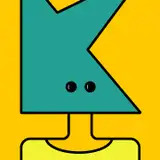
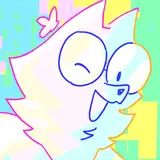
The title “Starbolt Kana” isn’t a reference to anything. It’s just me trying to come up with an anime that sounds like something I would want to watch. You can imagine it, right? I bet it’s really fun and kinetic. I bet it looks like this:

Although you’d think she’d be, like, an animal or something? Maybe don’t overthink that.
Page 029 - Plus One
Between last page and this page we had some discussion of a second encounter with another extra where Jasper and Rex would rush to another house to bust a ghost and then discover that the mysterious other exorcist got ahead of them on this one, too. It felt like it made sense, but… ultimately completely unnecessary. It wasn’t introducing much in the way of new information and it would have eaten up a bunch of panel budget. Better to have such an encounter occur offscreen, between pages.

Shout out to this panel. I wanted to communicate “Jasper opens the laptop to do some gaming” but in a unique way. I like how it looks like cracking open a treasure chest… I tried to continue the theme of a dark room with rays of light bursting out of the game device for the rest of these four transitions but I don’t think any of them ended up looking as good as this one. It’s just got a sense of mystery that’s hard to beat…
Peri purports:
It reminds me a ton of the box from Pulp Fiction! Not that I’ve actually seen that movie, but it’s very iconic… I totally agree with Lum that this has a “treasure box” feel to it. It’s something marvelous, but also a little forbidden…
Also, shoutout to Alma in the previous panel. I will come over and eat your leftovers anytime, Alma.

It’s her! It’s Yuno!
Peri: Hi Yuno!!!
In chapter one we introduced six eligible bachelorettes who live on the island with Jiro, and here in chapter two we’ve introduced one more. To what end? Why not introduce her earlier?
Yuno here is actually a fusion of two different characters who would have served different roles:
The first, let’s call her the Librarian, was an idea I had where there would be a girl who would only appear in backgrounds that Jiro never spoke directly to. So all through chapters 1 and 2 you’d see this brown haired shy girl in the background but you would just not find out anything about her, just a sole recurring extra appearing on the island. Eventually, she would have served the same role Yuno does in chapter three– you’ll notice there that Yuno laments Jiro never even spoke to her; this bit would have been enhanced by the fact that up until that point you would not have even known her name!
I liked this bit for multiple reasons. I liked the meta element of exploring that idea of the neglected NPC you leave to gather dust in the back of your party, like how does she feel about that? And the bit of having a background character who only just starts to talk three chapters in truly would have been a world class gag. But there’s a problem… Foreach’s art is ruthlessly efficient, in order to get all the pages out in time I need to focus on only the details that matter in each panel. I draw as little as I think I can get away with before it starts to drag down the story, drawing just enough backgrounds to establish geography, drawing just enough characters to establish who’s present in the scene, and especially drawing just enough panels to support the dialogue boxes. And having a recurring background character was just not something I could fit into the schema I had created for myself. When I got to the end of Jiro’s section in chapter one and I still hadn’t found any panels I could sneak her into the background for, I knew the dream was dead.
The second character, Josephin, was a character intended to be introduced here in chapter 2 as a newly minted Love Warrior being inducted into the island’s society. With this, I wanted to demonstrate a little more of how the girls end up here, why they’re here, and what exactly the Goddess has been telling them that makes them treat Jiro the way they do. Josephin would have had the same hair colour, job (her working title was “doctor”), and herbal theme as Yuno, but her personality would have been different. Her vibe would have been ara ara sultry older woman, you know the type.
While we never massively developed out Josephin as a character, I did feel it was important to have this little extra bout of exposition on the island before we moved into the BIG CHANGES in chapter three. I don’t want Jiro to be the only character here with a rich internal world, right? The anime girls thus far have been presented as emotionally immature, projecting an idea of who Jiro is onto him that they want to believe in, but that idea had to come from somewhere. I don’t want to imply that this is just the natural behaviour of women when there is a boy around. Jiro’s position as Love Champion here is highly ritualised, his role is to lend Love Power to the girls but part of that role is that he is kind and perfect and lovable. He is expected to not just perform his tasks, but to be a certain kind of person, and this expectation is enforced by the Goddess insisting that that is the kind of person that he is.
Peri pops in:
Combining Josephin and Yuno into one character was a really interesting process. We actually do a fair bit of consolidating story bits when planning out Foreach (which I think is a completely natural result of the writing process, you start with a huge range of brainstormed options and then cut and consolidate down into something tight enough to work as a coherent and tractable webcomic.) But one of the steps we often go through in the process of deciding to cut an element is to brainstorm how we might take things in the complete opposite direction first. Often times an element is on the chopping block because it’s a little too anemic to justify its place in the story–so what if we beefed up that idea with everything we can possibly think of to make it more interesting? We went through a bunch of fun “what ifs” for Josephin–what if she was actually a spy for Proteus? What if she was secretly a gorgon monstergirl, which could be dramatically revealed later? Ultimately, none of the ideas were enough to justify keeping her in as a separate character, but I think the version of Yuno we did get is deeper and more interesting for having gone through that process.
Yuno’s design is another one of those jokes only funny to me, that her clothes are stupid and her design is packed with cliches.
Her coat is meant to be reminiscent of a doctor’s labcoat but not quite so modern. But then the sleeves are too long. That’s a classic trope, right, look at this adorable helpless girl, she can’t even use her hands. Don’t you wanna protect herrrrrr. “Moe through helplessness” as is the term. For whatever reason that one always inspires a special contempt in me, I guess because it’s such a cheap shot, trying to engage one’s protective instincts. At its worst it ends up being genuinely regressive, implying the best thing a woman can be is totally reliant on the men in her life.
Under her jacket she’s got on a low-cut shirt and an incredibly short skirt with a slit in it. Why does Yuno wear these things? Why does she pick out a jacket three sizes two big and pair it with the show-offiest clothes she could find? The answer is that within the fiction here that’s irrelevant. It’s not a design created from the standpoint of what makes sense for the character, it’s a design meant to maximise appeal at all costs. Her legs are an “appeal point”, we gotta show off those. We gotta show off her chest, but ohh, make sure to get that big sleeves market. There’s no art here. She’s designed for the figurines.
Peri, in passing:
I also kind of like how the elements of “big coat” and “cheerleader outfit” combine to almost inadvertently highlight the conflict of her personality with her role on the island. The fantasy of Lovebomb demands that she be sexually attractive and available, hence the short shirt and cleavage peeking out. But also Yuno is shy, so the big coat gives her something to hide behind. It kind of makes you wonder how much of her outfit was her dressing herself, and how much was the game dressing her? How much agency did she actually have in that decision?
In hindsight a startling amount of contempt packed in there, and then probably the funniest thing about it is that absolutely none of it comes through cause, like, the design isn’t parodical or anything, I just did the thing I don’t like and played it completely straight. Pouring all of my bile into this work and then I show it to someone else and they go “oh she’s cute :D”.
No regrets though. No matter what happens, no matter the cost, COMMIT TO THE BIT.
Her hair maybe doesn’t quite have the same contempt in there, although there’s still some cliches. She’s got those two stars on her head that are reminiscent of clovers, and a sheaf of hair over one eye cause she’s shyyyy. And she wears glasses, of course. Of course.
Peri peddles:
A couple fun tidbits on this page! That opening shot of the Goddess is a good one, and it really gives us the clearest look at her ears-and-fluffy-hair-silhouette yet. We definitely had a few perspicacious readers see this page, compare it to Jasper’s design, and go “Wait a second…”
The goddess’ outfit also got a redesign on this page! Not a lot to say about it, but I remember that Lum wasn’t the happiest with her first outfit look. So we get her cute halter and string bikini top here. I also really like the detail of her blushing in blue on that first panel. It’s cute!
We also get our first hints that bad things happen when the goddess cries, with Polyta having a one off line responding to the Goddess mentioning tears of joy here, and again later with Casandra’s snide aside. This one is pretty subtle, I was actually a little worried that we were laying on the foreshadowing too thickly with some of the later mentions. Fortunately, I think that it’s the sort of thing that slots into natural conversation well enough that it probably doesn’t ping as “unusual line to pay attention to” for first time readers. I bet it does on re-reads though!
And, of course, Yuno is our second new green character introduced this chapter… Curious. Very curious. We’ll talk about that more on the next page.