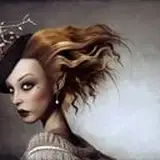
I really like Whitby’s mask. That’s about all I have to say about Whitby as a character. He’s another one of those Nitpickers introduced during the Christmas 2020 comics, and thus hasn’t had many chances to appear afterwards. And even if we DID have the usual number of pages in 2021, and Whitby did manage to appear in more of them, he’s still just the mute, trouble-causing sidekick of Chelsea-Lambda. There’s not really all that much else to say about the dude. It’s both sad and also really appropriate that I don't have much to write about Whitby, because he’s actually one of the very first instances of my making the soundtrack first and drawing up a character to match the music. Of COURSE I wouldn’t have much to elaborate on for a character with such a surface-level origin!
This is another one of those cases where I’ve decided to showcase a sub-sub-SUB-genre that doesn’t really have a name or even exist outside my own head. As mid-to-late-60s British Rock got deeper and deeper into Psychedelia and Prog/Art/Concept Album stuff, a sizable chunk of the music got a lot less, well, “Rock.” The post-Sgt. Pepper scene was a new golden age for orchestral overdubs, and even artists who couldn’t afford to hire session musicians (or rent a mellotron) still wrote plenty of slower, statelier, more gentle songs that honestly sound more like they belong in a schoolboy choir recital or hymnal than a Rock concert. Traces of Easy Listening abound, and even some Jazz… but only in the 40s orchestral ballad sense. It’s some of the most stereotypically “British” Rock music you’ll ever hear, and so old-person-friendly even when it was new that it’s a real anomaly in such a youth-obsessed genre. It’s often hard to tell if these songs are being ironic in their evocation of decidedly non-Rock aesthetics or if it’s sincere nostalgia, I’m not even sure if the bands themselves knew. That paradox was a large part of why Whitby turned out the way he did: prim and proper suit and hat for the old-fashioned music but impish stature and attitude for Rock’s rebellious streak… and also the mask for the weird Psychedelic flourishes.
If all that is a bit hard to make sense off, I’ll make it really simple: “A Whiter Shade of Pale” by Procol Harum. Y’know, that one stable of every Oldies station where the organ’s basically playing Bach’s “Air on a G String” only not? The one that’d totally sound like something from a church service if it weren’t for a Blue Eyed Soul vocalist belting out poetic nonsense lyrics? Yeah, Whitby’s soundtrack is basically an hour and fifteen minutes of that. Hope you’ve got a high tolerance for Hammond organs, ‘cos they’re all over this one.
Now, the thing about “A Whiter Shade of Pale” is that at least two out of five people who’ve heard this song have, at some point, mistaken it for a Moody Blues song. When it comes to oh-so-British rock that straddles the line between “stately” and “stuffy,” The Moodies are the grand masters, and I’m a bit shocked they don’t show up on Whitby’s soundtrack more than once. Much like with Madam Ventricle’s soundtrack, early drafts had a LOT of Moody Blues throughout, but in the end we’re left with only their biggest hit: “Nights in White Satin.” Yeah, I know. Two popular, mainstream hits in a row. I’m gonna lose my record geek cred if I keep this up, won’t I? I can’t pretend “Nights” isn’t a perfect companion piece to “Whiter Shade” though, the more bombastic and melodramatic payoff to the build up of “Whiter Shade.” There’s not much that can follow up a one-two punch like this, so it should go without saying that these two tracks are near the end of Whitby’s soundtrack… but not QUITE the end. More on that latter.
While I might have been surprised by how little The Moody Blues popped up on this soundtrack, the band who DID turn up the most was no surprise whatsoever. I keep mentioning how stereotypically “British” this playlist is, as it’s hard to get more stereotypically British than The Zombies, especially on their Odessey & Oracle album. It’s the album that “Time of the Season” comes from, but including that would have been one well-known song too many. Besides, there’s plenty of more bowler hat-sounding songs to be found here. There are four Zombies songs present on Whitby’s soundtrack, and while I said they were all off of Odessey & Oracle, one of them is kind of a technicality. “Smokey Day” was actually recorded after The Zombies’ disillusion, as part of a canceled posthumous album called R.I.P. that’s really too complicated to get into here. The point is, it’s available now as an Odessey & Oracle bonus track, and the odd mix of Medieval Folk, Classical, and Jazz is both stately and spooky. More firmly on the “stately” side is “Changes,” a piano & vocals piece that really does sound more like something an elite boy’s school would sing during assembly than anything from a Rock band. Slightly more Rock-y but still extremely English is “Brief Candles,” which still sounds like a school recital during the piano-only verses but does have the whole band kick in on the chorus. The most all-around Rock song present here is “Beechwood Park,” and it’s actually one of the few songs where the Jazz foundation of the composition nearly works it way up to the surface. I mean, the song is still as British-y as a song by a bunch of pasty white nerds writing about a girls school in Hertfordshire can be, but the melody is still there. Again, that weird cross-pollination of genres is a big part of the reason why Whitby turned out the way he did.
So, I was about to start this paragraph is “Now we get into the actually obscure bands,” before realizing that we still have songs by Pink Floyd and The frickin’ Beatles to cover. You know, those obscure cult artists few in the mainstream have heard of. But then again, a lot of people really HAVEN’T heard the odd album tracks that represent those bands here. The Beatles contribute “For No One,” a Chamber Pop song that’s all piano and clavichord and French horn. Very firmly in the prim and proper British cliché, this, but still a recognizable precursor to better-known songs like “She’s Leaving Home”. Pink Floyd, on the other hand, sound extremely odd in their contribution: “See-Saw.” Part of their awkward, unsteady transition away from the Syd Barret-led Psych Pop of their early days and towards the slower, Jazzier Prog Rock they’d become best known for, “See-Saw” tries to meld the two styles and… well, it doesn’t really succeed. “See-Saw” isn’t very well regarded amongst Floyd fandom, and even the band itself referred to the song as "The Most Boring Song I've Ever Heard Bar Two" during the recording sessions. Still, I think “See-Saw’ has its strengths, enough to fit into the groove of this soundtrack, at least. It fails to be a Barrett-style whimsical Psych ditty, but it fails SO hard that it comes back out the other side as a dreamy, ethereal haze of prettiness. At least, I think so. I dare say these two songs nicely embody the two sides of Whitby’s soundtrack as a whole: “For No One” is the sophisticated, Classically-influence side, while “See-Saw” is the wacky Psychedelic side.
Okay, this time we actually ARE getting into the obscure artists, and we see both sides of that previously mentioned equation in both songs here by Jason Crest (that’s a band, by the way, not a guy). “Turquoise Tandem Cycle” and “Teagarden Lane” both lean very VERY heavily on “Whiter Shade of Pale” for their melodic structure, trodding the same organ-driven hymn-sounding path, but both also sprinkle some trendy Psychedelic effects like phasing and wah-wah pedals to make them just a little bit more mischievous. That’s an old thing to say about songs that both mention lonely old people on the edge of death, but that’s a surprisingly common topic for this sub-genre. I guess that’s just a stereotypically British subject matter. Oh, and if you’re an EXTREMELY attentive Far Out There reader and that second title sounds familiar, that song is totally where May’s last name comes from (and that’s ironic, since there’s no chance of May being patient enough to listen to songs this moderately slow).
But if “Turquoise Tandem Cycle” and “Teagarden Lane” sound a little bit like “A Whiter Shade of Pale,” that’s nothing compared to “Reflections of Charles Brown” by Rupert’s People (actually studio band Les Fleur De Lys working under one of the several pseudonyms they used over their career). Admittedly, “Charles Brown” is much sparser and more guitar-based, with the Hammond organ serving as more of a highlight than the foundation it is on “Whiter Shade,” but the overall structure of the songs are remarkably similar… which is to say it’s also blatantly inspired by “Air on a G String.” It doesn’t have “Whiter Shade’s” ambiguous poetry, however, instead focusing on another “dreariness of modern life” character study.
Moving on… AWW CRAP! I forgot there’s a Bee Gees song in here! I should have mentioned them up top with The Beatles and Pink Floyd! Eh, whatever. People who only know their Disco-era stuff will think a song like “Holiday” might as well be by a totally different band. Yes, “Holiday” comes from the Bee Gees’ first album (to be released outside Australia, at least) and is another slow, stately, Chamber/Baroque-influenced number. Actually, the arrangement on “Holiday” is so ethereal and droning that it almost drifts over onto the Psychedelic side of the scale. I might even say the same thing about “Musty Dusty” by Sagittarius, whom attentive readers might recognize from Tarkus’ soundtrack. Sagittarius is one of the few American entries on this list, but like any good Chamber Pop aficionado, composer Curt Boettcher was an obsessive Anglophile, so this ode to thrown out children’s toys fits the mood here in several ways.
Continuing our slide into the Psychedelic, we have “Parachute” by The Pretty Things, which almost certainly IS being a bit ironic in its use of Easy Listening melodies. It’s a bit like Elevator Music if the elevator is taking you to a floor that only exists in your head. Simultaneously more straightforward but also more sprawling is the instrumental jam “Queen St. Gang” by Arzachel. Confusingly, both the band and the song have complicated histories surrounding their identities. “Arzachel” is actually an offshoot of Prog Rock band Egg working under a different name for contractual reasons. What’s more, “Queen St. Gang” as a composition is more popularly known as either “Soul Thing” or “Funky Fanfare,” though what it’s REALLY best known as is “that cool horn thing that plays on the Coming Attraction card in Grindhouse.” Arzachel’s organ-driven version is way more mellow and relaxed than the famous version, obviously, but once you recognize the melody, you won’t believe you didn’t catch it before. Easily the MOST Psychedelic track on Whitby’s soundtrack (aside from the Pink Floyd one) would have to be Scrugg’s “I Wish I Was Five,” which joins “Musty Dusty” in being an ode to lost innocence. Sort of an early precursor to the “getting old and lonely sucks” theme of several of the other songs here, if you will. For such a sad, minor-key song, “I Wish I Was Five” is so buried in reverb and swirling production tricks that the song gets downright disorienting to listen to in its final seconds. But then, that’s probably what it feels like to be around Whitby when he gets it in his head to start spreading mischief.
Things get a lot more straight forward with “So Much Older Now” by Plastic Penny. Another fairly forgotten band who rally wish they were Procol Harum, “So Much Older Now” is yet another slightly Jazz-influenced song with yet another prominent Hammond organ and yet another set of lyrics about being old and lonely. Again, late-60s England spawned a lot of these. To spice things up a bit, then, I present “Thursday Morning” by Giles, Giles, & Fripp. While technically one of the more obscure tracks here, since their one album The Cheerful Insanity of Giles, Giles & Fripp was barely even released, the “Fripp” in question is Robert Fripp, and GG&F were actually an early draft of Prog innovators King Crimson. You’d never know it from listening to “Thursday Morning,” though. This breezy, gentle ode to the British countryside sounds more like The Moody Blues than the Moodies themselves did half the time. And then there’s “I Never Found A Love Like This” by Nirvana… and I immediately have to get derailed by explaining this isn’t THAT “Nirvana” but a totally different British band from several decades earlier. I think there was actually a lawsuit once the Seattle boys got popular, though the very notion of owning the copyright on “Nirvana” is a bit hilarious. As for the song itself, remember how I compared “Parachute” to Elevator Music but also Psychedelic? Yeah, remove the second part and you’ve got “I Never Found A love Like This.” Trust me, the names maybe the same, but no one would ever get the two Nirvanas confused by listening to them.
While we’ve obviously been hitting the British 60s vein pretty darn hard, there’s still a few more songs both chronologically and geographically outside those narrow bounds. The previously mentioned Sagittarius already got us to America briefly, but the very last track on the soundtrack not only heads back, but brings us all the way to the turn of the millennium with Elliott Smith’s “Bye.” I knew attempting to follow up that one-two punch of “A Whiter Shade of Pale” and “Nights In White Satin” with a third big, dramatic song wouldn’t work, so instead I dropped this echo little piano instrumental on the end instead. I mean, come on. It’s called “Bye.” Where else was I supposed to put it?
That’s not the oddest song on Whitby’s soundtrack, though many listeners might not catch how odd it is without a heads up: “Cups and Cakes” by The Thamesmen, who are of course better known as Spinal Tap. While most people rightly remember how great Spinal Tap was at sending up 80s Heavy Metal, many sleep on just how good the “old” songs in the movie are as well. “Cups and Cakes” in particular is a pitch perfect recreation of “Penny Lane”-style twee orchestral 60s pop, which makes a lot more sense when you realize that Michael McKean was briefly a member of Baroque Pop pioneers The Left Banke. I dunno, there’s just something about slipping this straight-faced parody in with all the authentic 60s tracks that seems like something Whitby would delight in.
Oh, but “Cups and Cakes” isn’t the last of the odd inclusions. After all, I still need to slip in my standard “token Japanese song,” don’t I? So what’s it gonna be this time, another overly-orchestral Group Sounds-era song or something like that? Naw, I’m actually going really basic and obvious for this soundtrack. I keep mentioning that a number of these songs have faint traces of Jazz influence, despite not really sounding very Jazz at all on the surface. And what’s more “Jazz where you don’t expect Jazz” than everybody’s favorite live action Netflix series Cowboy Bebop? Yep, that’s right! It turns out there was actually some Bebop songs left over after The Kids’ soundtrack! The main attractions here are “Memory” and “STELLA BY MOOR,” a.k.a. those two music box songs. I dunno, I feel like the blend of Jazz and lullaby fits the general vibe here really well. What’s more, I also slipped in “Green Bird,” that mostly vocal piece with the lyrics you probably went a loooong time thinking were Latin or French or something before discovering it was just Yoko Kanno making “foreign-y” sounding gibberish sounds. Again, it fits the mood, and I do like the paradox of seeming extremely formal and classical, but also with a dash of utter nonsense thrown in. Whitby’s all about utter nonsense, ya know?
(Okay, so since this was one of the first cases of my creating the soundtrack BEFORE the character himself, it stands to reason that I was extra careful to make sure all the songs had easily accessible posts on YouTube ahead of time. In fact, I kind of psyched myself out a few times when finally making the YouTube playlists, since some of the videos still had the “you watched this” red bar underneath, making me wonder if I’d already used the song in question in another playlist and just forgot. You need to understand that SEVERAL songs here were once in early drafts of other soundtracks. “For No One” was penciled in for Augusta’s Baroque Pop playlist, “I Never Found A Love Like This” was once on Tarkus’ Sunshine Pop collection, and a BUNCH of these songs were briefly considered for Madam Ventricle, most notably “Nights In White Satin” before I swapped it out with “Watching and Waiting.” It’s hard enough to keep track of what’s on what soundtrack just in their completed forms, never mind my hazy recollections of the early drafts. Aside from that, the videos were mostly easy to find. Really, the only serious problem was one I brought upon myself, finding the right version of “Nights In White Satin.” See, that song is normally found in two versions, the more common one being the original single which just features The Moody Blues and many many layers of mellotron overdubs to sound like an orchestra. However, when the Days of Future Past album was released, it featured a lot of ACTUAL orchestral passages in between the songs, and in some cases even during them. “White Satin” in particular has a brief orchestral opening as well as a lot of extra overdubs on the final verse, before segueing into a big elaborate coda with some spoken poetry called “Late Lament.” Now, I actually really like the extra orchestra flourishes, but I DON’T like “Late Lament.” Fortunately, while the normal releases of Days of Future Past lump them both into a single track, the This Is The Moody Blues box set separated the two into separate tracks. UNfortunately, while I had an easy enough time getting this track on my personal playlist, finding it on YouTube turned out to be a real chore. Most post of the song, even those listed as being from the box set, were either the single mix or the regular whole album version. Even the video I eventually DID find still cuts off that little extra intro, but it’s still the only one I could track down, so it’ll have to do. This is the second time The Moodies have made life hard for me, after all the searching I had to do for a clean copy of “Out and In” for Madam Ventricle. Oh, as just a random thought, I need to draw attention to the video I found of The Beatles’ “For No One.” The video is a montage of clips of Jane Asher, who used to be Paul McCartney’s girlfriend… and who dumped him… and is now on a video accompanying a song Paul wrote about a guy getting dumped. That’s just cold, man.)