December 25, 1992: Half boy, half girl, 100% harbinger
by Diamond Feit
I've got a pretty strong memory when it comes to pop culture and personal milestones. I not only have just about every line and moment from Ghostbusters on standby in my mind, I remember exactly when and where we went to see it. This ability to recall facts has helped me win many a Trivial Pursuit contest, and it's the primary reason I love organizing quiz nights where I get to challenge others to answer questions I come up with (typically based on knowledge I already have).
Much to my lamentation, however, I have forgotten what should be landmark moments in my life, in part because I had no idea at the time how important these precious first encounters would become. I couldn't tell you anything about the very first movie I saw, the first video game I played, or my first ever taste of any of my favorite foods. Even chicken dakgalbi, an extremely recent entry into my personal canon of ultra delicious cuisine, entered my life without any location or calendar data attached. One moment I had never heard of it, the next it secured a place on my list of top ten meals.
Yet a major exception to this memory hole of mine turns 30 this week, a video game that, while I don't remember precisely when I first played it, I do know that it introduced me to an entire subculture I had never experienced before, one that easily occupies at least 15% of my brain today. On Christmas Day in 1992, Ranma ½ Bakuretsu Rantō-hen launched for the Super Famicom in Japan, and its eventual American release would serve as my gateway to anime.
Ranma ½ first appeared in the pages of Weekly Shōnen Sunday magazine in 1987 as a comic written and drawn by Rumiko Takahashi, already a well-established manga artist at the time. Takahashi had primarily written stories about girls and while she wanted to center her new martial arts story around a boy, she was a little anxious that she could pull it off. Her solution was to make her new protagonist half-boy and half-girl, a victim of an unfortunate curse that causes him to transform when splashed with hot or cold water.
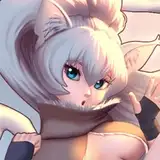
The eponymous Ranma was not alone in his predicament, as an astonishing number of other people in his life befell similar fates, although no two characters transform into the same thing. Ranma's father Genma turns into a giant panda, a form he ends up preferring so he made fewer and fewer human appearances as the series progressed. Ryoga, a fellow martial artist who bears a childhood grudge against Ranma, turns into an adorable black piglet. Shampoo, a Chinese warrior woman who wants to kill female-Ranma and marry male-Ranma, changes into a cat when she gets wet, which freaks out Ranma because he's scared to death of felines.
Despite all this body morphing, Ranma ½ is actually a romantic comedy first and foremost, as Ranma struggles to adapt to life in high school while he juggles two distinct physiques. Complicating matters even further is Akane, the youngest daughter of Genma's old friend. This pair of patriarchs decided years earlier that their kids should marry before the two ever met and neither child is thrilled with the arrangement. Somehow, as they encounter stranger and stranger characters and find themselves embroiled in one bizarre love triangle after another, Ranma and Akane grow closer.
The manga quickly won over readers and within two years, Ranma ½ debuted in animated form on Japan's Fuji Television. Initially a ratings failure, Fuji TV canceled Ranma ½ at the end of its first season, but reworked the characters into a brand-new program which picked up where the previous version left off. This second incarnation, officially titled Ranma ½ Nettō-hen ("Battle Chapter") placed a greater emphasis on combat-oriented stories and ran for three years, with the characters also starring in multiple animated films and specials.
With Ranma and his associates already appearing in comic books and animation, Ranma ½ video games quickly followed. An incredible 14 different titles were released from 1990 to 1996; given the trends of the era, most of these games revolved around one-on-one martial arts contests. Ranma's first fighting game arrived on the Super Famicom in March of 1992 and would later appear on the Super Nintendo, but the international version was retitled Street Combat and removed all of Rumiko Takahashi's characters. Nine months later, a second Super Famicom game launched on December 25. This game would make the journey overseas with its license intact under the title Ranma ½ Hard Battle.
As a fighting game, Hard Battle does little to innovate as the publisher likely sought the broadest possible audience. Despite the breadth of buttons available on the SNES controller, which Street Fighter II used to offer three punch and kick commands per fighter, Hard Battle characters only have two attacks, Normal and Power. Jumping and blocking are, by default, assigned to buttons as well as the D-pad, but players may remap all the commands in the option menu. Do you want to press Up to block? Hard Battle says have it your way!
Simplicity does not denote a lack of care, as much effort went into making Hard Battle an affectionate adaptation of the source material. Ten characters are available at the start—counting male and female Ranma separately—and the roster choices include several deep cuts like Hikaru Gosunkugi and Gambling King, both late additions to the anime. Every character also has their own storyline and motivation for fighting everyone else, instead of the usual excuse of a "martial arts tournament" which most games of the genre rely upon. In Japan, the original cast of the anime even showed up to voice their in-game counterparts, though they say little beyond shouting the names of special attacks and making noises when their characters take damage.
Likewise, the localized Hard Battle cuts no corners, faithfully translating all the characters' lines and voices into English. Considering how everyone has their own introduction and ending crawl, plus unique post-match dialogue for each opponent, that's a lot of text for 1992. Even little things, like a cry of itai when getting punched, was replaced with a more familiar "ow." We don't know who provided these new voices though, as the credits only cite "Mickey's Company" rather than individual actors.
Let's cut to the chase: very little about Hard Battle as a video game matters to me. I remember grabbing it in a toy store bargain bin for $20, possibly less, bringing it home solely on a whim and finding the sheer variety of characters entertaining. One of the fighters is a giant panda for Christ's sake, and all his winquotes are silent followed by a message "PANDAS CAN'T SPEAK."
The real impact of Hard Battle occurred when I enthusiastically shared the game with my friends, convincing them I had discovered a hidden gem. They seemed amused enough by the experience before one of them nonchalantly said "yeah, this is just like the cartoon" to which I immediately asked "What cartoon?" Which means, discounting early 80s American programs which had been animated in Japan unbeknownst to me, when my friends happily loaned me a few VHS tapes, Hard Battle served as my introduction to Ranma ½ and anime as a whole. And even though those initial tapes were all dubbed into English, the fundamental Japaneseness of Ranma ½ remained, given that no localizer tried to change the characters' names or the fact that they all live in Tokyo.
Within weeks of watching every Ranma ½ episode and OVA my friends had in their collection, I demanded they show me more. I also went to our local video store and methodically viewed their entire, albeit petite, dedicated anime shelf which lay separate from domestic cartoons aimed at children. I had the opportunity to bask in the glory of one landmark theatrical anime after another like Akira, Fist of the North Star, Vampire Hunter D, and Golgo 13: The Professional. Each film blew my mind more than the last as outrageous characters committed crimes and bared their flesh in ways that no Disney or Warner Brothers creation would ever dare.
With this cultural awakening fresh in my mind a year later when I became a freshman in college, you can already guess what came next: I immediately discovered the campus Anime Club and their treasure trove of fan-subtitled videotapes of material no U.S. distributor dared to touch. Some of it disgusted me, some of it amazed me, and some of it unlocked very specific sexual urges in my teenage psyche, but all of it fascinated me as I spent far more time and effort learning about anime and Japan in the months that followed than anything a professor taught me in a classroom.
In our current all-streaming instant-fix media landscape, enjoying anime has become commonplace. Characters from Dragonball and Naruto are as popular amongst today's youth as any traditional superhero. In my case, however, my interest in anime and video games would eventually lead me to move to Japan where I have lived for the past 15 years. Ranma ½ wasn't the sole influence that sent my life down this path, but from the moment I grabbed that priced-to-move Super Nintendo cartridge in Ossining, New York, I had unknowingly altered my future.
Reflecting on it 30 years later, I take away two lessons from Ranma ½ Hard Battle. First, as much as we tend to dismiss licensed video games as lesser works compared to original titles, we should never discount the potential impact one game can have on a person. Second, if you're ever planning a trip to China to practice martial arts, make sure you listen to your tour guide before you leap into action above a mysterious field of hot springs.
Diamond Feit lives in Osaka, Japan but is forever online, sharing idle thoughts on Twitter and playing games on Twitch.
Diamond Feit
2023-01-08 23:00:48 +0000 UTCNuno Amaral
2022-12-28 17:28:02 +0000 UTCMichael Castleberry
2022-12-27 16:17:45 +0000 UTC