Meet the Weirdos That Inhabit the Converged Worlds
At character creation, you will:
The Converged Worlds is a place where intelligent life is less a natural evolution from one being to the next, until one particularly brainy form of life emerges, and more a quilt made of torn pieces of something else that happens to look nice when all together. This is the quilt The Indivisible have sewn together thus far. More pieces are coming, because that is the nature of the Converged Worlds, constantly changing and growing. And adding new bits that want to either form a community with you, or wear you as clothing. Luckily, so far, this has only been an “or” and not the “and/or” we’ve all been dreading.
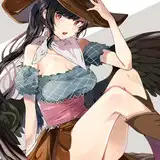
There is no people known to The Indivisible that places a value in books quite like the people now calling themselves the Lithic. They were a people that knew ways of containing things other than words and pictures in books, but could mix inks that could evoke feelings and experiences as sensory input, with the words and pictures providing the artistic input. No more than any intelligent form of living being could create a book that one could truly live in, save for the Lithic. It was how they outlived their world: they transcribed their own lives into books, and filed themselves away into great subterranean libraries, to live (in certain values of live; not really that alive, but when you can live in dreams and books made out of the collective experience of your species, ironically, that’s real living). The Indivisible found them as such, in a heaven of their own creation, and considered, and debated. Eventually it was decided: they would contact the dreaming, active minds of those consigned to a library, and simply ask: if given the chance to rise once more, would you? Those in the library responded in definitive fashion, for some were not simply placed in shelves in their libraries, but placed in statue reliquaries, as figures fashioned after who they were in life, and others given the honor to stand guard in armoured bodies over such a sacred quiet place. It was these that stood, and gave their answer: you can live forever in a good enough book, but sometimes, what you really want to do is write some new story, to add your own mark.

Beneath the surface of their world’s oceans, they thrived, hidden with guile, made a thing of legend by their agility, their ability to render themselves little more than figments of the imagination of bored sailors. This was how they persisted for so long, a realm of undersea houses, whose only land holdings were hidden places, amid reefs and treacherous waters. Beneath the waves, they cultivated arts and sciences, a society to rival any on land, which became a smirking point of pride for the Mereid- they knew what they had, while the world around them didn’t even know they existed. This unfortunately could not last, for as the realms on land became more and more corrupt and driven by more ruthless leadership, one particularly greedy one began a campaign that kicked off the Final War. Like a emission from a volcanic vent blackens the surrounding seabed, the surface world was covered by conflict. Whatever that couldn’t be taken and held or exploited for resources was put to the torch. After a while, it seemed less about taking claimed land and more about the destruction of all the enemy had, and watching them starve and wither from exhaustion, injury and sickness. This was the conditions of the surface world when the Mereid realms were finally discovered by explorers. This was the circumstances under which the Mereid sought the Convergence. This was also the reason why far fewer Mereid made the journey than they originally counted in their numbers. The Mereid as a people now have only one declared enemy: War itself. Though despite that, never mistake a Mereid for a pacifist.

Within the nature of the world that birthed the Taun, wilderness is wilder. Not a nourishing Mother figure was found there, with hard rules to be obeyed, but a brutal and driven smith, who pounded his creations on an anvil until they either broke or became acceptable to his exacting eye. Ferocity was a necessity for life to thrive here, but so was developing a weapon of survival. Prey was not simply fleet or stealthy here, but capable of leaps verging on flight or the ability to turn translucent and make themselves deathly still. Predators here could bowl over trees in pursuit of a meal, trees that stood like stone pillars, and such strength was only in addition to more horrible jaws and venoms. There was even a kind of berry with poisoned barbs hidden beneath the seeds, a paralytic that could kill a thousand pounds of angry meat in a painful minute. Among this ecosystem of brutality, the Taun stood tall as the brightest creatures of an infinite and terrifying woods, bright enough to have permanent settlements, strongholds, divergent languages and cultures. Their weapon of survival was their unparalleled sensory perception, which resolved the world that surrounded them as an itemized mental catalogue of threats, and sight them for ranged retaliation. But among them was one who sought an escape from a life of observance of peril. Perhaps he was a coward who snapped; perhaps he just thought himself better than this. Whatever the case, he sought a method to achieve immortality, a means of escape from a brutal world. In the pursuit of this ideal, he damned his entire world, becoming the most selfish and total failure to live in all the history of his people: he took in the full light of the sun, snuffing it out, and even so, bobbled such power and failed to become immortal. This became readily apparent when he landed, and his people tore him to pieces. This is the new creed of the Taun, in the Converged World: None Shall Take What Belongs to Everyone.

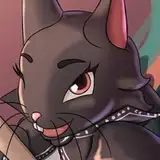
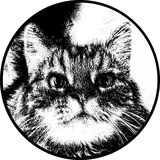
The Launakin were imbeciles who thought they could fight the world; they couldn’t, and so became extinct. The Perekin were unmade by their hubris and tried to make the sky their home; they fell, and became extinct. The Nidakin took inspiration from their own shells, and so tried to make stone-shelled fortresses deep in the earth; the laws of physics disagreed with their designs, buried them, and they went extinct. The Grimalkin had better ideas, and that’s why they persisted for so long. Their world wanted competition, like some sort of game to create the ultimate living being. So the Grimalkin, with superior wits and a deeper connection to the subtleties of their environment, were flexible and followed one simple rule to govern all: don’t compete, persist and let them fail. And, as it turns out with more than one of the Grimalkin syndicates admitted after Convergence, interfere if it speeds their failure. So in a world that was pressure cooking its masterpiece, the diminutive Grimalkin chose to instead ride the chaos and be elusive, opportunistic tricksters in the margins of the world. And this was entirely the thing that unmade them, because it was in this that they became the dominant species of their world. So their would sought to make a solution to this, for these frustrating little furballs that broke its rules by refusing to play. This was what led to the emergence of The Great Devouring Worm, a creature that was also a disaster. Implacable, unimaginably huge and constantly hungry, for everything, but especially Grimalkin. It was at this point that the Grimalkin, who were ever so clever, found themselves in the spotlight, the supposed supreme beings of a world that disagreed vehemently. They had no answer for it, but for the chance at Convergence the Indivisible offered them in their very final days. The lesson learned by this now humble people: you are nowhere near smart enough to know it all.

They were ruled by the Pale Ones, who were supposedly superior to them, despite being actually quite sickly and frail, who sat upon thrones of gold and ivory, and taught them of the world with their superior wisdom. They also directed them where to go, how to work, and to what end. This was necessary, because that’s how their world worked, so they were told, because this was the only way to maintain the realm. If things changed, chaos would creep in, and pestilence, war, and poverty would follow. This was a difficult thing for the Kith to reconcile, because much of what the Pale Ones tasked them with resulted in them suffering pestilence, war and poverty. But there was a great enemy to be defeated, those of the Dark Inverse, the world on the underside of the surface, and their god, the Unceasing Maw, a locus of hunger that could only seek more. Were it not defeated, it would be all of Kithdom that would be devoured, and worse? Perhaps even the Pale Ones afterward. But to many of the world, the reality of the situation was clear: That the Pale Ones and the Dark Inverse were two sides of the same coin, and both served the Maw. The Pale raised people, societies, cultures out of the surface of the world, and beneath it, the Inverse fed them into a pit that only seemed to hunger for more. This became a problem, because the world began to break apart under the weight of its only growing hunger. So it was that when the Indivisible made their contact, the Kith employed one of their best weapons against their masters and the giant hole in the ground that commanded them: cunning. Treachery, deceit and violent insurrection forged the rites of their Convergence, from lies, plots and piles of the right sort of dead bodies. Into the new world, they brought with them knowledge of grand scale treachery, and the surest way to spot someone with an agenda: look for the ones that apparently know nothing, except what to do next.

Next Time:
The Ways!: Warrior, Freelancer, Outlander, Seer and Academic!