[COLUMN] Peacock's Teacup Taps into Pandemic Terrors | by Darren Mooney
Added 2024-10-11 14:00:13 +0000 UTC
Note: This piece contains spoilers for the first two episodes of Teacup, which premiered on Peacock this week. Two episodes will be released every week between now and Halloween. It’s… fine. It’s solid, if a little over-extended. Like a lot of streaming shows, it feels like it could have worked fairly well as a 90- to 150-minute movie.
It’s strange how the pandemic manages to feel both absent and present from the modern pop culture landscape.
Allowing for a few high-profile exceptions like Grey’s Anatomy, which aired during the pandemic, or exploitation films like Sicko, COVID is rarely directly acknowledged in mainstream film and television. Understandably, there’s a palpable desire to avoid the topic. Noah Hawley’s Star Trek movie was reportedly scrapped because it focused on a deadly virus. There is longstanding speculation that Falcon and the Winter Soldier was clumsily retooled to strip out a plot involving vaccines.
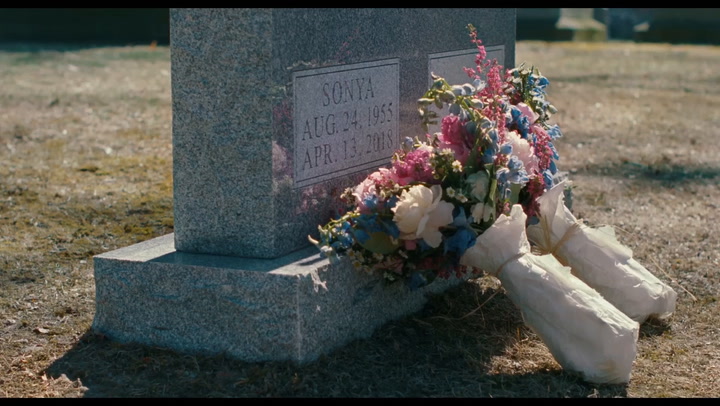
Quite a few recent films have been subtle pre-pandemic period pieces: Nia DaCosta’s Candyman, Luca Guadagnino’s Challengers, Patrick Wilson's Insidious: The Red Door and Jamie Payne’s Luther: The Fallen Sun were all set in 2019, on the cusp of the outbreak. Filmed in 2022, A Man Called Otto follows an old man (Tom Hanks), grieving the loss of his wife (Rachel Keller) to a long-term illness the year before. However, a quick shot of his wife’s tombstone reveals that she died in 2018.
Still, even though it is rarely directly acknowledged, the disease haunts pop culture. There is a pandemic aesthetic that distinguishes film and television from the period: smaller crowds and groups of characters in shot together, actors blocked so they are standing two meters apart, plot threads designed to keep older cast members in more tightly-controlled filming blocks. Revisiting media from those years can feel uncanny. Even if it is never addressed, there is a sense memory of the pandemic.
More broadly, one can feel the trauma of the pandemic rippling through the collective unconscious. It’s clear that writers and directors are still working through the scars of the era, whether consciously or not. Last year, for example, cinema was preoccupied with “bubbles”, isolated and contained communities: Barbieland in Barbie, Los Alamos in Oppenheimer, Asteroid City in Asteroid City. These groups were never forced together by anything as literal as a lockdown, but it still felt eerily familiar.
The recent thematic preoccupations in mainstream film and television could be understood as a hangover from the pandemic. Many of last year’s awards contenders were built around the idea of marriage as a trap, which might have resonated in after years of families being locked together. Family-friendly films like Barbie and Puss in Boots: The Last Wish asked kids to contemplate mortality, while blockbusters like Fast X and Guardians of the Galaxy, Vol. 3 questioned the existence of God.
This isn’t a surprise. Pop culture often grapples with these sorts of collective traumas obliquely before handling them directly. Allowing for the initial wave of prestige films about the conflict like Coming Home, The Deer Hunter and Apocalypse Now, American cinema felt more comfortable dealing with the scars of the Vietnam War indirectly in films like Jaws, Star Wars, Rambo: First Blood and Red Dawn before it began earnestly exploring the conflict in the wave of films following Platoon.

Similarly, Hollywood struggled to deal directly with the AIDS epidemic, instead sublimating its fears into movies about death and gentrification like Ghost and Beetlejuice or more abstract infectious disease movies like Outbreak or 12 Monkeys. There is a sense that audiences and filmmakers weren’t necessarily comfortable tackling these sorts of collective traumas directly, and so instead they seep in around the margins of culture. It’s an absence that somehow still leaves an impression.
The Spanish flu outbreak in the wake of the First World War garnered relatively little historical attention, despite killing many more people than the Great War. “The Spanish flu is remembered personally not collectively,” wrote Laura Spinney. “Not as a historical disaster but as millions of discrete, private tragedies.” Spinney has described the lack of cultural memory of the influenza outbreak as a “collective forgetting of the greatest massacre of the twentieth century.”
The same is perhaps true of COVID-19 and the global pandemic that it spawned. Teacup is not about the pandemic. It is a high-concept horror series, loosely adapted from Robert R. McCammon’s 1988 novel Stinger. It is not literally about a virus or a disease. While the season premiere does not reveal the exact nature of what is going on, it is clearly within the realms of the supernatural and the irrational rather than any earth-based infection.
However, it’s also worth acknowledging that Teacup is an extremely loose adaptation of that source material. According to showrunner Ian McCulloch, the show is “99.8% different from the book.” A lot of that difference comes from narrowing the focus. Stinger is a novel about an entire town in Texas caught in a conflict between two outsiders. In contrast, Teacup is a more intimate story of three families thrown together in a crisis on a farm in Georgia.
The show’s imagery draws overtly from the pandemic. Both the poster and the trailer lean heavily on the unsettling image of a man (Rob Morgan) wearing a gas mask. This man shows up at the small farm owned by Maggie (Yvonne Strahovski) and James Chenoweth (Scott Speedman), and draws a thick blue line around the edges of the property. To cross that line is to die, as Claire Kelly (Holly A. Morris) discovers at the end of the second episode, her body quickly turning itself inside out.
However, the show is also about the sensation of the pandemic, the muscle memory of it. The series takes its title from an early sequence in which Maggie uses a cup to trap an insect in her son Arlo’s (Caleb Dolden) room. This is a none-too-subtle metaphor for the blue boundary that will soon mark the edge of the farm. By the end of the premiere, the characters will be just like that insect, trapped beneath an invisible teacup.

Without getting too deeply into the specifics of the plot, which runs the risk of spoiling the remaining six episodes, Teacup is often about the challenge of holding a family unit together in a confined space under intense pressure. Maggie and James’ marriage is on shaky ground even before they are stuck together on the family property. In those early scenes, the show also establishes the tension between Maggie and her mother-in-law Ellen (Kathy Baker), who is also living in the household.
Much of the series is about recognizable parental anxieties, the desire to keep children safe – even in the midst of a crisis that they don’t entirely understand. Arlo and his older sister Meryl (Émilie Bierre) disappear into the woods surrounding the property. The adults are initially confused – unsure about how worried they should be – before eventually giving into concern and panic. “Kids,” James sighs to Valeria Shanley (Diany Rodriguez). “They’re so stupid. So stupid. I love them so much.”
“Stuff happens, right?” Ellen opines to Claire in the kitchen. “I mean, weird things happen to kids, and it all turns out okay.” It’s a clear attempt to reassure herself that everything will be fine. Claire punctures that comforting thought. “Sometimes it doesn’t, right?” Claire asks. “I mean, sometimes kids get stuck and it turns out really, really bad.” It is a conversation recognizable to any parent, that deep-seated fear that something might happen to a child outside of their parents’ control.
Of course, these are all standard horror tropes. There have always been stories about bad things happening to children. More broadly, it spoils very little to acknowledge the heavy influence of John Carpenter’s The Thing on Teacup. Certainly, the way that the bodies outside the blue line contort and burst evokes that body horror classic. There is also the same sense of paranoia and isolation, a strong sense that these people didn’t entirely trust each other before weird stuff started happening.
Still, the uncanniness of Teacup feels firmly rooted in the experience of the pandemic. These characters aren’t isolated on the Antarctic tundra. This is rural America. This is a part of the country where everybody knows their neighbors. The paranoia and tension is firmly rooted within the family unit, and tied to the idea of that family locked in a confined space together, stuck in place and thrown into conflict with their neighbors by their fear of some ambiguous outside force.
Teacup is not a show about the pandemic, at least not in any literal way. However, it feels firmly anchored in the sensation of the pandemic, the anxieties and the tensions of that moment, which pop culture has yet to fully articulate or explore. Teacup doesn’t explicitly name those fears. It doesn’t even directly acknowledge them. It is slightly less subtle in its invocation of the pandemic than something like Songbird. Still, they hang in the air.
Comments
It's pretty good! Decently creepy with a nice dash of body horror. 😉
Bryan Cybershaman(X) Logie
2024-10-11 22:03:33 +0000 UTCFor videos, if I'm not editting myself, I'll typically point to an episode/scene/line. And if Omar or Jesse need it, I can dig out a timecode. (But that's rare. They're generally incredible at it, and make me feel clumsy at what I do.) For text pieces, I'll generally take notes as I watch. Most of which will be irrelevant, because I don't know what the shape of the piece is until I finish the show or film. In some cases, I'll watch without making notes, and go back and scan through afterwards, to source quotes.
Darren Mooney
2024-10-11 20:51:37 +0000 UTCI hope you enjoy. It's solid enough. I did particularly like the fifth episode.
Darren Mooney
2024-10-11 20:49:08 +0000 UTCThanks for another great read! Me thinks I shall check this out. 😉
Bryan Cybershaman(X) Logie
2024-10-11 14:39:27 +0000 UTCI'm curious about your writing process. Are you a heavy note taker while watching or do you write small notes to support writing later? Do you track time codes for scenes that you think you'll likely need to feed to an editor?
jahr
2024-10-11 14:33:37 +0000 UTC