I apologize if this is common knowledge for you already, this post is to everyone who has interest in starting Photography.
The beauty of photography is it has a place in litterally every aspect of life. From cars to architecture, astronomy, commercial and family.
Over the past 10 years I’ve dabbled in dozens of the genres professionally and creatively. Obviously photography of Steph is one of my main hobbies. I got a question on lighting techniques and photography basics from someone interested in photographing his wife. I also have one of my first jobs of coaching a husband and wife in a photoshoot teaching photography basics, lighting and simple posing. I figured I’d make a post for anyone interested.
For this post I will take the stance of a portrait photographer as opposed to say a commercial car photographer or a real estate photographer. Each would use different methods and lens.
Getting started in photography seems daunting. Once you get your camera and a kit lens that may come with the camera, you immediately get disappointed when the photo looks the same or worse as what your phone can take. That is because a phone is way smarter at automatically capturing an appealing image.
If you want to unlock the camera’s abilities you need to pair it with a worthy lens which is based on your shooting style and genre and switch the camera’s exposure settings to manual: learn the exposure triangle which is:

Aperture
This is determined by the iris in your lens. Not all lens are made the same. Typically the more expensive the lens the faster it is; meaning that iris can open up letting in more light to achieve better exposures low light conditions, it also make for the commonly desired bokeh or blur in the background. Each increment of opening or closing is measured in something called a “stop” abbreviated “f” or f-stop. So if I take a photo and I’m at an aperture of f5.6 and my photo is too dark I may go down a stop to f4.5 to let in more light. The lower the f stop the more light comes in. The lowest you can stop down to is f1.2 for commercial lens.

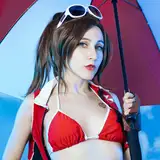
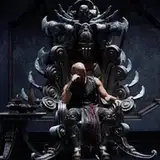
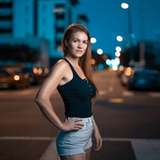
One of my favorite lens is a 50mm f1.2. which I used in the photo above at f/1.4. But it I was recommending a lens to a starter. Id go with a 50mm 1.8. It’s around $100 but yields great photos. Do not use your kit lens (the lens that comes with the camera) for artistic portraits. You’ll be disappointed. In fact I’d go as far to say, don’t buy a camera that comes with a kit lens or any kind of starter pack.
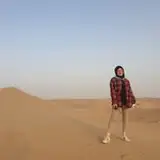
I always recommend one good prime lens and one good zoom lens. A prime lens is at a fixed focal length of day 50mm. A zoom has a variable focal range for example a 24-70mm. I use my Canon 16-35 for wide angle projects like real estate. But I have used it on portraits as well like this one:

Shutter speed
If you’ve taken any photography class in high school you may remember shutter speed. It’s kinda obvious but your shutter is how fast your camera sensor is exposed to the light coming in. These days there are mechanical shutters and electronic ones, like the ones found in your phone. Each having their benefits. I prefer a mechanical shutter. I like the feel and the sound as silly as that sounds. Kinda like a 4 cylinder truck that has a fake engine sound of a v8. I’d prefer the shake and sound of a real v8, but of course the 4 cylinder will have way better fuel economy. Same is true with cameras. The eletronic shutter is silent and the camera bodies are smaller. This would be ideal when photographing events such as a wedding or a corporate event. However for sports photography or strobe portraits use a mechanical shutter. Mechanical offer better flash sync and motion freezing which we will talk about now. The main takeaway is that shutter speed is one of the elements of the exposure triangle.
It can control the overall exposure. I typically make shutter adjustments in 2 scenarios. 1) when I’m outside and I do not want to touch my aperture because I like it a wide open look and bokeh (blur) of my aperture at f/1.4. That aperture let’s in a lot of light so I will compensate by bumping my shutter speed up to something like 1/2000 sec. The second scenario 2) is when you want to freeze motion.


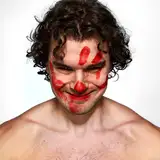
You can see my shutter was set to 1/500 to allow all the particles of flour dust to be frozen in time.
ISO
ISO (International Standards Organization) is your camera sensors sensitivity to light. Before digital cameras this was your film’s sensitivity.
At first glance you may think oh I’ll just crank my iso up in any low light situation. But there is a drawback. The higher your iso the more grain and noise will be in your photo. A little grain is fine but too much yields a very poor image and will be deemed amateurish even by an untrained eye. So it’s a fine balance of all your settings working together.
Some cameras have way better ISO than others.
There have been professional events I’ve photographed where having a camera with good iso capabilities came in handy. In one setting I was photographing at f1.4 a shutter speed of 1/160 and my photos were way to underexposed due to the dimmly lit auditorium the event was in. In this case I did not feel comfortable shooting at 1.2 because at that low of an aperture your focus point is very narrow also the depth of field to blurry for commercial purposes. So I made sure to keep a distance from me and my subjects, like the guest speaker and the audience which helps widen the focus area at a low aperture. My shutter speed also could be adjusted lower to let in more light but there is another rule to consider. If you are doing hand held photos, which I was, you run the risk of blurry photos if shutter speed is to low. So I could not adjust that setting any lower.
(Bonus tip: if shooting hand held shoot a shutter speed 2x your focal length to ensure you sharp photos. So at a 50mm focal length my shutter should at minimum be 1/100 sec. But to play it safe I like to be at 1/160sec.
So in that scenario I would adjust my ISO to 800 or so. Now each camera is different as I said so each camera will have a base line or native ISO. My camera (Canon R5) has a native ISO of 400 for photos. My first camera could not even reach an ISO of 400. So it’s about knowing your camera. I would never shoot over an 1800 ISO on my current camera.

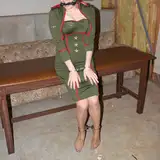
See here I totally missed the focus shooting at 1.2. The focus hit her hair not her eye. Also the ISO is way to high because I was not considering my light source for a portrait in an urban setting. I did some corrections in editing to reduce the noise but the photo could have been much better had I found a better organic light source, lowered my ISO and confirmed my focus area. But I do like that bokeh in the background.
So that is your exposure triangle. Some things I didn’t mention is your white balance, focus method, and other camera functions like Internal stabilization. That’s a topic for another day. But I will say don’t stress those so much, your white balance can easily be adjusted in Lightroom or Photoshop.
Lighting
If you don’t have light you don’t have a picture. Always consider your light source. It can be a window:

Or natural light:

Or my favorite studio lighting (strobe or continuous)


Either way always consider the light source, the direction and the diffusion.
Investing in lighting is intimidating. Especially if it’s just for hobby purposes. But it’s worth it if you stick with it. Strobe vs continuous light sources is another topic. They both have advantages and different looks.
Editing

I only use Adobe Photoshop/Camera Raw
This is where people tend to go overboard or skip all together. Again it has to be a balance. You don’t want to change the photo or the subject entirely you just want to enhance the photo or create a theme. Such as white balance and basic exposure settings. Cropping and alignment. (Straight lines are important) pay attention to your horizon or a wall. Even untrained eyes pick up the subtle distractions of crooked photos. But if you know the rules you can break them so if you want a crooked photo. Go for it.

Color grading is another way to bring a mood or energy to your photo. Play around with that.
There is no particular right or wrong. There are a few fundamentals to understand then it’s all about making your own style.
I hope this has been helpful. If you have any interest in photography I’d say exploit that interest. I wish I had started 10 years sooner. For me it’s how I make a living but I also enjoy it as a hobby or a shared interest I have with my wife Steph.
If you have any questions let me know.
Pete
2023-02-25 18:40:09 +0000 UTCPete
2023-02-25 18:39:20 +0000 UTCMemoirs of Steph
2023-02-25 17:49:17 +0000 UTCShawn
2023-02-25 17:45:35 +0000 UTC