I’m not a big fan of beauty. I mean, I enjoy beautiful things and find many kinds of people beautiful, but messages about ‘access’ to beauty bother me. You know the ones I mean - the every body is beautiful ones.
The push for public acknowledgement of a wider range of beauty is a political aim. Beautiful people have a power in society that those who don't fit that narrow mould don't have. But as a political aim I find it a troubling one.
Activism on this front can’t honestly hope to change who individuals find subjectively attractive. People are attracted to what they are attracted to. If the pray away the gay movement has taught us nothing else, it has taught us at least that rhetoric is VERY unlikely to affect the deep mechanics of human attraction.
But the politics of expanding the definition of beauty seems to miss the point for me, insofar as I have been touched by it. My feeling is that surely in the best possible world the goal would be to unpack the idea that beauty is an important or necessary part of human value. It would be a nice thing to have, but surely it shouldn’t be so integral to identity that people who don’t have it should feel a desperate lack of privilege, requiring them to be ‘given’ beauty by mainstream assent.
On one hand, public acknowledgement of a broader range of beauty might give permission to people who have repressed their natural attraction to non-mainstream bodies to express that attraction, as those bodies become more mainstreamed. A wider acceptance of a bigger set of bodies as beautiful might allow people who would otherwise feel shame about the people to whom they are attracted to be open about their desires. To bring it back to the analogy of queer rights, the coming out movement made gay and bi people more visible, and that visibility gave those people who had been hiding a safer place to be. But on the other hand, and back to beauty, de-emphasising the primacy of beauty as a measure of worth would serve the same function.
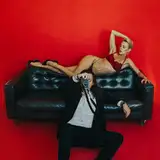
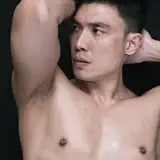
Of course, a wider range of bodies available to the imagination of the public (in the form of models and actors) is a pretty much unleavened good. We're very bad as humans at seeing normative standards as anything other than prescriptive - so making more things 'normal' might make more people feel more comfortable.
On the other other hand, the expansion of (for example) every-body-is-beautiful advertising seems to be driven more by a desire to get more wallets into the game as fetishistic consumers rather than (as well as) making people happier with their bodies. More people being brought into the exclusive club of product-capitalism doesn’t seem like the best of all outcomes for a political movement.
It would be interesting to see if there was a corollary increase in pay/employment or other concrete measures of non-prejudice that came along with this movement.
Obviously these are questions based on a feeling of uneasiness rather than on stats or facts, but it seems intuitively like it’s okay logic-wise. Let me know if I’m making any massive steps in the wrong direction.
As far as my own appearance goes, apart from personal vanity (which should be given the weight of any human flaw), I hope it's not important. My wishful thought is that the job of my appearance is to be (like the words in literature) more or less subordinate to my message. I ought to be (if I have any control over it) neither so beautiful nor so ugly that people are rendered incapable of listening to what I say. My face should be readable, and its expressions should be in service to my jokes or my messages.
Maybe all this is hopelessly idealistic, and I should be grateful that capitalism has taken an interest in the expansion of beauty standards, as alliances with monetary interest seem to be the best fuel for any kind of movement. But I mistrust it, and vaguely resent it. When we say 'everybody is beautiful', what we mostly mean is 'everybody is valuable and deserves to feel secure in themselves', but why don't we say what we mean?
Vivienne McCallum
2017-10-26 06:48:09 +0000 UTCDean
2017-10-26 06:16:22 +0000 UTC