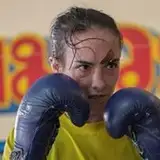
We've been thinking about our values, the things that make all the fighting and training, the writing and the entire Muay Thai Library project so meaningful to us and others, and it felt like a very good time to write something down. Something like a manifesto. A public statement on what we are about, and what we want to be creating and putting out there. These are guiding principles for us, not only things that have motivated what we've been doing, but also things we aspire to, as well. And, in posting them, they give us compass-heading; they inform and direct us in our future decisions, our projects - and they let those who support us through Patreon and by other means (thank you for all the positive energies!) know what it is they are supporting. And perhaps, they might encourage others to adopt some of these for themselves, and carry them on in their own way. Like a shared map of the constellations that guide our paths.
1. Defend and nurture kaimuay culture.
Kaimuay is a camp, as opposed to a "gym," and indicates a more traditionally structured, less commercially-oriented space (true, traditional kaimuay have no outward facing commercialism for Westerners, see an example in #149 Provincial Kaimuay Knowledge | Santi Ubon Muay Thai (85 min)). These are long-standing, integral parts of Muay Thai pedagogy across Thailand, usually serving the local communities and occasionally bringing up a stable of fighters strong enough to warrant wider-reaching attention. The kaimuay, in general, grows and raises fighters; gyms then often purchases the most successful or promising kaimuay fighters. Kaimuay structure relies on a lot of kids, who arrive and grow up together in informal "classes" based on age and size. The muay in kaimuay is often taught without much explicit technical correction, communially developed through imitation and te aesthetics of fighting and krus. Knowledge is communial, rich & reflects the history of the sport itself. The older fighters, who might be earning bigger purses, traditionally helped support the presence of all the kids, who weren't yet finanially contributing to the camp. The young kids who made it through all the trials and tribulations that make the majority of fighters quit or move on, would then become the earners who support the next generation. This is kaimuay "culture," which focuses on the development of fighters, whereas the commercial gyms focus on the ready-made fighters and the tourists. As the importance of tourism rises, and more and more of Muay Thai is for Westerners and other non-Thais, kaimuay culture has come under risk. Small kaimuay get squeezed out by big Thai gyms which buy out all their talent prematurally before they can raise up the status of the kaimuay and contribute to its growth; and in general the culture of the kaimuay erodes before the demands of tourism, changing training methods to suit international expectations, and even fighting styles. Kaimuay shrinking in number, disempowered and drained of fighters, no longer have the weight to compete against the bigger, well-financed gym names in Bangkok. To defend and nurture kaimuay culture is to support the local traditional fight scenes which feed the kaimuay, to train in gyms that maintain kaimuay culture to some degree, and celebrate the unique communal nature of Thailand's traditional Muay Thai.
2. Honor, preserve and forward Golden Age heritage, with focus on its men.
The Golden Age is called such due to the peak success, popularity, skill-level and finanical boom of Muay Thai. But mostly for the absolutely beautiful and effective fighters in it, fighters that embodied a fight capacity that no longer exists today. Other sports have their own "golden ages" and there is much to be learned from preserving and learning from those who participated in that summit of achievement and expressiveness - this is what is behind the Muay Thai Library documentary project of course. The Library is not only the unique "cult of personality," of fighters, which comes out the Thai principle of "sanae" (charm, power to attract) which is fascinating to itself - we love the long-form training video because you really get to experience the personalities and magnatism of these men, much of which is expressed through their individual Muay - but also experiencing how they trained, how they developed and adjusted to their unique trajectories. This value of honor goes far beyond just celebrating and documenting these great fighters and krus, rises to care for them if injured or aging (we recently got Dieselnoi cataract surgery, and plan to help Karuhat with knee surgery, for instance), and forming long lasting friendships of respect with those who fought at such a high level. As a fighter as well, this involves centering oneself within that history and attempting to bring as much as one can forward from acme.
3. Fighting matters, learn to fight, but fight (often) to keep it alive.
Muay Thai is not intellectual, it is movement and expression. This is remarkable for us to say, because Kevin and I are both staunch informal academics; we intellectualize and dissect everything, so it is important to reiterate that reading about, watching videos of, isolating techniques or principles, and talking about Muay Thai, isn't Muay Thai. It is a beautiful way to try to understand it, to preserve it and roll it over in our hands and minds to see it from so many different angles. But fighting is Muay Thai. Doing is Muay Thai. As much as I think about and try to understand Muay Thai from so many different perspectives, it's my participation and fighting (and I have done a lot of it) that makes me part of Muay Thai in Thailand. In this training to fight, and fighting as much as one can is a lot like learning a language to actually use it, the preserve it through living use. We don't want a Muay Thai of "techniques" and "demos", as much as the internet thrives on those aspects. Fighting, and especially in Thailand even more so, is the traditional culture of Muay Thai, its what gives it meaning. This also means that we want to celebrate and forward traditional fighting to those that know less about it, because the culture of muay is quickly eroding under the pressure of tourism.
4. Muay Thai is born and nourished in the provinces.
During the Golden Age, the Muay Thai that was taking place in Bangkok was the "standard." It was the highest form, the place that all the fighters in the provinces wanted to arrive, to appear on the stages of the National Stadia and pit themselves against the greatest of the time. And that was the structure: earn a reputation in your local province, become the best in your region, and then you have to start all over against the best from all around the country in the rings of Bangkok. Almost all the greatest fighters came from the provinces, and they all got their experience in provincial fighting. This is still the case, that Muay Thai is largely practiced and perfected in the provinces. In the past 20 years or so, the place of Bangkok as the epitome of achievement has changed. It's less and less the "end guy" in a fighter's career trajectory and young fighters and under-experienced fighters arrive much more quickly in the and easily in the capital than they did in the Golden Age. Ironically, since the reopening of the National Stadia after the Covid shutdowns and the rise of Entertainment Muay Thai, which relies more on international fighters for international audiences, the position of Bangkok as the "standard" as been inverted and there is comparatively little traditional, 5 round fighting happening in Bangkok; and yet it is still happening widely in the provinces, where all the muay has developed and come from. For us supporting this picture of Thailand's Muay Thai involves traveling to visit provincial Muay Thai gyms and kaimuay, fighting on provincial shows as much as possible, documenting these provincial lines of legacy and heritage. While much of Muay Thai has turned itself toward the international eye and aesthetics, the living, beating heart of it in the provinces still pumps. We want to be a part of it, and for others to as well.
Conclusion, what we want to do
We believe these four principles have guided us in the past, but we now want them to come to the fore more clearly, and actively guide our choices. It's not enough to accidentally or incidentally express these, we want more to act on these, with them in mind. We want to think to ourselves: This is our value, what should we do today, this week, this month to express that. If Muay Thai is born in the provinces, go to provincial fights, write about them, photograph them and participate by fighting in these events (we just traveled up to Khorat to photograph Khaosai Galaxy's two young daughters fighting in a festival show, for instance, because of just such a thought). If you want to nurture kaimuay culture, train at a kaimuay, support kaimuay, insofar as they still exist. We want to expand this Patreon space to be a home for these values more, not only focused on the Muay Thai Library project which is going strong, but also what the project represents. Preserve the Legacy of the Krus and Legends who we film with for the Library, but also preserve the living legacy of real Muay, as it still exists and thrives in the provinces, in kaimuay, in festival fights. We should be bringing additional content to this Patreon - stories, photographs, updates, history and archive work - and part of writing this manifesto of sorts is so that you all know what that is about.
Some of this decision change has been brought about by the massive amount of "content" that fills social media streams. Highlights, demos, skits, it makes a huge river of consumption, much of it is quite far from what we are interested in, yet obviously has a place in the global interest in Muay Thai. Our feeling is that we really want to turn away from the entire social media "content" patterns that distinguish a great deal of how Muay Thai is represented to the world. It's its own thing, and there is a lot of it. But, social media has become awash with larger themes of anger, outrage, competitive argumentation, hype-stimulation, everything pumping to "11", imitation and reiteration. That's all fine, but it doesn't feel like where we want to go, nor what we want to participate in. We want to return - and discover! - our values, the things that make us tick, and which we feel have lasting value to the world, and to Muay Thai itself. We believe that traditional Muay Thai in Thailand has an enduring lesson for us all. Something that can better us, that has seemingly endless depths for discovery and fascination.
So, at least in this next phase, look for new, different additional content on this Patreon, beyond the Muay Thai Library project, which we are (of course) still powerfully committed to - there's nothing like it in the world, and we are lucky to have have it come together around our passion, mostly though all your support. It is the greatest documentation of any fighting art, and Muay Thai itself deserves this kind of rich preservation. We want to expand this space to include all the things that are implied by the Muay Thai Library project and all of the training, all of the fighting so far, and invite others to enjoy and see the meaning behind these four principles. If you follow us on social media, nothing much will change there. We actually have had so many stories, experiences and efforts that just didn't feel like they had a place so we didn't share them much, this Patreon is hoping to be that place. We want to grow this into something of a garden of Muay Thai, where these values can live.
Thank you to everyone who has suppported us over the years, and made everything possible, and brought us to this place where we can state our values more explicitly, upon reflection, and share in a deeper way. We invite you as well to maybe take some of these values as your own, and communicate them with others in your meaningful way, through training, fighting, study, discussion and care.
Allan U
2025-04-26 12:13:31 +0000 UTCBen Passmore
2025-04-24 15:31:33 +0000 UTC