SUSTAINING CREATIVE HEALTH - Part 2: The value of maintaining soft skills with Samuel Organ
Added 2021-04-22 13:18:55 +0000 UTC
In this Lux Cache article series, we analyse the foundational elements that lead to efficient creative workflow, testing interdisciplinary approaches to what can be applied to a musician’s arsenal outside of the DAW. In part two of Sustaining Creative Health we invite producer, tutor, & multi-instrumentalist Samuel Organ to explore the theories and practises of soft skills and hard skills - to navigate the creative wellbeing in the portfolio career.
This article is available as both a Patreon text post and .pdf document format . We ask you kindly to not share Lux Cache content outside of the Patreon, our contributors rely on your donations.
~
Welcome back to the Lux Cache: Sustaining Creativity series - an opportunity to for you to explore and implement new perspectives around your creative practice, positive psychology methods, and ultimately the significance of parts of your creative process outside the DAW. In this part, I’m presenting the theory of hard and soft skills, and their application to personal development and learning. There’s a wealth of incredibly supportive material out there aimed at raising issues concerning the mental health and well-being of creatives. This article aims to introduce a new perspective into the conversation, and reinforce the importance of balance when considering career sustainability and well-being.
As employment figures (pre-pandemic) and opportunities rise in a diverse ecosystem of music industries, so too do the impending challenges that stand to threaten the career sustainability and well-being of creatives working in the sector. This broadening range of occupational hazards calls for a response from practitioners to offer meaningful innovations and a spirit for entrepreneurialism governed by a mindful approach to protect the well-being of the industry and its members. Entrepreneurs in the truest sense identify a need and fulfil it, independent of product, service, industry or market (Nelson, 2012) and it’s this sentiment that should occupy the conscience of anyone who prospers from the health and wealth of the industry.
Ghazali and Bennett (as cited in Weston, 2020) note that the prevalence of the portfolio career in musical livelihoods and the rapidly changing nature of the music industry mean that ‘neither talent nor experience is sufficient to guarantee employability’. Musicians require diverse and agile skill sets so that they can create and sustain a musical livelihood (Bartleet et al. 2020). It has become increasingly apparent that the nature of the career style prevalent in creative portfolio careers is having a considerable impact on both the mental and physical health of practitioners within the sector. Work-related stress, which has been unofficially embedded in the cultural zeitgeist for years, has been officially recognised by the World Health Organization (WHO) through a revision of the International Classification of Diseases (Brown, n.d.).
The accessibility of the global marketplace coupled with the impact of new media and technologies has created immense opportunities as well as threats to the career sustainability of artists working within music industries. Brian Clark argues that the line between being a musician, a businessperson, and a salesperson have become largely blurred, which might suit some with the inclination for it, but proves to be a shortcoming for many musicians (Clark, 2021). Clark continues by suggesting that we can’t deny the impact that modern technology and the Internet have made on the accessibility of distributing and promoting music to a global audience, but the counterpart to these developments has meant that consumers have become overwhelmed with content, making it difficult for artists’ work to thrive within the marketplace. Mark Schaefer introduces the idea of content shock, a phenomenon which he describes as ‘the emerging marketing epoch defined when exponentially increasing volumes of content intersect our limited human capacity to consume it’ (Schaefer, 2013). This overwhelming amount of content is not only providing challenges to artists concerning the distribution and promotion of material, but also in the acquisition of new skills which contribute to career sustainability for practitioners.
There’s an abounding amount of articles, tutorials and instructional content focused on the development of hard skills (defined by Hendarman and Cantner; 2017, as processes, procedures, tools and techniques) in creatives working within music industries, including but not limited to social media management, content creation and brand development. These have become mandatory skills that are exposed to be foundational in the modern career musician. The nature of the career style asks practitioners to become comfortable with the idea that they ‘the subject’, view themselves as ‘the object’. Pantic presents the theory of objective self-awareness, which suggests that any stimulus causing the self to become the object (instead the subject) of the consciousness will lead to a diminished impression of the self (Pantic, 2014). In the case of the career musician, this stimulus is represented by the necessary social and digital marketing activities required to uphold a perceived engaging and prosperous online presence in order to thrive. From an educational viewpoint, Brett argues that with the rapid evolution of technology, a focus on hard skills leaves students vulnerable to change, as these often have a shorter shelf life (Brett, 2018). As they consistently self-evaluate and pursue the acquisition of new skills, one could argue that musicians should prioritise an equal nurturing and development of soft skills.
In a journal researching the value of soft skills in music education in nurturing musical livelihoods, Weston (2020) outlines them as encompassing a cluster of competencies also referred to as ‘life skills’, ‘social skills’ or ‘transferable skills’. Weston continues by citing Succi and Canovi’s description, which states they are skills that ‘include communication, teamwork, problem-solving, critical and innovative thinking, creativity, self-confidence, ethical understanding, capacity of lifelong learning, the ability to cope with uncertainty, as well as the willingness to accept responsibility’.
I’m sure we can all isolate moments in our career (past, present and future) where an understanding of those elements is necessary, beyond the more obvious factors. For example, I’ve never spent much time cognitively considering my capacity for lifelong learning and my ability to self-reflect in a meaningful way. Unfortunately those moments of self-reflection happen all too often as a response to noticing something I’m lacking when comparing myself to others achievements. Sound familiar? I’m sure many of you can relate to this, but don’t be too hard on yourself. It’s completely symptomatic of the realms in which we communicate ourselves and our art. I would urge anybody reading this to research and consider the idea of maintaining soft skills, with a view to cultivating balance in your work and personal life. Absolutely get sick as fuck on Ableton, but consider how you’re balancing the development of those hard skills by preserving your proficiency to sustain those activities.
References
- Nelson, B., 2012. The Real Definition Of Entrepreneur And Why It Matters. [online] Forbes. Available at:
- Weston, D., 2020. The value of ‘Soft Skills’ in popular music education in nurturing musical livelihoods. Music Education Research, 22(5), pp.527-540.
- Bartleet, B. L. , D.Bennett, R.Bridgstock, S.Harrison, P.Draper, V.Tomlinson, and C.Ballico . 2020. “Making Music Work: Sustainable Portfolio Careers for Australian Musicians – Summary Brochure.”
- Brown, D., n.d. Burnout is officially a medical condition, according to the World Health Organization. [online] Eu.usatoday.com. Available at:
- Clark, B., 2021. 7 of the Biggest Problems with the Music Industry? - Musician Wave. [online] Musician Wave. Available at:
- Schaefer, M., 2013. Content Shock: Why Content Marketing is Not a Sustainable Strategy. [online] Business 2 Community. Available at:
- Hendarman, A. and Cantner, U., 2017. Soft skills, hard skills, and individual innovativeness. Eurasian Business Review, 8(2), pp.139-169.
- Pantic, I., 2014. Online Social Networking and Mental Health. Cyberpsychology, Behavior, and Social Networking, 17(10), pp.652-657.
- Brett, N., 2018. Future graduates will need creativity and empathy, not just technical skills [online] The Guardian. Available at:
~
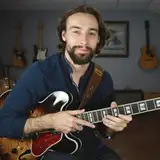
Samuel Organ is a producer, multi-instrumentalist (The Physics House Band, Slugabed, Kai Whiston) and tutor based in the UK. His upcoming album A Safe Place In Cyberspace releases on May 7th and is available for preorder.
You can follow him on Twitter @samuel_organ and Instagram @samuelorgan