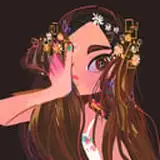
Hwarang (화랑), also known as Flowering Knights, were an elite warrior group of male youth in Silla, an ancient kingdom of the Korean Peninsula that lasted until the 10th century.
Hwarang were an exclusively military organisation, which reached the height of its strength in the 8th century. The so called 'Flower boys' or 'Elite youth' were young warriors-poets, they banded together to sing and dance in famous scenic places; the boys were chosen and taught not only martial arts, but also philosophy and ethics, such as piety, loyalty, sincerity and respect. Hwarang were obliged to have self-control, to be confident, brave, and devoted. Apparently the roots of hwarang were religious in origin, more likely Buddhism, asparticularly Buddhist monks were their tutors of martial arts.
Chinese sources tell about their physical beauty, making references to their fine costumes and cosmetics, therefore the practice of the gender-neutral, gender-fluid and feminine looks might indicate on the shamanistic explanation of the origin of hwarang.
"...A grouping of beautiful boys arrayed in cosmetics and fine clothes called hwarang..." from Samguk-sagi – a historical record of the Three Kingdoms of Korea: Goguryeo, Baekje and Silla.
"They gathered followers in large numbers. They encouraged one another morally, and delighted one another with singing and music, playing among the hills and streams—there was nowhere they did not go." Kim Busik (1075–1151) appended a quotation from the lost Silla-kukki (Account of the Country of Silla) by the Tang-dynasty (Chinese) official Ch'eng Ling-Hu that said: "They selected handsome sons of the elite and adorned them with powder and rouge. They call them hwarang. The people all revere and serve them. Good generals and brave soldiers are produced by reason of it."
Thus, despite their pretty looks and involvement in music, dance and art Hwarang were much feared as courageous warriors, who sacrifice their lives for the king and their people.
PS. For depiction of a hwarang boy as the example I used 1)"Damyeom ripbon wang heedo" 6th century depiction of Silla ambassadors to China 2) and I was inspired by the moves from the Hallyangmu (한량무) - traditional korean folk dance of noblemen, but here is not specifically that dance though, cause it belongs to later history of Korea.